创造性垄断

Search documents
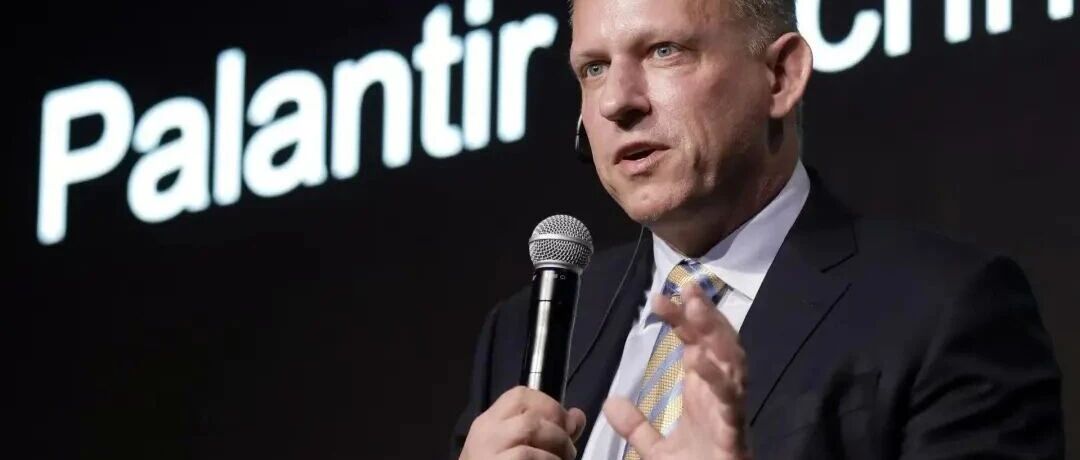
被誉为“硅谷教父”的彼得·蒂尔,致力构建影响世界运行规则的底层基础设施
3 6 Ke· 2025-12-04 03:48
Core Insights - Peter Thiel is recognized as a unique figure in Silicon Valley, focusing on building foundational infrastructure rather than consumer products, driven by his understanding of "mimetic desire" and "creative monopolies" [1][2][4] Group 1: Palantir's Foundation and Philosophy - Palantir was founded by Thiel in 2003, aiming to address fundamental issues in the digital age rather than following trends in social applications [2][9] - The name "Palantir" is derived from a crystal ball in "The Lord of the Rings," symbolizing the creation of a digital mirror to understand and shape reality [4] - Thiel's philosophy emphasizes that companies should innovate fundamentally rather than compete in existing markets, leading to the establishment of a "creative monopoly" [2][4] Group 2: Investment Philosophy and Strategy - Thiel's investment strategy is characterized by building unique and irreplaceable value networks, as seen in his early investment in Facebook, which provided significant returns and strategic influence [12][14] - He focuses on long-term, high-risk projects that address fundamental problems, such as investments in biotechnology aimed at combating aging [14][24] - Thiel's approach contrasts with typical investors who chase short-term trends, as he seeks to create new possibilities rather than merely meeting existing demands [23][24] Group 3: Political Engagement and Influence - Thiel's support for Donald Trump in 2016 exemplifies his investment philosophy of positioning himself in undervalued areas, despite controversy in Silicon Valley [15][20] - His political investments aim to convert political capital into business advantages, enhancing his influence in both technology and governance [15][20] - Thiel's actions reflect a broader strategy of constructing a value network that spans technology, politics, and finance, aiming for a cohesive influence across sectors [20][21] Group 4: Philosophical Underpinnings and Future Vision - Thiel's investment decisions are informed by his philosophical beliefs, particularly the "power law," which suggests that a small number of key decisions yield the majority of results [17][18] - He seeks to redefine societal structures through his investments, aiming to address existential questions about life and technology [20][21] - Thiel's ultimate goal appears to be the reconstruction of world order based on his philosophical principles, challenging conventional norms and exploring the implications of technological advancements [20][21][24]


硅谷“新教父”的野心:彼得·蒂尔重写人类欲望算法
阿尔法工场研究院· 2025-10-10 00:07
Core Insights - Peter Thiel's philosophy is rooted in René Girard's theories, particularly the concepts of mimetic desire and scapegoating, which he applies to both business and political strategies [11][14][19] - Thiel advocates for "creative monopolies" as a means to escape destructive competition, emphasizing the importance of innovation over imitation in business [31][32][30] Group 1: Background and Influences - Peter Thiel co-founded The Stanford Review in 1987 as a response to the cultural shifts at Stanford University, aiming to challenge prevailing progressive ideologies [7][5] - Thiel's worldview was shaped by his engagement with Girard's theories, which he encountered through a reading group led by Robert Hamerton-Kelly [10][14] Group 2: Girard's Theories - Girard's first revelation is that human desire is fundamentally mimetic, meaning that individuals desire what others desire, leading to competition and conflict [16][14] - The second revelation involves the scapegoat mechanism, where societies project their internal conflicts onto a chosen victim to restore order [19][20] - Girard's interpretation of biblical texts reveals the truth about scapegoating, suggesting that the innocent victim is often blamed while the true perpetrators remain hidden [23][20] Group 3: Thiel's Political Philosophy - Thiel's political philosophy evolved post-9/11, where he began to see the need for decisive leadership in times of crisis, influenced by the works of Leo Strauss and Carl Schmitt [26][27] - He argues that the Enlightenment's view of human nature as rational is flawed, and that crises reveal the violent and irrational aspects of humanity [27][26] Group 4: Business Applications - Thiel's business strategy, articulated in "Zero to One," emphasizes avoiding competition by creating unique products that do not have direct rivals [30][31] - His management practices at PayPal involved radical differentiation among employees to minimize internal competition and foster collaboration [34][33] Group 5: Paradoxes and Critiques - Thiel's investment in Facebook represents a paradox, as he leveraged the platform's mimetic nature while advocating against imitation in business [36][37] - Critics argue that Thiel's application of Girard's theories is more engineering-focused, lacking the ethical and compassionate dimensions inherent in Girard's work [40][41]