创造性重构

Search documents
AI投资狂潮下,如何分清泡沫与机遇?
3 6 Ke· 2026-01-29 23:10
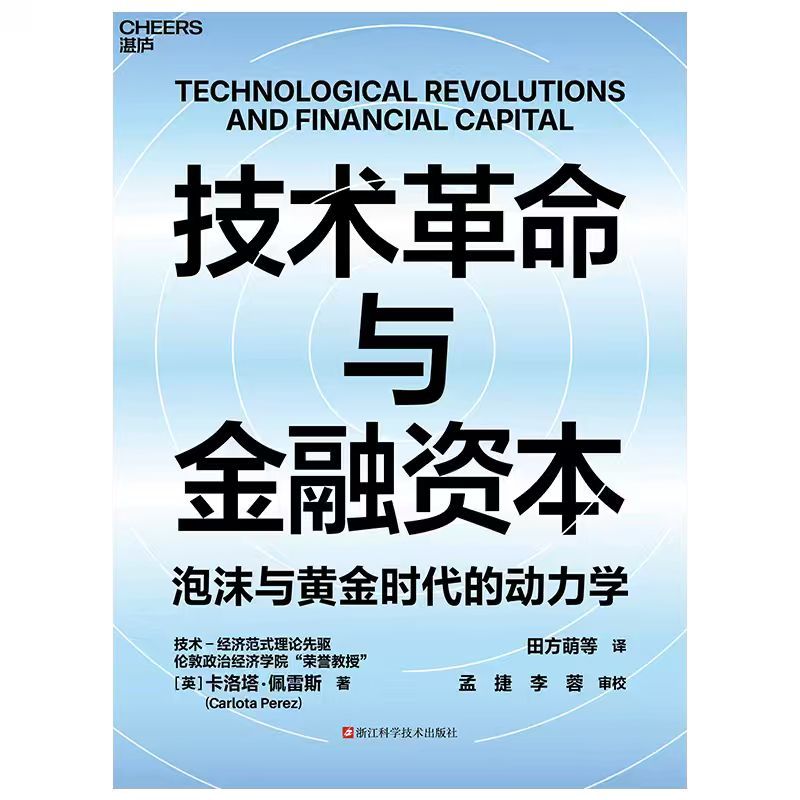
Core Insights - The book "Technological Revolutions and Financial Capital" by Carlota Perez provides a framework for understanding the cyclical nature of capitalism driven by technological revolutions and financial capital [4][10] - It emphasizes the interplay between technological innovation and financial speculation, highlighting how each technological revolution leads to a cycle of boom and bust, followed by institutional restructuring and a new golden age [5][8] Group 1: Technological Revolutions - Perez identifies five major technological revolutions over the past 200 years, each leading to significant societal and economic transformations [4][8] - Each revolution is characterized by a shift in the "efficiency paradigm," influencing management practices, social institutions, and cultural values [7][10] Group 2: Financial Capital Dynamics - Financial capital plays a dual role as both a catalyst for innovation and a source of speculative bubbles, often leading to economic crises [6][9] - The cyclical nature of capitalism involves periods of financial exuberance followed by crises, which serve as mechanisms for institutional renewal and adaptation [5][9] Group 3: Institutional Restructuring - After a financial crisis, new institutional frameworks emerge, including regulations and social policies that align with technological advancements, facilitating a new phase of economic stability [9][10] - This process of "recoupling" between technology and social institutions is essential for harnessing the potential of new innovations [9][10] Group 4: Historical Perspective - The book advocates for a historical perspective on economic thought, emphasizing the importance of understanding the interactions between technology, finance, and societal structures [10][12] - It suggests that economic fluctuations are not random but rather a result of the misalignment between technological progress and institutional evolution [10][12]


金融与技术的千年共舞:为什么每次技术革命,都伴随泡沫与重构?
3 6 Ke· 2026-01-18 23:21
Core Insights - The book "Technological Revolutions and Financial Capital" by Carlota Perez provides a framework for understanding the cyclical nature of capitalism driven by technological revolutions and financial capital [4][10] - It emphasizes the interplay between technological innovation and financial speculation, highlighting how each technological revolution leads to a cycle of boom and bust, followed by institutional restructuring and a new golden age [5][8] Group 1: Technological Revolutions - Perez identifies five major technological revolutions over the past 200 years, each leading to significant societal and economic transformations [4][8] - Each revolution is characterized by a shift in the "efficiency paradigm," influencing management practices, social institutions, and cultural values [7][10] Group 2: Financial Capital Dynamics - Financial capital plays a dual role as both a catalyst for innovation and a source of speculative bubbles, often leading to economic crises [6][9] - The cyclical nature of capitalism involves phases of financial exuberance followed by crises, which serve as mechanisms for institutional renewal [5][9] Group 3: Institutional Restructuring - After a financial crisis, new institutional frameworks emerge, adapting to the new technological landscape and facilitating economic stability [9][10] - This process of "recoupling" aligns technological logic with social institutions, allowing for a new phase of economic growth [9][10] Group 4: Historical Perspective - The book advocates for a historical approach to economic analysis, viewing economic fluctuations as results of the misalignment between technology and institutions [10][11] - It suggests that understanding these cycles can inform current policy decisions, especially in the context of emerging technologies like AI and clean energy [10][12]