加沙重建

Search documents
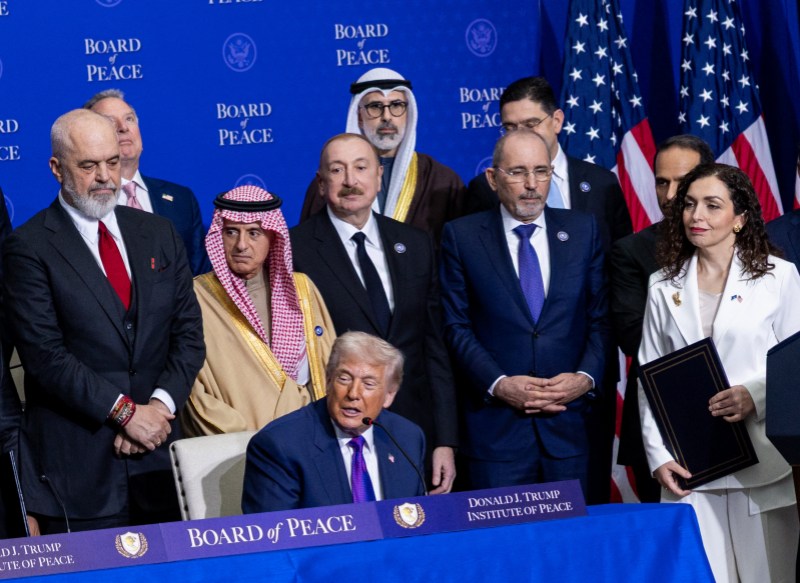
“和平委员会”举行首次会议:特朗普收获“惊喜”,加沙只剩闹剧
Xin Lang Cai Jing· 2026-02-20 05:14
Core Viewpoint - The so-called "Peace Committee" initiated by President Trump is facing skepticism from major global powers and traditional Western allies, with limited participation from countries and a focus on the Gaza reconstruction issue [1][2][11]. Group 1: Committee Formation and Participation - The "Peace Committee" was launched with participation from over twenty countries, primarily from the Middle East and emerging nations, while major global powers and traditional Western allies have been cautious, with no participation from the other four permanent members of the UN Security Council [2][11]. - Trump has assumed the role of "lifetime chairman" of the committee, which grants him unilateral powers to veto resolutions, approve agendas, and select successors, causing hesitation among many nations [2][11]. Group 2: Financial Commitments and Reconstruction Plans - Trump announced a commitment of $10 billion from the U.S. to the "Peace Committee," part of a ten-year reconstruction plan for Gaza, with an initial investment of approximately $1.25 billion allocated for clearing munitions and providing essential services [5][6]. - Other member countries have pledged $7 billion for Gaza reconstruction, including nations like Kazakhstan, Azerbaijan, UAE, Morocco, Bahrain, Qatar, Saudi Arabia, Uzbekistan, and Kuwait [5][6]. Group 3: Criticism and Concerns - The establishment of the "Peace Committee" has been criticized as an attempt to replace the UN, with concerns raised about its legitimacy and the lack of Palestinian representation [11][12]. - Palestinian President Abbas has rejected the committee, labeling it a "temporary arrangement," while critics describe it as a colonialist project that does not reflect the interests of the Palestinian people [11][12].

土耳其举行2026年首次国安委会议 强调维护地区稳定
Jing Ji Guan Cha Wang· 2026-01-28 18:05
Group 1 - The core focus of the meeting was the situation in Gaza, with Turkey expressing readiness to collaborate with all parties for the reconstruction of Gaza and calling for a lasting ceasefire to ensure humanitarian aid access [1] - The meeting emphasized support for Syria's territorial integrity and political unity, discussing the current situation in neighboring Iran, highlighting its stability as crucial for regional security [1] - The communiqué reiterated concerns regarding the Ukraine crisis, stating that the risk of war is spreading globally, and urged responsible actions to prevent the conflict from affecting the stability of the Black Sea region [1]
内塔尼亚胡:加沙非军事化前 不会允许重建
Xin Hua She· 2026-01-27 22:45
Group 1 - Israeli Prime Minister Netanyahu emphasized that Israel will focus on the demilitarization of Gaza and will not allow reconstruction before this process is completed [1] - Netanyahu stated that Israel is committed to dismantling Hamas's armed presence and clearing weapons and tunnels in Gaza [1] - He denied rumors about allowing Turkey and Qatar to participate in an international stabilization force in Gaza, asserting that this will not happen [1] Group 2 - U.S. Special Envoy Witte announced the initiation of the second phase of the "20-point plan" to end the Gaza conflict, transitioning from a ceasefire to demilitarization and reconstruction [2] - The second phase will establish a transitional Palestinian bureaucratic committee to manage Gaza and initiate comprehensive demilitarization and reconstruction efforts [2] - The focus will be on disarming all unauthorized personnel in Gaza [2]
内塔尼亚胡称解除哈马斯武装是重建加沙前提
Yang Shi Xin Wen Ke Hu Duan· 2026-01-27 20:11
Core Viewpoint - Israeli Prime Minister Netanyahu emphasized that Israel's political and security interests will be fully safeguarded in response to President Trump's proposed second phase of the Gaza ceasefire plan [1] Group 1: Israel's Objectives - The current focus for Israel is to accomplish two main tasks: disarming Hamas and achieving the demilitarization of the Gaza Strip, which includes the removal of all weapons and tunnels [1] - Netanyahu stated that this process "will ultimately be completed in any way" [1] Group 2: Conditions for Reconstruction - Netanyahu asserted that reconstruction in Gaza will not be allowed to proceed until disarmament is achieved [1] - He denied the possibility of Turkish or Qatari forces entering Gaza [1] Group 3: Palestinian Statehood - Netanyahu emphasized that the establishment of a Palestinian state, including in the Gaza Strip, will not be permitted [1] - He mentioned that he and his government colleagues have long prevented the progress of such a process [1] Group 4: Regional Security Concerns - Regarding the situation with Iran, Netanyahu warned that if Iran decides to attack Israel, it would be a grave mistake, and Israel would respond with unprecedented force [1]
外媒:哈马斯已同意解除武装,以换取其领导人自由离开加沙
Huan Qiu Shi Bao· 2026-01-23 22:44
Group 1 - Hamas has agreed to disarm in exchange for the freedom of its leaders to leave Gaza and transition into a political entity [1] - The disarmament plan involves the immediate destruction of heavy weapons, tunnels, and military infrastructure, followed by a phased program to collect personal weapons from Hamas members [1] - The U.S. has assured that Hamas leaders will not face persecution from Israel after leaving Gaza, and negotiations for the disarmament plan have been ongoing for two to three weeks [1] Group 2 - The U.S. announced a "New Gaza" reconstruction plan, which includes building residential buildings, data centers, and seaside resorts [2] - Jared Kushner stated that the demilitarization of Gaza has already begun and that a newly formed Palestinian technocratic committee will work with Hamas to advance this process [2] - The U.S. has issued threats to Hamas, indicating severe consequences if they do not disarm [2]
巴勒斯坦技术官僚委员会:首要任务是人道主义援助
Yang Shi Xin Wen Ke Hu Duan· 2026-01-16 20:36
Core Viewpoint - The Palestinian Technocratic Committee has officially commenced its work, focusing on humanitarian aid and the management of daily affairs in the Gaza Strip [1] Group 1: Committee Formation and Objectives - The committee's primary task is to provide emergency relief and aid, particularly to the most vulnerable groups, including women, children, and patients [1] - The committee aims to implement the terms of the peace plan and alleviate the humanitarian crisis in Gaza during its two-year transitional period [1] - The establishment of the committee is seen as a result of broad consensus among various Palestinian sectors and has received support from the international community and the United States [1] Group 2: Regional and International Support - The Palestinian leadership hopes that Arab countries, including Egypt, will contribute to the reconstruction efforts in Gaza by providing contractors [1] - A joint statement from Egypt, Qatar, and Turkey announced the completion of the committee's formation, emphasizing its role in managing daily operations in Gaza [1]
特朗普不想烂尾,哈马斯放弃加沙了?
Xin Lang Cai Jing· 2026-01-15 12:12
Core Viewpoint - The United States has announced the initiation of the second phase of the Gaza ceasefire, focusing on demilitarization, bureaucratic governance, and reconstruction in the Gaza Strip [3]. Governance Structure Established - A transitional Palestinian technocratic committee will manage the Gaza Strip, aiming for comprehensive demilitarization and reconstruction by disarming unauthorized personnel [3]. - Hamas has agreed to dissolve its administrative bodies in Gaza and transfer governance responsibilities to the technocratic committee [5][6]. - The technocratic committee has been formed, led by former Palestinian official Ali Abdulhamid Shaas, and will oversee areas such as infrastructure, education, and health [7]. International Oversight Mechanism - The "Peace Committee" is being established, with former UN Middle East envoy Nikolay Mladenov appointed as its head. The committee's work will be guided by the U.S. [8]. Key Challenges - The two major unresolved issues are Hamas's disarmament and the complete withdrawal of Israeli forces from Gaza [9]. - Hamas's willingness to "hand over power" is seen as a response to internal and external pressures, indicating a shift in its strategy [10]. - Despite the concessions, Hamas is unlikely to fully abandon its armed resistance, as it remains central to its identity [11]. Israeli Position - Israel has shown reluctance regarding the second phase of the ceasefire and has not committed to a full withdrawal from Gaza [12]. - Reports suggest Israel is planning new military actions against Hamas, indicating a low likelihood of complete withdrawal [13]. Reconstruction Challenges - The reconstruction of Gaza faces numerous challenges, including restoring basic living conditions and clearing debris [14]. - There is uncertainty regarding the composition and funding of international stabilization forces, with no country publicly committing to send troops [15]. - Long-term solutions for Gaza's issues and funding for large-scale reconstruction remain unclear, especially as U.S. and international attention shifts due to the evolving situation in Iran [16].

土外长:以色列持续违反停火协议 加剧实现和平难度
Yang Shi Xin Wen· 2025-12-20 22:32
Group 1 - The Turkish Foreign Minister, Fidan, reported that the meeting held in Miami on the Gaza issue was "productive" and discussions continued late into the night [1] - Fidan emphasized that violations of the ceasefire agreement are jeopardizing the peace plan and pose serious risks to the transition to the second phase of the ceasefire [1] - Continuous violations, particularly by Israel, are making the peace process exceptionally difficult [1] Group 2 - A preliminary research report on the reconstruction of Gaza was submitted during the meeting, and initial discussions were held within this framework [1] - Fidan outlined three key principles for Turkey regarding Gaza: it must be managed by the people of Gaza, the territory should not be divided, and all actions taken should genuinely benefit the people of Gaza [1]
“20点计划”不易落实,以色列尚未完全撤军,加沙停火遭遇“哈马斯解除武装”难题
Huan Qiu Shi Bao· 2025-10-15 23:00
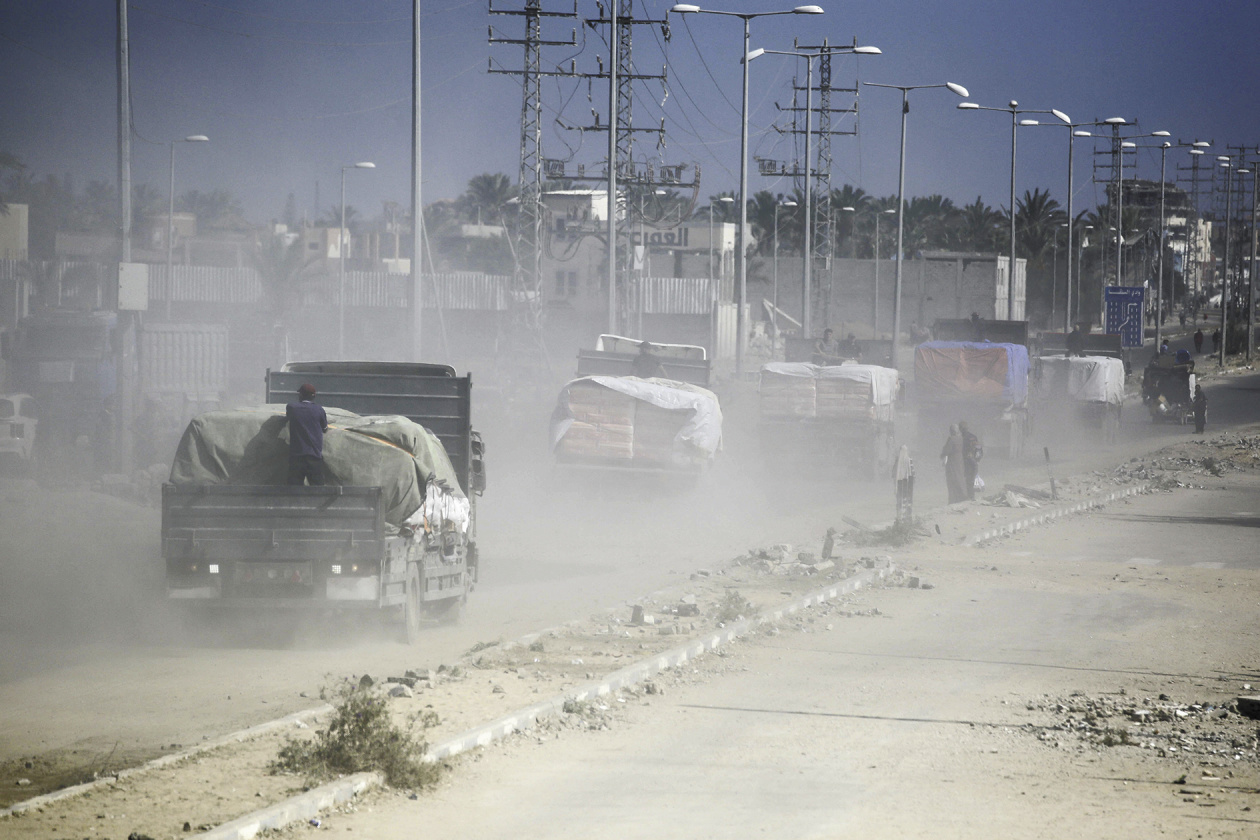
Core Points - The effectiveness of the Gaza ceasefire agreement is questioned, with key issues such as Hamas disarmament and governance of Gaza still unresolved [1][5] - Israeli Prime Minister Netanyahu warns of collapse if Hamas does not disarm, while President Trump threatens military action if disarmament is not achieved [1][5] - The fragile ceasefire is maintained despite ongoing tensions and accusations between Israel and Hamas regarding the exchange of bodies of deceased individuals [3][4] Summary by Sections Ceasefire Agreement - The ceasefire agreement's implementation faces significant challenges, particularly regarding Hamas's disarmament and the timeline for Israeli withdrawal [5][6] - The first phase of the ceasefire, effective from September 9, requires the exchange of all detained individuals, with Hamas having transferred only a portion of the bodies [3][6] Humanitarian Aid and Conditions - Humanitarian aid to Gaza is uncertain, with conflicting reports about the opening of the Rafah crossing, which is crucial for aid delivery [4][6] - The World Food Program reports that 137 trucks carrying aid have entered Gaza, sufficient for basic needs for at least three months [8] Reconstruction Challenges - The reconstruction of Gaza is complicated by extensive damage, with 78% of approximately 250,000 buildings affected, leaving around 2.1 million people displaced [8] - Despite U.S. promises to "rebuild and revitalize" Gaza, there are no concrete details on how this will be achieved, raising doubts about the effectiveness of proposed plans [8]
伊朗:怀疑美国能否兑现
中国能源报· 2025-10-12 10:06
Group 1 - The Iranian Foreign Minister, Zarif, expressed skepticism about the United States' ability to fulfill its commitments regarding the reconstruction and support of Gaza, citing a lack of stability in U.S. actions in recent years [1] - Zarif emphasized the need to observe the actual actions of the U.S. and Israel, stating that any subsequent phases of agreements will serve as a true test of U.S. sincerity [1] - Zarif denied having direct communication with U.S. Middle East envoy, Witte, indicating that information was only exchanged through intermediaries [1] Group 2 - The U.S. has requested direct negotiations with Iran but has rejected Iran's proposal to include the UK, France, Germany, and the International Atomic Energy Agency in the discussions [1] - Zarif stated that Iran will not accept any unreasonable preconditions and that negotiations will only resume on the basis of equality and respect [1]