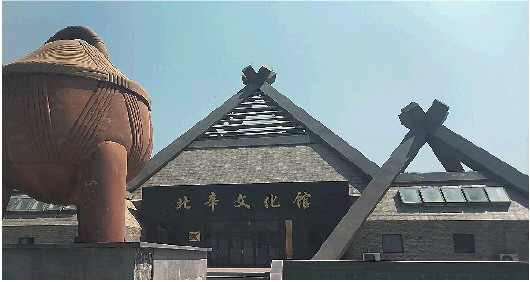
北辛文化

Search documents
青铜绿和石榴红(我与一座城)
Ren Min Ri Bao· 2025-12-16 22:30
Group 1 - The city of Zaozhuang, located in southern Shandong, is characterized by its rich history and cultural heritage, with notable landmarks and local customs [1] - Zaozhuang is known for its unique colors, represented by "bronze green" symbolizing ancient civilization and "pomegranate red" representing modern vitality [2][3] - The region has a significant archaeological background, with artifacts dating back approximately 7,300 years, linked to the Beixin culture [2] Group 2 - Zaozhuang's Yicheng District is famous for its pomegranate cultivation, with millions of pomegranate trees contributing to local agriculture and economy [3] - The pomegranate has evolved from a traditional fruit into various innovative products, including pomegranate bonsai, wine, tea, pancakes, and face masks, reflecting the local community's creativity [3] - The pomegranate seeds from Zaozhuang have even been sent into space aboard the Shenzhou 12 spacecraft, showcasing the city's aspirations and achievements [3]
薛河孕育的古薛文化
Qi Lu Wan Bao· 2025-09-11 09:47
Core Viewpoint - The article highlights the historical and cultural significance of the Xue River and its surrounding areas, emphasizing the archaeological discoveries that reveal the rich heritage of ancient civilizations, particularly the North Xin culture and the ancient Xue state [5][6][7]. Summary by Sections Historical Significance - The Xue River, while not widely known, has nurtured a rich cultural heritage, with significant archaeological sites along its banks, particularly in Tengzhou and Weishan [5]. - The North Xin culture, discovered between 1964 and 1978, showcases artifacts from the Neolithic era, indicating advanced agricultural and economic practices among its inhabitants [6]. - The ancient Xue state was established during the Xia dynasty, with its founder, Xi Zhong, credited for innovations in agriculture and transportation [8]. Archaeological Discoveries - Numerous archaeological sites have been identified along the Xue River, including the North Xin culture and the Dawangkou culture, which reflect the continuous human settlement in the area [7]. - The Xue city, the capital of the ancient Xue state, was a significant urban center with a complex fortification system, showcasing advanced construction techniques [9][10]. Cultural Heritage - The article details the contributions of historical figures such as Meng Changjun, who played a crucial role in the development of the Xue state, attracting scholars and enhancing its economic prosperity [13][14]. - The region has a wealth of ancient cultural relics, including bronze artifacts from the Shang and Zhou dynasties, which are preserved in various museums [16]. Modern Developments - Recent initiatives have been undertaken to preserve and promote the archaeological sites, including the establishment of parks and museums dedicated to the North Xin culture and the ancient Xue city [17].