
医保直接结算

Search documents
事关异地就医!吉林医保最新提醒
Xin Lang Cai Jing· 2026-02-14 13:29
Core Viewpoint - The Jilin Provincial Medical Security Bureau has released a convenient guide for cross-regional medical services to ensure insured individuals can easily access medical insurance services while traveling during the Spring Festival [1] Group 1: Registration Process - Insured individuals are advised to complete the registration for cross-regional medical services in advance, covering various scenarios such as long-term residence, emergency referrals, and temporary medical visits [2] - Multiple channels for registration are available, including online platforms like WeChat and Alipay, as well as offline services at local medical insurance offices [2] Group 2: Required Materials - For long-term cross-regional medical service registration, individuals need to provide an electronic medical insurance certificate or valid ID, along with specific documents such as household registration and proof of residence or employment [3][4] Group 3: Exemption Policy - Certain groups are exempt from the registration requirement, allowing them to directly settle medical expenses without prior registration when seeking medical services within the same city or across county lines [5][7] Group 4: Emergency Services - In case of sudden illness while traveling outside the province, hospitals can directly upload emergency information for immediate settlement, with a 10% reduction in reimbursement rates compared to local treatment [8] Group 5: Coverage and Reimbursement - Direct settlement services are available nationwide for various medical expenses, including inpatient and outpatient treatments for specific chronic diseases [9] - The reimbursement for cross-regional medical services is categorized into three tiers based on the type of service and location, with varying payment ratios [10]
减轻“跑腿”负担!四川省本级参保职工门诊计生手术费直接结算
Xin Lang Cai Jing· 2026-01-02 11:15
Core Viewpoint - From January 1, Sichuan has implemented a "one-stop" direct settlement system for outpatient family planning surgery fees at designated medical institutions, aimed at protecting the rights of insured individuals and reducing their burden of running errands [1] Group 1: Policy Implementation - The new settlement system covers medical expenses for various family planning surgeries performed at designated medical institutions for insured employees at the provincial level [1] - Insured individuals are only required to pay their personal medical expenses, while the costs covered by the medical insurance fund will be settled separately between the provincial medical insurance center and the designated medical institutions [1] Group 2: Payment Standards - The fixed payment standards for various procedures are as follows: - Intrauterine device insertion: 157 yuan per case - Intrauterine device removal: 160 yuan per case - Long-acting contraceptive implant insertion: 132 yuan per case - Long-acting contraceptive implant removal: 148 yuan per case - Tubal ligation: 317 yuan per case - Vasectomy: 79 yuan per case - Artificial abortion: 269 yuan per case - Medical abortion: 129 yuan per case (with an additional 47 yuan for incomplete abortion requiring curettage) - Mid-term pregnancy induction: 523 yuan per case - Tubal ligation reversal: 993 yuan per case - Vasectomy reversal: 993 yuan per case [2]
报告:药品流通企业回款周期增至154天
Di Yi Cai Jing· 2025-12-09 10:29
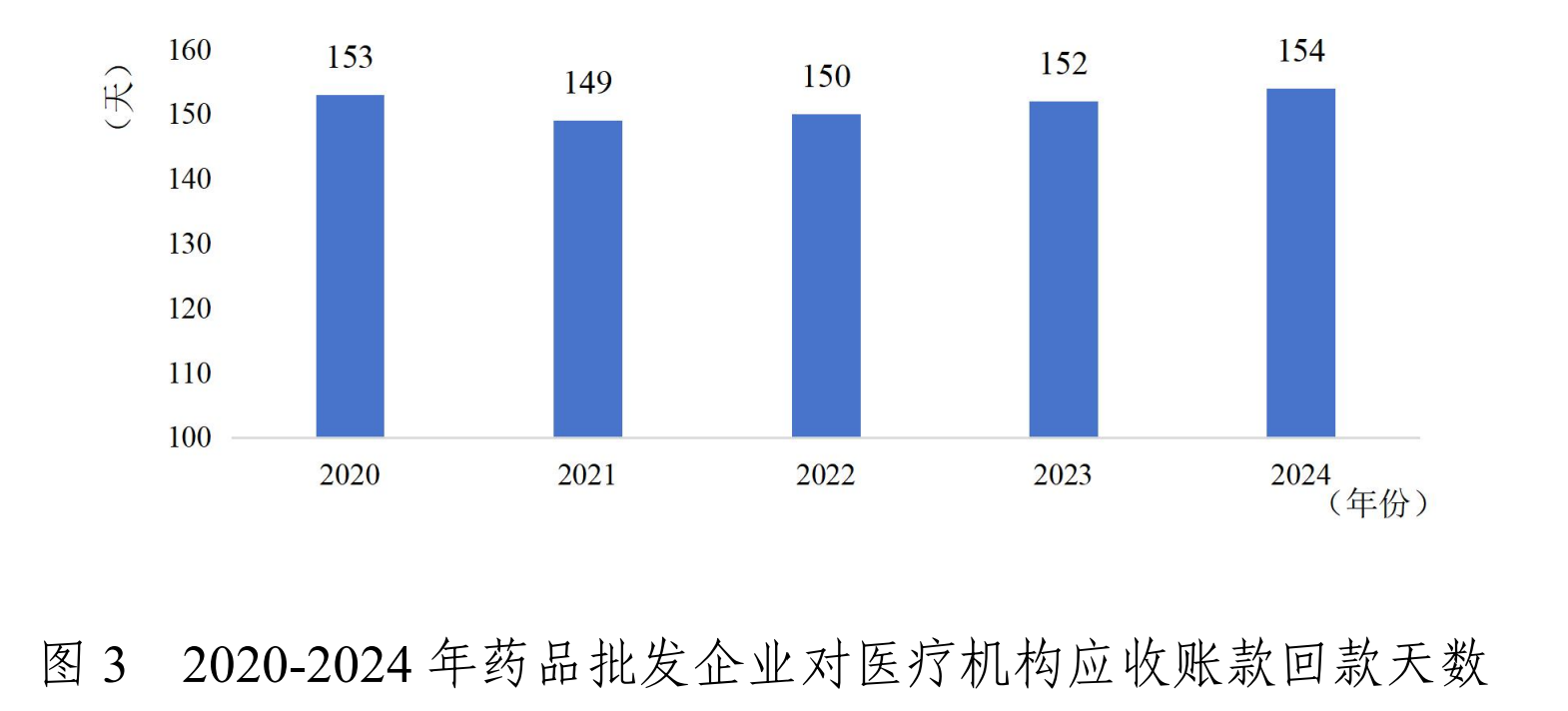
Core Insights - In 2024, the average accounts receivable collection period for pharmaceutical distribution companies from medical institutions has extended to 154 days, indicating continued cash flow pressure in the industry [1][3]. Group 1: Accounts Receivable Situation - The average accounts receivable collection period for pharmaceutical wholesale companies has remained around 150 days over the past five years, meaning companies typically wait about five months to receive payment after selling drugs to hospitals [3]. - The prolonged collection period has contributed to financial strain on pharmaceutical companies, with some publicly listed companies reporting losses as a result [3]. Group 2: Factors Affecting Collection Period - Three main reasons for the extended accounts receivable period include: 1. The post-payment mechanism of medical insurance, where hospitals must first advance drug payments, leading to delays if insurance settlements are not timely [3]. 2. The cancellation of drug markups in public hospitals has led to revenue structure adjustments, causing financial strain on hospitals and affecting their ability to pay pharmaceutical companies [3]. 3. Many public hospitals are operating at a deficit, lacking sufficient funds to make timely payments to pharmaceutical companies [3]. Group 3: Policy Initiatives and Improvements - The National Healthcare Security Administration has initiated a "three-settlement" approach to improve cash flow, allowing for immediate settlements between medical insurance and designated medical institutions, as well as direct settlements with pharmaceutical companies [4]. - Innovative practices in regions like Jiangxi and Hainan have significantly reduced the payment collection period from 180 days to 30 days, enhancing the cash flow efficiency for pharmaceutical suppliers [4].

“医保直接结算”后,医院难摆脱现金流焦虑
Hu Xiu· 2025-10-10 03:03
Core Viewpoint - The implementation of direct settlement between medical insurance and pharmaceutical companies has raised significant cash flow concerns for hospitals, as the new model alters the traditional payment cycle and may exacerbate existing financial pressures [1][3][5]. Group 1: Cash Flow Anxiety - Hospitals are experiencing heightened cash flow anxiety due to ongoing reforms in medical insurance payment methods and adjustments in medical service pricing, leading to reduced revenues and difficulties in payroll [2][5]. - The transition to direct settlement has caused hospitals to worry about the potential disruption of cash flow, which has historically been a crucial part of their financial stability [3][5]. - The average accounts receivable days for hospitals from pharmaceutical companies is reported to be 152 days, indicating a significant delay in cash inflow [6]. Group 2: Direct and Instant Settlement Policies - The direct settlement policy, which allows local medical insurance departments to settle payments with pharmaceutical companies directly, aims to shorten the payment cycle to within one month [1][3]. - The introduction of the prepayment system by the National Medical Insurance Administration in November 2024 is intended to alleviate cash flow pressures by allowing hospitals to apply for advance payments from the insurance fund [10][11]. - The prepayment system has been criticized for its stringent application requirements, making it difficult for hospitals to access these funds, which were previously more readily available under the old turnover fund system [11][12]. Group 3: Operational Adjustments in Hospitals - Hospitals are adjusting their procurement strategies due to cash flow constraints, often reducing inventory levels to avoid the risk of stockpiling unsold medications [8][10]. - The pressure to maintain timely payments to pharmaceutical companies has led some hospitals to consider taking loans to meet their obligations, which poses compliance risks [17]. - The implementation of daily or weekly settlement trials in some regions has been viewed positively by hospitals, as it provides more immediate cash flow without significantly increasing administrative burdens [25][24]. Group 4: Future Outlook - The goal of achieving instant settlement for medical insurance funds with designated medical institutions is set for 2025, with a target of 80% of regions implementing this by then [23]. - Concerns remain regarding the potential increase in operational workload for hospitals due to more frequent settlements, although initial feedback suggests that the benefits of improved cash flow outweigh these concerns [24][25].