单品依赖

Search documents
首次全年盈利,百济神州为何股价三地齐跌?
Zhong Guo Xin Wen Wang· 2026-03-03 14:37
Core Viewpoint - BeiGene has achieved a historic turnaround in 2025, reporting total revenue of 38.205 billion yuan, a year-on-year increase of 40.4%, and a net profit of 1.422 billion yuan, marking the first annual profit since its establishment 16 years ago [1][2]. Financial Performance - The significant revenue growth is primarily driven by product sales, which reached 37.770 billion yuan, accounting for 98.9% of total revenue [1]. - The core product, BTK inhibitor Zebutini (brand name: Baiyueze), generated global sales of 28.067 billion yuan, up 48.8% year-on-year [1]. - The anti-PD-1 drug Tislelizumab (brand name: Baizean) achieved global sales of 5.297 billion yuan, a year-on-year increase of 18.6% [1]. - The sales from licensed products from Amgen amounted to 3.471 billion yuan, reflecting a 33.6% increase [1]. Market Reaction - Despite the positive earnings report, BeiGene's stock prices fell significantly across multiple markets, with a 9.16% drop in Hong Kong stocks and a 5.65% decline in A-shares on the first trading day after the announcement [2][3]. - The market capitalization has decreased to below 280 billion HKD, indicating investor concerns despite the reported profitability [2]. Profitability Concerns - The fourth-quarter net profit is estimated at 284 million yuan, a significant decline from 689 million yuan in the third quarter, raising concerns about quarterly volatility [3]. - The revenue forecast for 2026 is projected to be between 43.6 billion and 45 billion yuan, indicating a growth rate of only 14.12% to 17.79%, which is a substantial decrease compared to the 40.4% growth in 2025 [3]. Dependency Risks - BeiGene's profitability is heavily reliant on its core product Baiyueze, which contributes over 70% of total revenue [4]. - The sales growth of Baiyueze in the U.S. market has slowed significantly, with a 45.5% increase in 2025 compared to a 107.5% increase in 2024 [4]. - The company faces risks from over-reliance on a single product and market, as 72% of Baiyueze's revenue comes from the U.S. market [4]. Competitive Landscape - The competitive environment is intensifying, with AbbVie's ibrutinib being included in the U.S. price negotiation list, potentially leading to price reductions starting January 1, 2026 [4]. - The expiration of patents for first-generation BTK inhibitors in the U.S. and Europe is expected to increase competition from generic drugs [4]. Future Growth Potential - BeiGene's second major product, anti-PD-1 drug Tislelizumab, is also facing challenges in a highly competitive market [6]. - The company has received approval for its self-developed drug Sotokluda (Baiyueda) in China and has submitted a marketing application in the EU, which could become a new core product [7][8]. - The company aims to create the next successful product following Baiyueze, as future growth is critical for maintaining investor confidence [8].

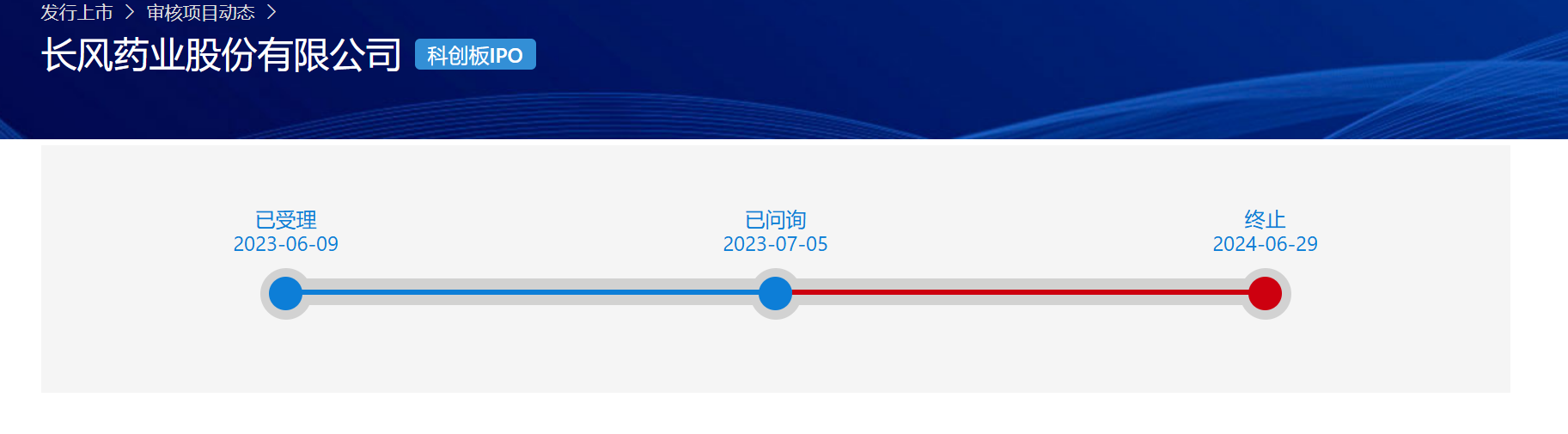
两次冲A未果,长风药业身患“单品依赖症”转战港股!销售费用逐年增长
Shen Zhen Shang Bao· 2025-06-12 04:40
Core Viewpoint - Changfeng Pharmaceutical Co., Ltd. has submitted a listing application to the Hong Kong Stock Exchange after previous unsuccessful attempts to list on the STAR Market in China, focusing on the development and commercialization of inhalation drugs for respiratory diseases [1][3]. Financial Performance - The company reported revenues of RMB 349.1 million, RMB 556.4 million, and RMB 608 million for the years 2022, 2023, and projected for 2024, respectively, with net profits of -RMB 49.4 million, RMB 31.7 million, and RMB 21.1 million during the same periods [2][4]. - The gross profit margin improved from 76.6% in 2022 to 82.2% in 2023, indicating better cost management [4]. Product Dependency - The company heavily relies on its inhalation product CF017, which accounted for 96.2%, 98.4%, and 94.5% of total revenue in 2022, 2023, and projected for 2024, respectively [4][6]. - CF017 is the company's first approved product for treating bronchial asthma, highlighting the risk of revenue concentration [4][6]. Sales and Distribution - Approximately 98.8%, 99.5%, and 99.3% of the company's product sales revenue came from distributors during the reporting periods, indicating a strong dependence on the distribution network [7]. - The company has a high customer concentration, with revenue from the top five customers accounting for 60.2%, 69.4%, and 66.4% of total revenue in the respective years [8]. Cost Structure - Sales and distribution expenses have increased over the reporting periods, totaling approximately RMB 594 million over three years [9]. - Research and development expenses were RMB 1.07 billion, RMB 1.33 billion, and RMB 1.22 billion for the years 2022, 2023, and projected for 2024, with a noted decrease in 2024 due to outsourcing certain services [9].