印缅槽

Search documents
入冬以来中国平均气温历史第二高 专家解析成因
Zhong Guo Xin Wen Wang· 2026-01-15 14:08
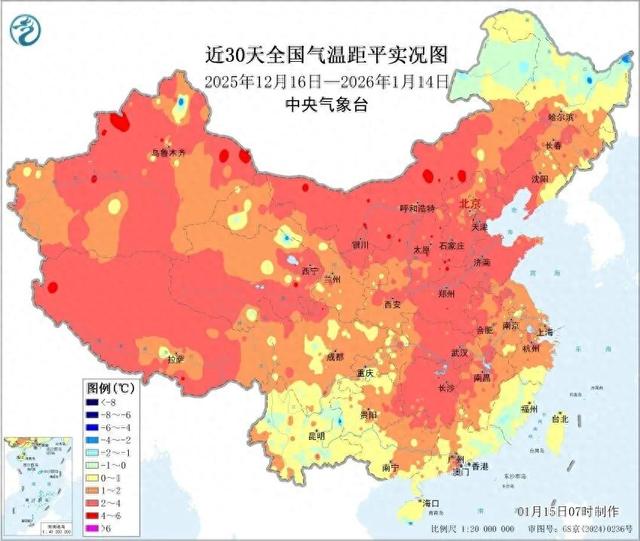
Core Viewpoint - The average temperature in China since the beginning of winter has been the second highest on record, with significant regional variations and multiple contributing factors identified [1][2]. Group 1: Temperature Data - The national average temperature from December 1, 2025, to January 13, 2026, was -2.1°C, which is 1.5°C higher than the historical average, marking the second highest since 1961 [1]. - Most regions in China experienced temperatures close to or above the historical average, with Hubei and Hunan provinces recording the highest temperatures since 1961, while five provinces including Shandong and Shaanxi had the second highest [1]. - The northeastern region and parts of Inner Mongolia and western Yunnan were the only areas with lower than average temperatures [1]. Group 2: Causes of Temperature Increase - The warm winter temperatures are attributed to a weakened Arctic vortex and a lack of active blocking high pressure in the Ural Mountains, leading to a reduced intensity of cold air affecting China [1][2]. - The influence of global warming is also noted, with an average increase of 0.4°C every decade since 1961 for winter temperatures in China, and a trend of warmer winters during La Niña years [2]. - Other factors influencing winter climate include Arctic sea ice, snow cover, and mid-to-high latitude atmospheric circulation systems, indicating a multi-factorial impact on temperature variations [2].
“三九”不冷?不是错觉!入冬以来全国平均气温为同期第二高
Bei Jing Ri Bao Ke Hu Duan· 2026-01-15 11:37
Core Viewpoint - The article discusses the unusually high winter temperatures in China during the winter of 2025-2026, highlighting the implications for public health and agriculture due to climate change and other meteorological factors [1][4]. Temperature Analysis - The average national temperature from December 1, 2025, to January 13, 2026, was -2.1°C, which is 1.5°C higher than the historical average, marking the second highest since 1961 [1]. - Most regions in China experienced temperatures close to or above the historical average, with Hubei and Hunan provinces recording the highest temperatures since 1961, while five provinces including Shandong and Shaanxi had the second highest [3]. Meteorological Factors - The high winter temperatures are attributed to a weak polar vortex and reduced cold air intensity, with the paths of cold air shifting north and east [3]. - The weakening of the subtropical high in the western Pacific and the influence of abnormal northeast winds have led to decreased precipitation in southern China, contributing to the overall rise in temperatures [3][4]. Climate Change Context - The article connects the current winter temperature trends to global warming, noting a consistent increase in average winter temperatures in China at a rate of 0.4°C per decade since 1961 [4]. - The occurrence of warmer winters under La Niña conditions has become more frequent in recent years, indicating a complex interplay of various climatic factors [4]. Public Health Implications - Warmer winter temperatures may increase the activity of pathogens, raising the risk of spring infectious diseases, and could exacerbate respiratory and cardiovascular conditions due to temperature fluctuations [5]. - Recommendations include enhanced monitoring and public awareness to mitigate health risks associated with these temperature changes [5]. Agricultural Impact - Higher temperatures may benefit the overwintering growth of winter wheat and rapeseed, but could also lead to early pest outbreaks and increased risk of spring droughts due to accelerated soil moisture evaporation [5]. - Experts suggest timely monitoring of pest warnings and irrigation facility maintenance to prevent potential agricultural issues [5].