
历史文化街区活态传承

Search documents
城市焕新记 | 南京高淳老街:金陵第一古街的逆生长
Xin Lang Cai Jing· 2026-01-01 14:35
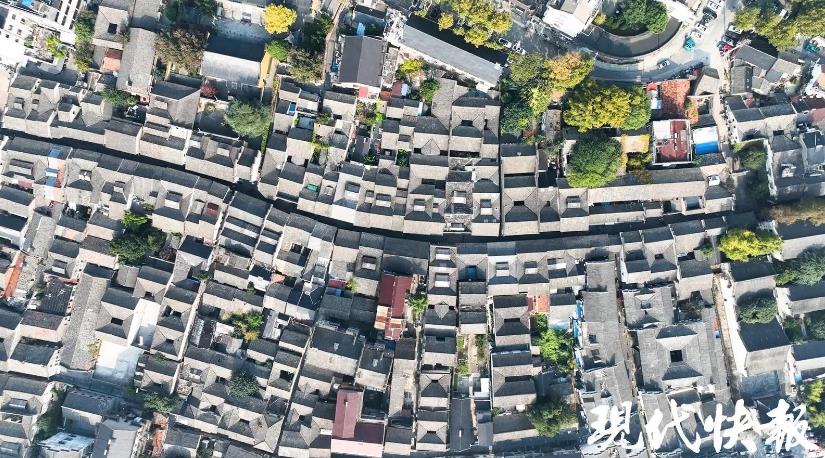
Core Viewpoint - The article discusses the organic renewal of the historic Gaochun Old Street in Nanjing, emphasizing the balance between preserving cultural heritage and introducing new vitality through modern updates [1]. Group 1: Historical Significance - Gaochun Old Street, located in the southwestern part of Gaochun District, has a history dating back to the Song Dynasty and was a significant trade hub during the border trade between Jiangsu and Anhui provinces [3]. - The main street, known as "Yizhi Street," features a unique "fishbone" street pattern, connecting various alleys and showcasing historical architecture from the Ming and Qing dynasties [3][5]. Group 2: Current Challenges - Over time, many old buildings have deteriorated, and the street's commercial activities have become monotonous, leading to a decline in vibrancy [6]. - The need for revitalization has become apparent, prompting discussions on how to rejuvenate the old street while maintaining its historical essence [6]. Group 3: Renewal Initiatives - The organic renewal project for Gaochun Old Street adheres to the principle of "repairing the old as the old," focusing on precise restoration and improving basic infrastructure such as water, electricity, and fire safety [8]. - The updated street incorporates rich intangible cultural heritage elements, including local crafts and cultural spaces, enhancing the traditional business landscape [8]. Group 4: Community Involvement - Residents have actively participated in the renewal process by renovating their homes and opening new businesses such as cafes and dyeing studios, contributing to the street's new appearance [8]. Group 5: Future Developments - The adjacent Riverside Street is being developed into a cluster of artistic guesthouses, allowing visitors to immerse themselves in the local culture [11]. - Upcoming projects, such as "Deep Alley Secrets" and "Guanxi Night Dock," aim to further extend the cultural influence and spatial vitality of Gaochun Old Street [11]. Group 6: Policy Context - The 2025 Central Urban Work Conference emphasizes the importance of urban renewal as a key strategy for high-quality urban development, advocating for the optimization of urban structures and the transformation of old districts [13].

看“旧”品“新”话老街(现场评论)
Ren Min Ri Bao· 2025-11-12 22:19
Core Insights - The revitalization of the Ximen Street area in Qujing, Yunnan, showcases a blend of historical preservation and modern commercial development, transforming a once-neglected area into a vibrant cultural and economic hub [1][2] Group 1: Historical and Cultural Significance - Ximen Street has over 600 years of history and contains more than 2,000 modern buildings, representing the city's cultural heritage [1] - The approach to revitalization emphasizes preserving the original architectural style while introducing modern business elements [1] Group 2: Economic Impact - The revitalization has led to an increase in daily visitors to approximately 10,000 and an annual consumption boost of over 30 million yuan, creating more than 900 job opportunities for local residents [1] - The area has become a hub for innovation and entrepreneurship, attracting young people and fostering new business models [2] Group 3: Community Engagement and Governance - The local government plays a crucial role in guiding the revitalization process, shifting from "one-way management" to "co-governance" by involving community input and establishing a dedicated urban management team [2] - Initiatives such as community merchant alliances and regular public consultations are implemented to address local concerns and promote shared responsibilities [2] Group 4: Future Development and Policy - The "14th Five-Year Plan" emphasizes the effective protection and active inheritance of historical cultural cities and districts, highlighting the importance of balancing respect for history with innovative development [3]