
双向飞地

Search documents
“时空之变”驱动发展跃升——江西在双向开放中积蓄动力活力
Xin Hua Wang· 2026-01-27 02:12
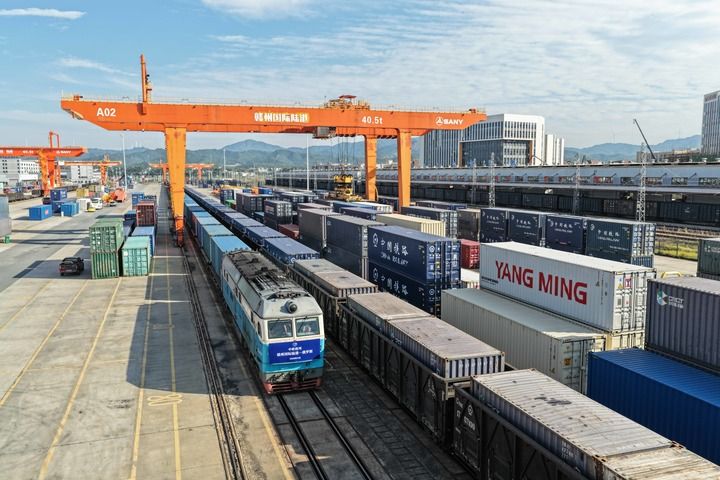
Core Viewpoint - Jiangxi province is transforming from a traditional industrial base to a hub of innovation and connectivity, leveraging its geographical advantages and developing a comprehensive transportation network to enhance its economic growth and global integration [1][5][10]. Group 1: Infrastructure Development - The establishment of the Ganzhou International Land Port has significantly reduced logistics time and costs, allowing goods to reach global markets more efficiently [2][4]. - Jiangxi has developed a multi-modal transportation network, including 2,286 kilometers of high-speed rail, enhancing connectivity with major economic regions like the Yangtze River Delta and the Pearl River Delta [7][10]. - The province has also improved its waterway infrastructure, achieving a 16.01% year-on-year increase in container transport via rail-water intermodal services [7][10]. Group 2: Economic Zones and Innovation Platforms - Jiangxi was designated as the third inland open economic pilot zone in China, focusing on building open channels to facilitate economic development [5][10]. - The province is creating high-energy open platforms that foster innovation and collaboration, breaking traditional boundaries between research and manufacturing [12][14]. - Jiangxi's innovation strategy includes establishing technology centers in key regions to attract talent and resources, enhancing the local innovation ecosystem [12][14]. Group 3: International Expansion and Investment - Jiangxi has seen a 40.9% year-on-year increase in foreign direct investment, with over $11.6 billion invested in the first nine months of 2025 [21]. - The province has established over 1,043 overseas enterprises in 116 countries, with total foreign investment exceeding $20 billion [21]. - Jiangxi companies are increasingly engaging in international markets, with successful ventures in various countries, including Zambia and Egypt, showcasing the province's growing global footprint [19][21].

乌海:“北京研发+乌海转化”首家企业落地
Nei Meng Gu Ri Bao· 2025-11-17 03:34
Core Insights - The establishment of Inner Mongolia Wancheng Kaiyuan New Materials Technology Co., Ltd. marks a significant milestone in the "Beijing R&D + Wuhai Transformation" regional collaboration model [1] - The "dual flying land" innovation model links global innovation resources through the establishment of a science and technology innovation center in Wuhai, facilitating the transformation of scientific achievements [1][2] Group 1 - The "dual flying land" mechanism enables the successful establishment of companies like Inner Mongolia Wancheng Kaiyuan New Materials Technology Co., Ltd. in Wuhai, benefiting from the collaboration between Wuhai and Beijing [1] - A professional team was formed by multiple departments in Wuhai to identify technical bottlenecks in local coal coking enterprises and create a demand list, which was then matched with quality resources from Beijing [1] - The collaboration led to the formation of a new company through the partnership between Beijing Kaiyuan Environmental Technology Co., Ltd. and Inner Mongolia Huanghe Industry and Trade Group Qianlishan Coal Coking Co., Ltd., achieving efficient cross-regional integration of technology, capital, and industrial chain resources [1] Group 2 - The "Beijing R&D + Wuhai Transformation" model offers significant advantages over traditional regional cooperation, providing a fertile ground for high-quality technological achievements to transition from the laboratory to the market in Wuhai [2] - Wuhai can quickly overcome local industrial technical bottlenecks by accurately matching Beijing's R&D resources, leading to an upgrade in industrial capabilities [2] - This dual empowerment mechanism effectively stimulates the resource advantages of both regions, creating a regional synergy effect that exceeds the sum of its parts, thus establishing a replicable new path for cross-regional collaborative development in Wuhai's industrial transformation [2]