
古生物学研究

Search documents
“亚洲首例”,竟是小学生意外发现!
Xin Lang Cai Jing· 2026-02-01 15:14
Core Viewpoint - The discovery of the first Jurassic amphibian footprint fossils in Asia fills a significant gap in the study of Jurassic amphibian traces in China and Asia, providing valuable evidence for understanding the ancient geographical environment, paleoecology, and biodiversity of North China approximately 160 million years ago [1][8]. Group 1: Discovery and Significance - The fossil was discovered in the Mentougou District of Beijing, which has unique geological conditions that preserve rich fossil records [4]. - The initial discovery was made by a primary school student, Ni Jingchen, who found a rock slab with distinct footprints, leading to further scientific investigation [4][6]. - This finding represents the first scientific description of amphibian footprints in the Jurassic strata of Asia, previously dominated by records of dinosaur and turtle footprints [8]. Group 2: Fossil Characteristics - The fossil consists of two footprints preserved on the same rock slab, with one clear footprint measuring 1.5 cm in length and 1.3 cm in width, indicating a small-sized animal [6][7]. - The second footprint is less clear, showing signs of five toes, measuring approximately 1.1 cm in length and 1.4 cm in width, with a broad heel impression [6]. Group 3: Research Methodology - The research team utilized photogrammetry and 3D modeling techniques to create high-precision digital models of the fossils, allowing for detailed morphological analysis [7]. - The relative size, spacing, and alignment of the footprints suggest they likely belong to the same animal, presumed to be an early salamander-like amphibian [7]. Group 4: Ecological Context - The fossil's geological layer is part of the important coal-bearing strata in the Mentougou area, indicating that small amphibians existed in a lake-swamp environment during the Middle Jurassic, coexisting with diverse plant life [8]. - This discovery highlights the complexity of the ecosystem during that period, which included ferns, ginkgoes, and cycads [8].

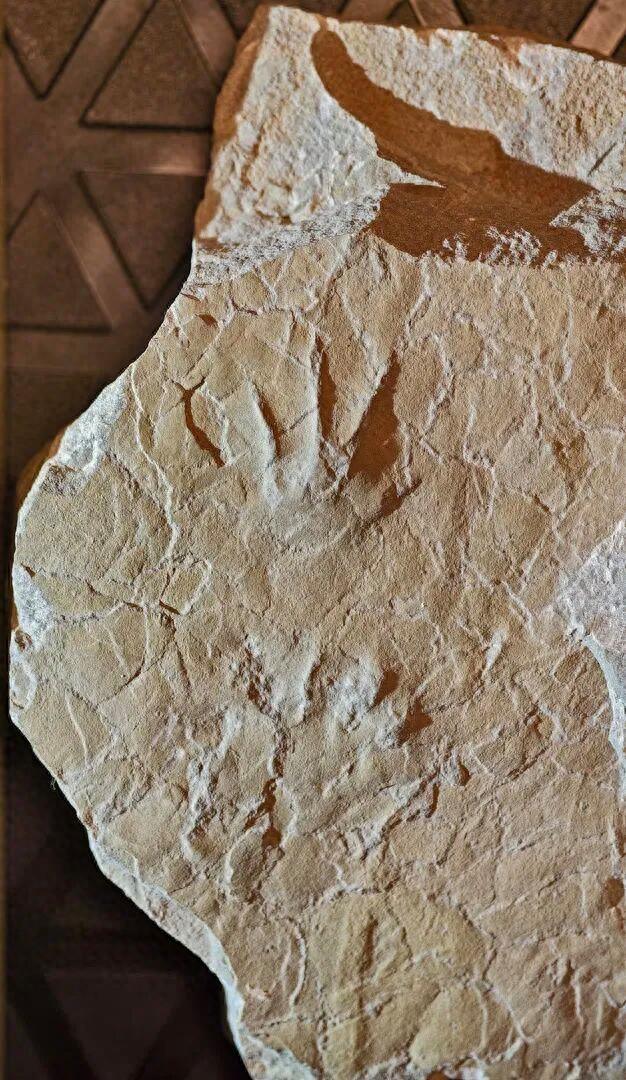
北京小孩哥野外发现登上国际期刊
Xin Lang Cai Jing· 2026-01-31 11:13
Core Viewpoint - A primary school student discovered a Jurassic amphibian footprint fossil in Beijing, marking the first such find in Asia, which provides valuable evidence for understanding the ancient geography and biodiversity of North China around 160 million years ago [1] Group 1: Discovery and Significance - The fossil discovery fills a gap in the research of Jurassic amphibian traces in China and Asia [1] - The findings were published in the international journal "Ichnology" on January 30 [1] - The fossil consists of two footprints, with one being well-preserved and measuring 1.5 cm in length and 1.3 cm in width, indicating a small-sized animal [1] Group 2: Research Process and Technology - The research team utilized photogrammetry and 3D modeling technology to create high-precision digital models of the fossil [1] - The analysis revealed that the footprints likely belong to the same animal, suggesting a continuous movement [1] - The study indicates that small, land-adapted amphibians existed in the lake-swamp environments of Beijing during the Middle Jurassic period [1] Group 3: Educational Impact and Public Engagement - The discovery exemplifies public participation in scientific research, highlighting the importance of keen observation [1] - The student, who initially discovered the fossil, expressed a desire to pursue a career in paleontology [1] - The research emphasizes that significant historical evidence can be found in everyday surroundings, waiting for discovery [1]
解锁古人类密码,揭秘鸟类演化史
Xin Lang Cai Jing· 2025-12-23 19:08
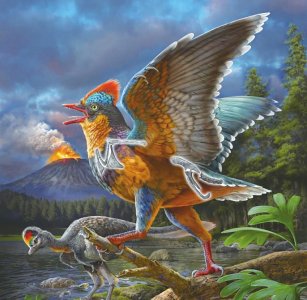
Core Insights - The article highlights significant breakthroughs in paleontology research in China, showcasing a series of discoveries that contribute to the understanding of evolutionary history and the origins of life on Earth [7][11]. Group 1: Avian Evolution - A new bird fossil named "Zhenghe Bamin Bird" was discovered in Zhenghe, Fujian, which pushes back the timeline for the emergence of modern bird body structures by nearly 20 million years, indicating that key evolutionary processes were already underway during the Jurassic period when dinosaurs dominated [8]. - A new specimen of Archaeopteryx, known as the "Chicago specimen," provides critical evidence for the evolution of skulls and flight adaptations during the transition from dinosaurs to birds, showcasing well-preserved bones, soft tissues, and feathers [8]. Group 2: Dinosaur Origins - The discovery of Wushi Wudinglong in Chuxiong, Yunnan, represents the oldest known sauropod dinosaur in East Asia, dating back approximately 200 million years to the early Jurassic period, thus extending the fossil record of Chinese dinosaurs [9]. - Research on two ancient fossils revealed new evidence regarding the evolution of jaw joints from reptiles to mammals, with the Chuan Nan Duozhi Beast displaying a unique jaw joint morphology, indicating that this evolutionary path was not singular [9]. Group 3: Human Ancestry - The successful capture and sequencing of over a hundred ancient human genomes from Yunnan clarified the genetic contribution of a mysterious group known as the "ghost ancestors" to the Tibetan Plateau population [10]. - Innovative methods in ancient protein and DNA analysis confirmed that a nearly complete human skull fossil found in Harbin, Heilongjiang, belongs to the Denisovans, providing a clearer depiction of this extinct human lineage [10]. - Research on the digital reconstruction of the skull of the "Yunxian Man" revealed that it is an early representative of the Dragon Man lineage, suggesting that the divergence of modern Homo sapiens from other human lineages occurred around 1 million years ago, significantly altering the timeline of human evolution [10].
科学与健康|改写生命演化史!2025我国古生物学研究在多领域取得突破
Xin Hua She· 2025-12-19 10:37
Core Insights - China's paleontology research has made significant breakthroughs in various fields, rewriting the history of evolution and contributing to global research on the origins of life [1][3][4] Group 1: Evolutionary Discoveries - A new bird fossil named "Zhenghe Bamin Bird" was discovered in Fujian, pushing back the timeline for the emergence of modern bird body structures by nearly 20 million years, indicating that key evolutionary processes for birds began during the Jurassic period [1] - The "Chicago Specimen" of Archaeopteryx, discovered through collaboration between Chinese and American researchers, provides critical evidence for the evolution of skulls and flight adaptations during the transition from dinosaurs to birds [2] Group 2: Dinosaur and Mammal Evolution - The discovery of Wushi Wudinglong in Yunnan represents the oldest known sauropod dinosaur in East Asia, dating back approximately 200 million years, thus extending the fossil record of Chinese dinosaurs [3] - Research on two ancient fossils revealed new evidence regarding the evolution of jaw joints from reptiles to mammals, demonstrating that this evolutionary path was not singular [3] Group 3: Human Ancestry Research - The successful capture and sequencing of over a hundred ancient human genomes in Yunnan clarified the genetic contribution of the "ghost ancestors" to the Tibetan Plateau population [4] - Innovative methods in ancient protein and DNA analysis confirmed that a nearly complete human skull found in Harbin belongs to the Denisovans, providing a clearer understanding of this extinct human group [4] - Digital reconstruction of the skull of Hubei Yuncheng Man 2 revealed that it is an early representative of the Dragon Man lineage, significantly advancing the timeline for the divergence of modern humans and other hominins to around 1 million years ago [4]
从一块琥珀,怎样“看见”一片热带森林(唠“科”)
Ren Min Ri Bao· 2025-06-27 22:12
Group 1 - The collaboration between Chinese and American scientists has led to the discovery of a new Archaeopteryx specimen, providing critical evidence for the evolution of skulls and flight adaptations during the key transition from dinosaurs to birds [1] - New technologies, such as CT scanning, are accelerating the research in paleobiology, allowing for detailed reconstruction of fossilized specimens and revealing internal structures while preserving their integrity [1][2] - The use of laser confocal microscopy and transmission electron microscopy has become common in paleobiology, enabling researchers to analyze microstructures and create 3D digital models of ancient organisms, contributing to the understanding of insect color evolution [2] Group 2 - The transformation of earth system science in the digital age is leading to the establishment of comprehensive paleobiological databases and big data analysis, which provide a macro perspective on biological evolution and ancient environments [3] - The GBDB and OneStratigraphy databases, led by Chinese scientists, offer robust data support for exploring changes in biodiversity over deep time, revealing the evolutionary history of early life on Earth [3] - The integration of modern technology with ancient disciplines is driving the advancement of paleobiology, creating new growth points for the field [4]