可变几何(variable geometry)

Search documents
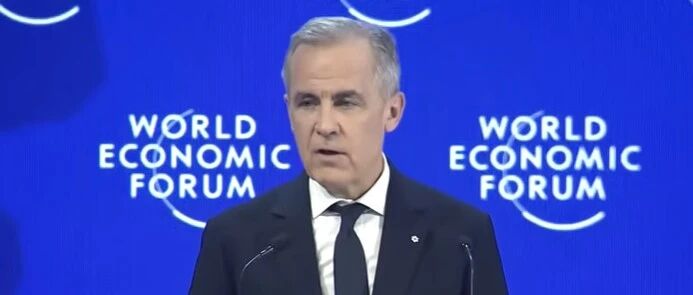
加拿大总理卡尼重磅演讲:基于规则的秩序已死,中等强国应团结行动,抵制某些大国胁迫
华尔街见闻· 2026-01-21 08:41
Core Viewpoint - Canada strongly opposes the U.S. imposing tariffs to acquire Greenland, highlighting the threat to collective problem-solving frameworks like the WTO and UN due to the use of tariffs as leverage by major powers [1][20]. Group 1: International Order and Middle Powers - Mark Carney warns that the post-World War II rules-based international order is disintegrating, entering an era of zero-sum games among major powers, where weaker nations suffer [2][3]. - Carney calls for middle powers to abandon the illusion that compliance can ensure security and instead take collective action against the coercion of hegemonic states [3][10]. - He emphasizes the need for middle powers to form new alliances to counteract the weaponization of trade, finance, and supply chains by hegemonic nations [4][10]. Group 2: Strategic Shift of Canada - Canada is fundamentally shifting its strategic posture towards "value-based realism," actively seeking to build hard power and diversify its relationships rather than waiting passively for global improvement [13]. - Carney outlines significant reforms, including a commitment to double defense spending by the end of the decade, investing in submarines and advanced radar systems [14]. - Canada is diversifying its trade relationships, having established new strategic partnerships with China and Qatar, and is negotiating free trade agreements with India, ASEAN, Thailand, and the Philippines [15]. Group 3: Response to U.S. Hegemony - Carney implicitly criticizes U.S. hegemony, particularly in response to Trump's claims over Greenland and related tariff threats, reaffirming Canada's commitment to sovereignty in the Arctic [20]. - He urges middle powers to stop applying double standards when addressing economic intimidation from different sources, advocating for a unified stance [21]. - Carney concludes that nostalgia for the old order is not a strategy, urging nations to recognize reality and build domestic economic strength and international diversification to assert principled positions [21].