名单造假

Search documents
新闻多一度丨梳理“最忙五人组”:“万能人生”背后谁在造假?
Xin Jing Bao· 2025-12-08 09:28
Core Viewpoint - The "Most Busy Five" incident highlights systemic issues in public procurement and administrative processes, revealing a pattern of using fictitious names in various official documents and events, raising concerns about compliance and oversight in public sector operations [3][26][30]. Group 1: Incident Overview - The "Most Busy Five" names appeared in multiple official documents, including procurement evaluation committees and administrative penalty lists, leading to public scrutiny and ridicule [3][5][8]. - The names were sourced from the "10000 Chinese Common Names Database," indicating a reliance on fictitious identities in official processes [2][6][8]. Group 2: Responses from Authorities - Authorities in Hubei and Liaoning provinces acknowledged the use of false names in official documents and initiated investigations, with commitments to rectify the issues and hold responsible parties accountable [5][14][21]. - The response from the "Hua Xia Cup" calligraphy competition organizers included an apology and a promise to refund entry fees due to the discovery of fabricated award lists [16][19]. Group 3: Systemic Issues and Recommendations - The incidents expose deeper systemic problems, such as inadequate oversight, lack of compliance with regulations, and a culture of "paper compliance" rather than genuine adherence to procedural integrity [26][30][32]. - Experts suggest enhancing transparency in public procurement processes, establishing robust verification mechanisms, and fostering a culture of accountability to prevent future occurrences of similar issues [30][31][33].

“全网最忙五人组”何以轻松通过层层审核?
Yang Guang Wang· 2025-12-07 06:51
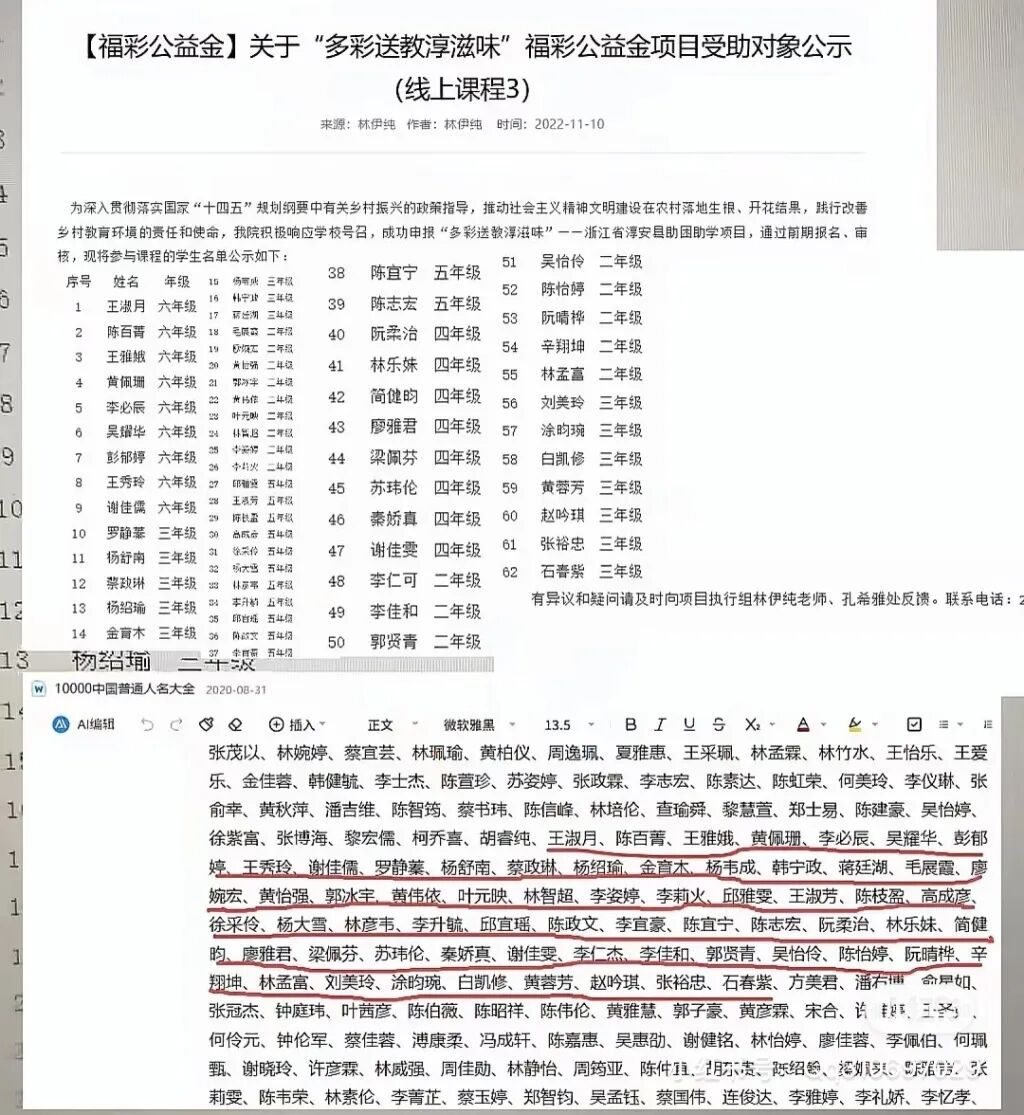
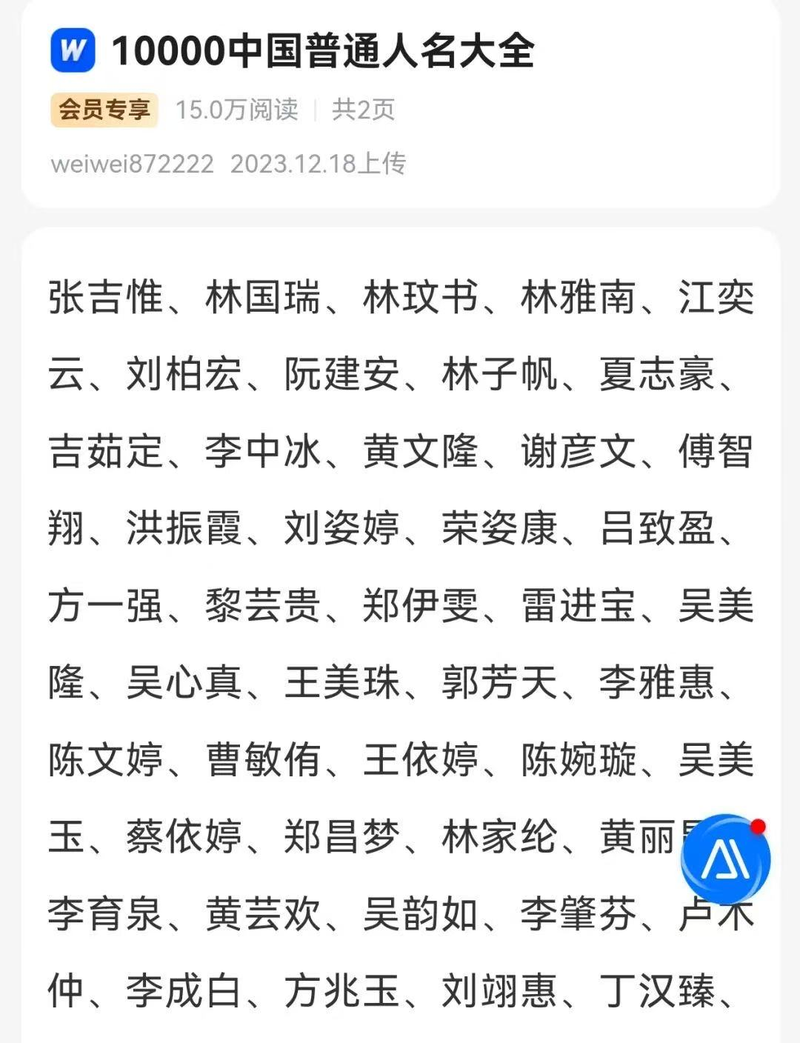
Core Viewpoint - The recent discovery of fake names used in various government procurement announcements and public lists has raised significant concerns about the integrity of public information and the processes involved in these announcements [1][5]. Group 1: Incident Overview - A list titled "10000 Chinese Common Names" from Baidu Wenku was found to be frequently used in government procurement announcements, award lists, and public information, leading to public outcry over the use of "fake names" [1]. - Hangzhou Normal University acknowledged that staff had fabricated names for a public welfare project, using names from the internet instead of actual beneficiaries, resulting in a lack of authenticity in the published lists [2][3]. Group 2: Financial Details - The project in question had a total funding of 4.5 million yuan (approximately 0.65 million USD), aimed at supporting left-behind children through various educational initiatives [2]. - The actual expenditures included 1.5 million yuan for library resources, 933,990 yuan for course development, and 100,536 yuan for learning supplies, among other allocations [2]. Group 3: Broader Implications - The issue of name duplication extends beyond Hangzhou Normal University, with similar instances reported in procurement announcements from other government bodies, indicating a systemic problem [3][5]. - The integrity of public procurement processes is crucial, as the selection of evaluation experts must be random and transparent to ensure fairness and compliance [4]. Group 4: Recommendations for Improvement - Experts suggest that to combat the issue of fake names, there should be enhanced transparency in the entire process of public information disclosure, particularly in critical stages and operational details [5][6]. - There is a call for both self-examination by government departments and top-down supervision to identify whether these issues are isolated incidents or indicative of a broader systemic failure [6].
帮扶留守儿童的福彩公益项目,受助名单竟照搬百度文库人名,杭州师范大学道歉:工作人员弄虚作假,简单采用网络名单,将严肃处理
Mei Ri Jing Ji Xin Wen· 2025-12-06 11:08
Group 1 - The core issue revolves around the publicized list of beneficiaries for the "Colorful Teaching" project funded by the Welfare Lottery, which was found to match names from a document titled "10000 Chinese Common Names" on Baidu Wenku, raising concerns about authenticity [1][8] - The project, initiated by the Alumni Association of Hangzhou Normal University, received a total funding of 4.5 million yuan, aimed at supporting left-behind children through various educational resources and activities [5][6] - Following public scrutiny, the university acknowledged the discrepancies in the beneficiary list, attributing it to staff negligence and a failure to adhere to proper protocols during the project's implementation [6][7] Group 2 - The university's response included a formal apology and a commitment to investigate the matter thoroughly, indicating that the staff involved would face serious consequences for their actions [4][7] - The project was intended to run from June 2022 to June 2023, focusing on improving educational conditions for rural children, including the purchase of books and teaching materials [5][6] - The incident highlights broader issues regarding the integrity of public project funding and the potential misuse of names in official documents, as seen in other cases involving government procurement and award lists [8][19]