含毒农药违规使用

Search documents
湖北天门回应“菜商使用含毒农药”:尚未上市,已传唤当事人
Nan Fang Du Shi Bao· 2026-01-20 02:40
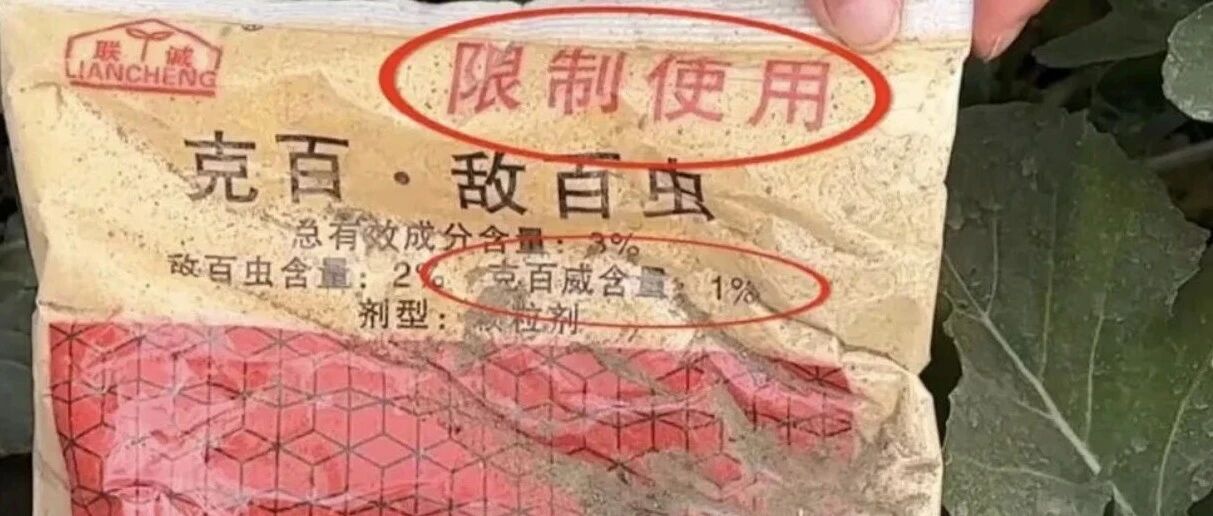
Core Viewpoint - The issue of individual vegetable vendors illegally using toxic pesticides has raised significant concern, prompting a swift investigation by local authorities in Tianmen City, Hubei Province [1] Group 1: Investigation and Response - The Tianmen Municipal Party Committee and government have established a joint investigation team to address the issue and have summoned the involved growers for questioning [1] - Following consumer reports, the investigation revealed that some vendors and enterprises are still selling the banned toxic pesticide, Chlorpyrifos, which is prohibited for use on vegetables [1] - The investigation team has conducted sampling and testing of the vegetables grown by the implicated farmer, ensuring evidence preservation and increasing inspection frequency for pesticide sales and vegetable quality across the city [1] Group 2: Regulatory Context - Chlorpyrifos is classified as a toxic pesticide and is banned for use on crops, with production of related formulations set to be prohibited starting June 1, 2024 [1] - The discovery of multiple opened pesticide packaging containing 1% Chlorpyrifos in a village's vegetable field highlights ongoing compliance issues within the agricultural sector [1]
央视曝光后,天门市委市政府迅速成立联合调查组
Xin Jing Bao· 2026-01-20 01:32
Group 1 - The Hubei Tianmen Agricultural and Rural Bureau has launched an investigation into reports of illegal pesticide use, specifically focusing on the case of a grower named Luo, whose vegetables are still in the growth stage and have not yet been marketed [1] - A joint investigation team has been established to conduct sampling and testing of the vegetables grown by Luo, while increasing inspection frequency for pesticides sold in the city to prevent non-compliant vegetables from entering the market [1] - The police have summoned Luo for investigation, and there is a public acknowledgment of the media and public's role in monitoring the situation [1] Group 2 - Reports indicate that some merchants and enterprises are still illegally selling pesticides that are banned or restricted, including "Kebaiwei," which is prohibited for use on vegetables and will be banned for production starting June 1, 2024 [1] - In a separate report, it was found that a grower in Tianmen was using "Kebaiwei" pesticide, which contains 1% of the toxic substance, raising concerns about the safety of the vegetables produced in that area [2] - The grower admitted to using the banned pesticide and claimed to have access to it through certain channels, highlighting ongoing issues with compliance in pesticide regulations [2]
曝光:个别菜商违反国家规定使用含毒农药
新华网财经· 2026-01-19 05:46
Core Viewpoint - The article highlights the ongoing illegal sale and use of toxic pesticides, specifically chlorpyrifos, in violation of national regulations aimed at ensuring food safety and environmental protection [2][3]. Group 1: Regulatory Context - Chlorpyrifos is classified as a broad-spectrum insecticide and is prohibited for use on vegetables, fruit trees, tea, and traditional Chinese medicinal herbs according to official announcements [3]. - Starting from June 1, 2024, the registration of products containing chlorpyrifos will be revoked, and production will be banned, with a complete prohibition on sales and usage by June 1, 2026 [4]. Group 2: Illegal Practices - Reports indicate that some vendors are still selling chlorpyrifos, with evidence found in Hubei Province where it was used on vegetables despite its prohibition [5][9]. - Farmers are aware of the risks associated with consuming vegetables treated with these pesticides, leading them to avoid such produce [7]. - Investigations revealed that vendors are using deceptive practices, such as falsifying production dates to evade regulatory scrutiny [16]. Group 3: Market Dynamics - The investigation uncovered that chlorpyrifos is being sold at agricultural fairs and through various channels, with vendors openly offering it to vegetable growers [11][12]. - Some vendors are aware of the toxicity of chlorpyrifos but continue to sell it to meet demand, indicating a significant market for these banned substances [21][23]. - The article also mentions the sale of other banned pesticides, such as methamidophos, with vendors employing similar tactics to avoid detection [30][32].