
呼唤和平

Search documents
用画笔重现历史 用艺术连接友谊(环球热点)
Ren Min Ri Bao Hai Wai Ban· 2025-12-22 22:46
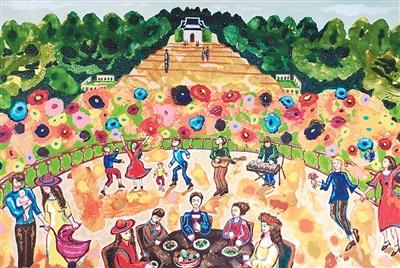
Core Viewpoint - The article highlights the artistic contributions of Slovak painter Jaro Šulej, emphasizing his efforts to use art as a medium to commemorate historical events, particularly the Nanjing Massacre, and to foster cultural exchange between Slovakia and China [4][5][6]. Group 1: Artistic Contributions - Jaro Šulej has created a series of artworks titled "War and Peace," which were exhibited at the Nanjing Massacre Memorial Hall, aiming to depict the horrors of war and the beauty of peace [5][10]. - His artworks reflect a strong emotional response to the historical events he studied, particularly the Nanjing Massacre, and he spent a year researching and creating these pieces [5][6]. - A total of 30 paintings were created for the exhibition, with 25 being permanently collected by the memorial, showcasing both the dark aspects of war and the light of peaceful living [5][10]. Group 2: Cultural Exchange - Šulej has been actively involved in cultural exchanges between Slovakia and China, participating in various exhibitions and events, including the Shanghai World Expo and the China International Import Expo [4][10]. - His recent participation in the China International Import Expo allowed him to showcase six of his artworks, which symbolize the cultural connection between Slovakia and China [10][11]. - The artist's works have inspired mutual interest in travel and cultural understanding between Slovak and Chinese people, with many expressing a desire to visit each other's countries after viewing his art [11]. Group 3: Personal Experiences and Observations - Since his first visit to China in 2010, Šulej has traveled extensively across the country, gathering inspiration from various cities and cultural experiences [7][8]. - He has noted significant advancements in China, particularly in technology and infrastructure, which have influenced his artistic perspective [8]. - His favorite city in China is Hangzhou, where he has enjoyed local cuisine and cultural experiences, further enriching his understanding of Chinese culture [7].

“对历史罪行的无知是一种罪”——日本民间团体坚守相模湖水库强征劳工真相
Xin Hua She· 2025-07-28 09:42
Core Viewpoint - The article highlights the tragic history of laborers from China, Korea, and other countries who suffered and died during the construction of the Sagami Lake Reservoir in Japan, emphasizing the importance of remembering and acknowledging this dark chapter in history [1][2][4]. Group 1: Historical Context - The Sagami Lake Reservoir, Japan's first multipurpose artificial lake, was constructed between 1940 and 1947, utilizing 3.6 million laborers, including nearly 300 Chinese individuals forcibly taken by the Japanese military [1]. - The harsh working conditions led to numerous fatalities among the laborers, with 28 documented Chinese laborers losing their lives during the construction [1]. Group 2: Memorial Activities - A memorial event was held on July 27, attended by over 350 participants, including local residents, students, and representatives from various governments, to honor the deceased laborers [1][2]. - The Sagami Lake Historical Records Association was established in 1976 to document the history of the laborers and has been conducting annual memorial activities since 1979 [2]. Group 3: Advocacy for Historical Truth - The article emphasizes the efforts of individuals like Hashimoto Toshiko, a founding member of the Historical Records Association, who advocate for the recognition of the suffering endured by the laborers [2][3]. - The memorial site includes a "Lake Monument" inscribed with the names of the deceased laborers, symbolizing the commitment to preserving this historical truth [2]. Group 4: Reflection on Historical Responsibility - The narrative stresses the importance of confronting negative historical events rather than concealing them, as articulated by Hashimoto, who reflects on the moral responsibility of acknowledging past injustices [3][4]. - The article concludes with a call to remember history as a means to foster peace and prevent the repetition of past atrocities, particularly in light of the 80th anniversary of the victory in the World Anti-Fascist War [4].