和合

Search documents
妇建“共联体”组团共富 儿童“观察团”童语献策
Xin Lang Cai Jing· 2026-01-06 19:29
Group 1 - The core idea of the articles revolves around the initiatives taken in Taizhou, Zhejiang Province, to promote women's empowerment, child welfare, and community development through collaborative efforts and innovative programs [1][2][3][4][5][6][7] Group 2 - The "Dongli Home" initiative, led by Wang Xuejuan, has provided care and support to nearly 300 left-behind children over the past 20 years, highlighting the importance of community involvement in child welfare [1] - The Taizhou Women's Federation has implemented a "three major driving forces" strategy to enhance urban development, focusing on integrating women's contributions into community building and child-friendly city initiatives [1][2] - The establishment of the "Women's Joint Body" in Tian Tai County has successfully mobilized rural women to participate in local economic development, creating a 2,000-acre mugwort planting base that has become a source of income for villagers [2][3] - The "Hehe Family Mediation Hall" in Huangyan District has resolved 672 family disputes, showcasing the effectiveness of community-based mediation services in addressing family conflicts [3][4] - The "Hehe Family Healing Base" aims to shift from reactive conflict resolution to proactive prevention of family disputes, integrating traditional practices with modern technology [4] - The "Hehe Taizhou" initiative emphasizes children's involvement in urban governance, with various children's observation groups actively participating in city planning and improvement projects [5][6] - The establishment of 124 children's observation groups across Taizhou has enhanced children's engagement in urban development, ensuring their voices are heard in community decision-making [6]
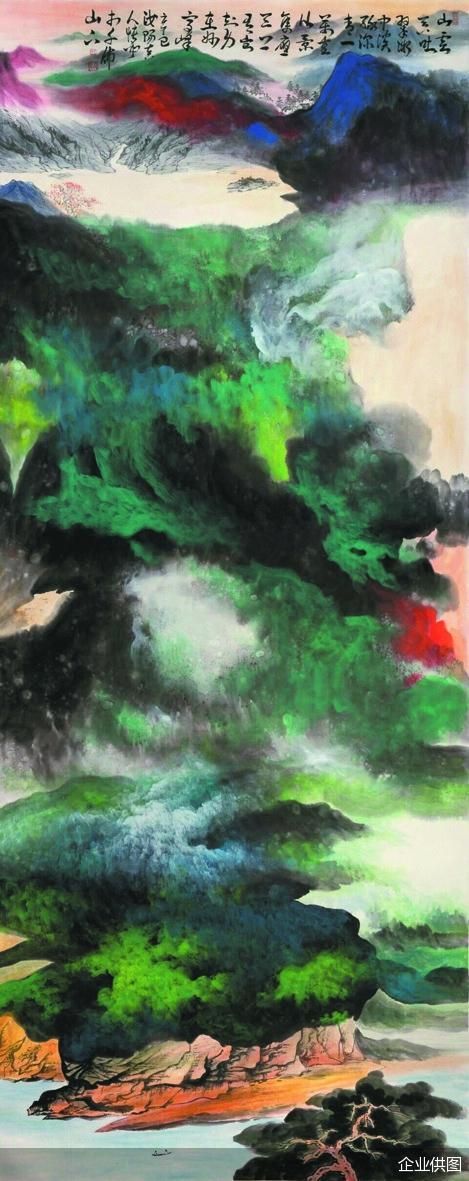
孙博文的和合之力与色彩之舞
Bei Jing Shang Bao· 2025-12-25 13:50
Core Viewpoint - The article discusses the artistic contributions of Sun Bowen, particularly in the context of modern Chinese ink painting, highlighting his innovative use of color and methodology in addressing the anxieties of modernity in Chinese art [1][4][8]. Group 1: Concept of "Hehe" (Harmony) - "Hehe" is presented as a core strategy for Sun Bowen's response to the modernity anxiety in 20th-century Chinese painting, addressing the dual concerns of "loss of tradition" and "otherness" [4]. - Sun Bowen's approach is characterized by a synthesis of traditional Chinese techniques and Western influences, avoiding the binary of either realism or abstraction [4]. - The concept of "Hehe" allows for a higher-dimensional balance of contradictions, providing a non-Western solution to the modern transformation of ink painting [4]. Group 2: Color Development - Sun Bowen's color practice is analyzed in three stages: "pattern - symbol - culture," representing a "triple jump" in his artistic evolution [5][7]. - The first stage involves transitioning from traditional blue-green landscapes to "bounded color painting," where color begins to define form rather than merely filling it [5]. - The second stage sees the development of his unique "color dot system," influenced by techniques from other art forms, creating a distinctive visual language [6]. - The third stage marks a shift from "visual stimulation" to "psychological symbolism," where color increasingly expresses emotional states and philosophical reflections [7]. Group 3: Artistic Legacy - In just five years, Sun Bowen elevated color from a secondary role to a primary focus in expressive landscapes, using "Hehe" to reconcile traditional and modern, Eastern and Western elements [8]. - His work suggests that the modernization of Chinese painting does not require the abandonment of traditional techniques or complete Westernization, but can be achieved through a harmonious integration of media, imagery, and spirit [8]. - Sun Bowen's legacy offers a valuable "Chinese solution" for the increasingly diverse yet fragmented global art scene, emphasizing the need for ongoing theoretical and educational engagement with his work [8].