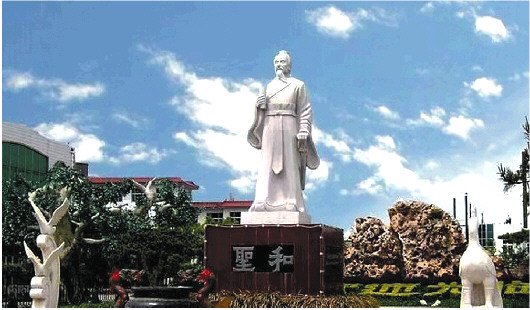
和圣

Search documents
柳下惠真的能“坐怀不乱”吗?
Xin Lang Cai Jing· 2025-12-19 17:24
Core Viewpoint - The article explores the life and legacy of Liu Xia Hui, a historical figure from the Spring and Autumn period, emphasizing his moral integrity and the evolution of his image over time, particularly the story of "sitting in harmony" which symbolizes his character [2][6][10]. Group 1: Historical Background - Liu Xia Hui (720 BC - 621 BC) was a descendant of the Lu state royal family, known for his high moral standards and adherence to Zhou rites, becoming a model of virtue in Confucianism [3][4]. - His birth and death dates are documented in historical texts, with a consensus on his lifespan being around 100 years, although some sources suggest he may have died at 93 [3][4]. Group 2: Career and Challenges - Liu Xia Hui served as a "Shi Shi" (a judicial officer) in Lu, a position that, while significant, often put him at odds with the powerful, leading to his repeated demotions, referred to as "three dismissals" [8][9]. - His commitment to principles and the Zhou rites often resulted in political struggles, as he faced opposition from emerging powers in Lu, reflecting the tension between traditional values and contemporary political realities [9][10]. Group 3: Moral Legacy - The story of "sitting in harmony" illustrates Liu Xia Hui's moral character, symbolizing integrity and self-control, although its origins are traced back to later interpretations rather than historical fact [6][7]. - Liu Xia Hui's persona as the "He Sheng" (Saint of Harmony) is derived from his overall moral qualities, which include being principled, self-sufficient, and deeply connected to his homeland, contrasting with the more flexible approach of later figures like Confucius [10][11].