道德修养

Search documents
课程思政融入古代汉语教学的实践路径
Xin Lang Cai Jing· 2026-02-12 19:35
Core Viewpoint - The integration of ideological and political education (思政) into the ancient Chinese language curriculum is essential for enhancing the quality of talent cultivation and aligning with the fundamental task of moral education [1] Group 1: Curriculum Development - The ancient Chinese language course should incorporate ideological elements to unify knowledge transmission, value guidance, and skill development, thereby enriching the teaching content [1] - The course aims to enhance students' language analysis, reading, and comprehension abilities through the study of classical texts and various knowledge modules [1] Group 2: Ideological Themes - The curriculum will emphasize themes such as "supporting the party's leadership and promoting national harmony" by including regional language policies and the role of Chinese characters in cultural identity [2] - It will also focus on "appreciating the beauty of language and educating through aesthetics" by enhancing students' understanding of phonetics and rhetoric through professional demonstrations [2] - The direction of "learning from ancient wisdom and inheriting excellent culture" will be highlighted by analyzing ancient Chinese character creation and comparing it with world cultures [2] Group 3: Teaching Methodology - A student-centered, mixed and inquiry-based teaching model will be adopted to stimulate students' interest in autonomous learning and facilitate the integration of ideological content [3] - Pre-class activities will include online resources to help students identify ideological elements in texts, while in-class discussions will promote collaborative learning [4] - Post-class assignments will encourage practical applications of ancient Chinese language knowledge, fostering a comprehensive learning loop [4] Group 4: Assessment Mechanism - The evaluation mechanism for the ancient Chinese language course will focus on diverse assessment methods, emphasizing both process-oriented and outcome-oriented evaluations [5] - Continuous assessment will include tasks such as online reports and presentations, aimed at evaluating students' ability to integrate ideological elements into their learning [5] - The final examinations will increase the weight of ideological content, assessing students' understanding of traditional Chinese culture embedded in ancient texts [5]
柳下惠真的能“坐怀不乱”吗?
Xin Lang Cai Jing· 2025-12-19 17:24
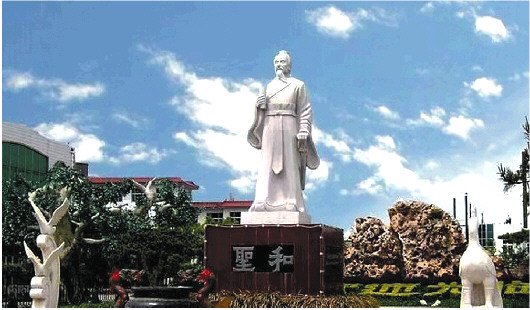
Core Viewpoint - The article explores the life and legacy of Liu Xia Hui, a historical figure from the Spring and Autumn period, emphasizing his moral integrity and the evolution of his image over time, particularly the story of "sitting in harmony" which symbolizes his character [2][6][10]. Group 1: Historical Background - Liu Xia Hui (720 BC - 621 BC) was a descendant of the Lu state royal family, known for his high moral standards and adherence to Zhou rites, becoming a model of virtue in Confucianism [3][4]. - His birth and death dates are documented in historical texts, with a consensus on his lifespan being around 100 years, although some sources suggest he may have died at 93 [3][4]. Group 2: Career and Challenges - Liu Xia Hui served as a "Shi Shi" (a judicial officer) in Lu, a position that, while significant, often put him at odds with the powerful, leading to his repeated demotions, referred to as "three dismissals" [8][9]. - His commitment to principles and the Zhou rites often resulted in political struggles, as he faced opposition from emerging powers in Lu, reflecting the tension between traditional values and contemporary political realities [9][10]. Group 3: Moral Legacy - The story of "sitting in harmony" illustrates Liu Xia Hui's moral character, symbolizing integrity and self-control, although its origins are traced back to later interpretations rather than historical fact [6][7]. - Liu Xia Hui's persona as the "He Sheng" (Saint of Harmony) is derived from his overall moral qualities, which include being principled, self-sufficient, and deeply connected to his homeland, contrasting with the more flexible approach of later figures like Confucius [10][11].