唐代文化

Search documents
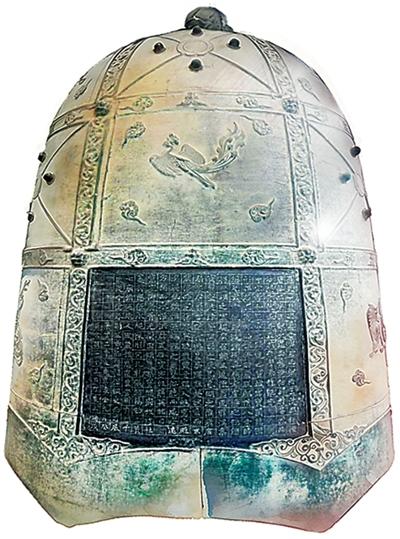
春晚钟声来自这里(文物有话说)
Ren Min Ri Bao· 2026-02-17 00:50
Core Viewpoint - The Jingyun Bell, a significant cultural artifact from the Tang Dynasty, symbolizes China's rich historical and artistic heritage, and continues to resonate with contemporary cultural identity through its association with the Spring Festival Gala [2][5]. Group 1: Historical Significance - The Jingyun Bell was cast in the second year of the Jingyun era (711 AD) during the Tang Dynasty, commissioned by Emperor Ruizong after a prophetic dream [2]. - It has been a part of Chinese cultural tradition, marking the New Year during the Spring Festival Gala since the 1980s [2]. - The bell's history includes being hidden during the Second Sino-Japanese War to protect it from destruction, and it was later housed in the Xi'an Beilin Museum [5]. Group 2: Artistic and Technical Features - The bell stands approximately 2.47 meters tall and weighs 6 tons, made from a copper-tin alloy using advanced casting techniques [3]. - It features intricate designs with 32 sound nipples that enhance its acoustic properties, producing a clear and resonant sound [4]. - The bell's surface is adorned with various auspicious motifs, including flying deities and mythical creatures, reflecting the artistic excellence of the Tang Dynasty [3]. Group 3: Cultural Value - The Jingyun Bell is recognized as a national treasure, classified as a first-class cultural relic, and is included in the list of artifacts prohibited from international exhibition [5]. - It serves as a multidimensional witness to Tang Dynasty politics, religion, art, and technology, embodying a vibrant cultural symbol that connects ancient and modern Chinese identity [5].

西安这家博物馆太会了!让唐代仕女俑“寻找李善德”
Xin Lang Cai Jing· 2025-08-21 03:56
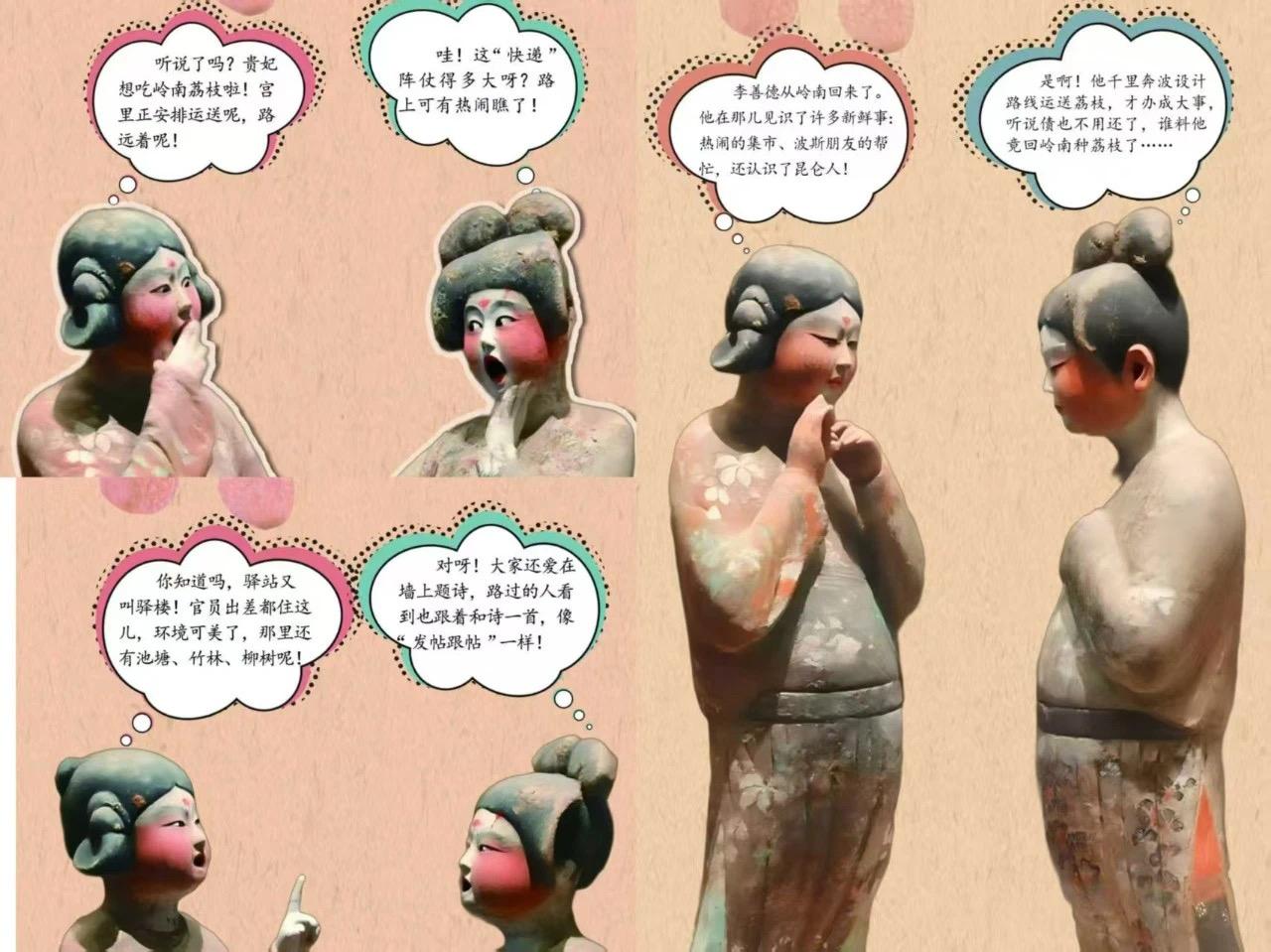
Core Viewpoint - The exhibition "Encountering the Tang Dynasty: The Splendor of the Chang'an Lychee Route" at the Xi'an Datang Xishi Museum highlights the historical significance of lychee tribute and the efficient transportation network that supported it, using the perspective of painted figurines to narrate the story of the "Tang Express Line" for lychee transportation [1][3]. Group 1: Exhibition Overview - The exhibition focuses on the historical fact of "lychee tribute," divided into three sections that explore the cultural and economic aspects of the Tang Dynasty through the lens of painted figurines [3]. - The opening section, "The Origin of the Lychee Mission," showcases the fashion trends of Tang women through exquisite painted figurines, reflecting social hierarchies and craftsmanship [5][10]. Group 2: Transportation System - The core section "Running Gears: The Courier Network of the Tang Dynasty" analyzes the efficient yet burdensome courier system behind lychee transportation, with 1,639 relay stations documented in the "Tang Liudian," including 260 water stations and 1,297 land stations [14][16]. - The figurines of inner servants represent the key figures in the transportation network, illustrating their roles in delivering orders and managing logistics within the imperial court [16][18]. Group 3: Social Life in Chang'an - The third section, "The Everyday Life Along the Lychee Route," presents a vivid portrayal of life in Chang'an, showcasing the diverse social groups that converged in the city, including foreign envoys and merchants [23][25]. - The exhibition features 80% of the artifacts on display for the first time, including various painted figurines that capture the vibrancy of daily life in the Tang Dynasty [30]. Group 4: Interactive Experience - To enhance visitor engagement, the exhibition includes a Tang Sancai pottery-making experience, allowing attendees to learn about ancient ceramic techniques under the guidance of professional restorers [34].
文博日历丨《长安的荔枝》中的文博彩蛋,你发现了吗?
Yang Shi Xin Wen· 2025-06-15 01:43
Group 1 - The drama "Lychee in Chang'an" is currently airing and showcases detailed costumes, makeup, and props that reflect the Tang Dynasty culture [1] - The character Shiqi Niang has a striking hairstyle reminiscent of the murals from the Mogao Caves and Tang Dynasty figurines [1] - The show features various hairstyles and clothing styles that are historically accurate, such as the double hanging bun for young girls [5] Group 2 - The male character He Youguang's outfit includes subtle patterns that align with the fashion trends of the Tang Dynasty [7] - The costumes in the show are closely aligned with historical artifacts, such as the deer-patterned brocade from the China Silk Museum [9] - The show has been noted for its high fidelity to historical designs, with 99% accuracy in the replication of patterns [12] Group 3 - Accessories like bags used by characters are also reflective of historical designs, linking modern fashion with Tang Dynasty practicality [14][16] - The drinking vessels featured in the show, such as the Tang Dynasty "suction cup," highlight the creativity of ancient Chinese pottery [20] - The performance elements, including dance and music, are depicted with attention to historical accuracy, enhancing the cultural experience [22][24] Group 4 - The narrative of "Lychee in Chang'an" serves as a slice of the grand history of the Tang Dynasty, enriching viewers' understanding of traditional Chinese culture [26]