四川科技创新

Search documents
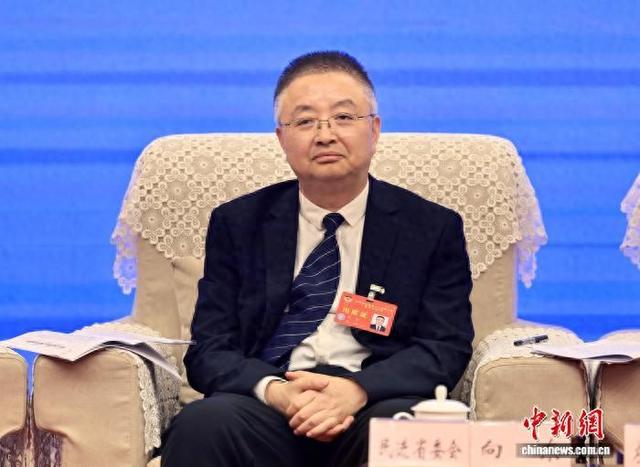
各民主党派省委会、省工商联和无党派人士代表接受联合采访
Xin Lang Cai Jing· 2026-02-04 18:26
Group 1 - The interview highlighted the importance of multi-party cooperation in Sichuan to promote Chinese-style modernization and shared successful practices in implementing the new type of party system [1] - The concept of "morning economy" was discussed, with suggestions for Sichuan to accelerate its development to tap into a new wave of cultural and tourism markets [1] Group 2 - The Minmeng Provincial Committee reported a record high of over 1,800 pieces of social sentiment information submitted to relevant departments, with an adoption rate exceeding 50%, providing valuable references for decision-making [2] - The Minjian Provincial Committee emphasized the need for strengthening basic software and enhancing regional collaboration and talent support to achieve high-quality development in the software and information services industry [2] - The Minjin Provincial Committee suggested focusing on foundational work and open coordination to enhance technological innovation in Sichuan during the 14th Five-Year Plan period [2] - The Nonggong Party Provincial Committee introduced an innovative public supervision initiative for ecological protection along the Yangtze River, enhancing community engagement in environmental conservation [2] Group 3 - The Zhigong Party's legal committee shared successful grassroots initiatives that addressed community issues through legal knowledge and public platforms [3] - The Jiusan Society focused on contributing to high-quality development in Sichuan through various forms of political participation and social service, planning to continue its efforts in science and technology [3] - The Provincial Federation of Industry and Commerce aims to strengthen its role as a bridge for private enterprises, providing support and suggestions to enhance their growth and social responsibility [3] - A representative from the non-partisan group emphasized the critical phase of cultural development in Sichuan, advocating for a strategy that integrates cultural confidence, industrial growth, and technological innovation [3]
民进四川省委会:“十五五”四川科创应实现三大转变
Xin Lang Cai Jing· 2026-02-04 14:18
Core Viewpoint - The Sichuan Provincial Committee of the Chinese People's Political Consultative Conference emphasizes the need for significant transformations in technological innovation during the 14th Five-Year Plan period, focusing on leading rather than following, enhancing systemic capabilities, and shifting from resource-driven to innovation-driven development [1][3]. Group 1: Key Transformations - The three major transformations suggested for Sichuan's technological innovation include moving from "following and running" to more "running and leading," from "point breakthroughs" to "system capability enhancement," and from "resource-driven" to "innovation-driven" [1][3]. - The key to achieving these transformations lies in focusing on the main line, solidifying the foundation, promoting integration, and fostering open collaboration [1][3]. Group 2: Strategic Focus Areas - Sichuan should align its efforts with the national strategy of high-level technological self-reliance, concentrating on core areas critical to national security and development [3]. - There is a need to strengthen basic research, particularly in mathematics and physics, and to establish cutting-edge interdisciplinary research platforms to encourage both curiosity-driven and application-oriented basic research [3]. Group 3: Integration and Collaboration - The Sichuan Provincial Committee suggests promoting deep integration of the innovation chain, industry chain, capital chain, and talent chain, enhancing the role of enterprises in technological innovation [3]. - Effective measures should be taken to facilitate knowledge flow and technology transfer between research institutions, universities, and enterprises [3]. Group 4: Key Areas for Development - The focus areas for Sichuan during the 14th Five-Year Plan should include optoelectronic information and intelligent perception, advanced manufacturing and high-end equipment, clean energy and carbon neutrality, biomedicine and health, aerospace technology and future transportation, as well as frontier and disruptive technologies [4].