固 - 固界面问题

Search documents
全固态电池,这次真有重大进展
3 6 Ke· 2025-10-11 02:47
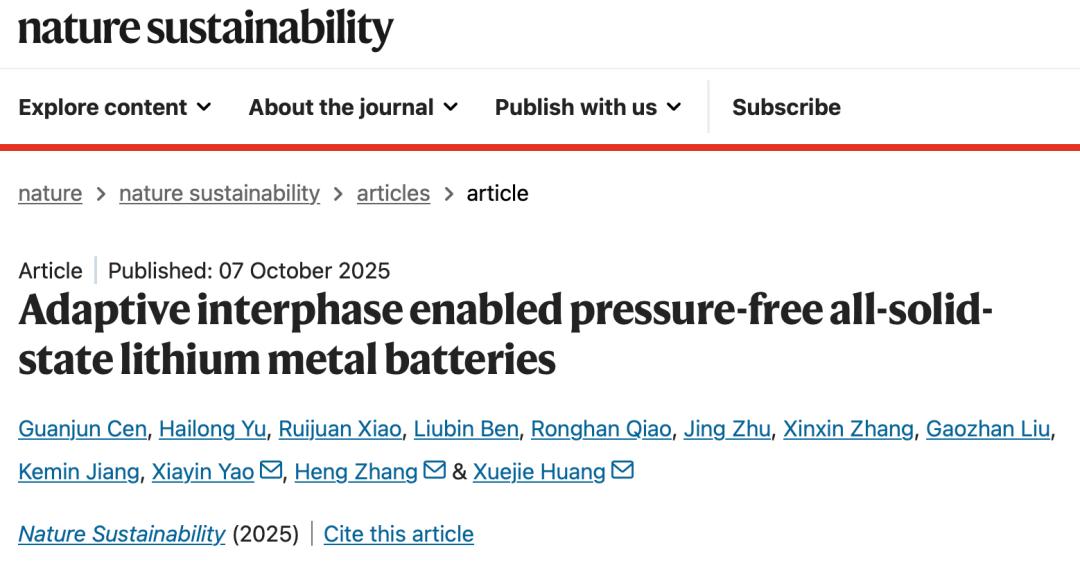
Core Insights - Recent breakthroughs in solid-state battery technology have been reported by multiple Chinese research teams, focusing on overcoming the "solid-solid interface" challenge, which is a significant barrier to commercialization [2][4][5] - The introduction of Dynamic Adaptive Interface (DAI) technology allows solid-state batteries to maintain stable cycling even under low or zero external pressure, achieving over 70% capacity retention after 300 cycles [2][5] - The advancements in solid-state batteries are still in the research phase, with experts estimating a potential timeline of 5 to 8 years for mass production, suggesting that large-scale commercialization may not occur until around 2030 [4][5] Research Breakthroughs - The research led by Huang Xuejie’s team at the Chinese Academy of Sciences has made significant progress in addressing the solid-solid interface issue, which has been a major challenge for solid-state lithium batteries [2][7] - Another team from the Institute of Metal Research has innovated at the molecular level to reduce interface impedance and enhance ion transport efficiency, with their findings published in Advanced Materials [2][16] - Tsinghua University’s team has developed a new fluorinated polymer electrolyte that significantly increases energy density, achieving 604 Wh/kg and 1027 Wh/L, nearly double that of current liquid electrolyte lithium batteries [14][16] Industry Implications - Despite the promising research, experts caution that the transition from laboratory breakthroughs to commercial applications remains a lengthy process, with significant challenges in manufacturing and cost still to be addressed [4][21] - Toyota, a leading player in the solid-state battery space, has set ambitious timelines for mass production, aiming for 2027-2028, while also investing heavily in partnerships and production facilities [18][21] - The solid-state battery technology race is ongoing, with various companies exploring different approaches, but the consensus is that solid-state batteries may only find niche applications in high-end markets, rather than becoming mainstream [21][23]