全固态电池商业化

Search documents
首条百吨级产线正式投产!研一硫化物固态电解质实现产业化
鑫椤锂电· 2025-11-30 00:40
Core Viewpoint - The article emphasizes the significant advancements made by Shenzhen Yanyi New Materials Co., Ltd. in the mass production of sulfide solid electrolytes, which are crucial for the commercialization of all-solid-state batteries, marking a breakthrough in China's core material sector [3][11]. Group 1: Breakthroughs in Production - Yanyi has achieved stable mass production of sulfide solid electrolytes, with a designed production capacity of 500 tons per year, addressing global challenges in low-cost large-scale manufacturing [3][6]. - The company has developed a unique element doping and structural design to enhance the room temperature ionic conductivity and air stability of sulfide electrolytes, overcoming significant engineering obstacles [5]. - Yanyi has established a vertically integrated supply chain by achieving low-cost, large-scale self-production of high-purity lithium sulfide, which is a key raw material affecting overall electrolyte costs [7]. Group 2: Quality Assurance and Performance - The company leverages decades of experience in high-nickel cathodes and lithium supplementation to ensure that mass production does not compromise performance, achieving a batch ionic conductivity deviation of less than 5% and purity above 99.9% [8]. Group 3: Market Potential and Future Applications - With the breakthrough in core materials, the industrialization of solid-state batteries is accelerating, with projections indicating that the Chinese solid-state battery market could exceed $4.5 billion by 2025, capturing over 40% of the global market share [10]. - The demand for solid-state batteries is driven by the need for long endurance, high safety, and lightweight solutions, particularly in low-altitude aircraft, humanoid robots, and high-end consumer electronics [10]. Group 4: Future Collaboration - Yanyi's successful mass production of sulfide solid electrolytes fills a gap in the domestic supply chain and provides a solid material foundation for the commercialization of all-solid-state batteries, indicating a commitment to collaborative innovation in the new energy sector [11].

大面积涨停!军工股,爆发!
证券时报· 2025-11-24 03:57
Core Viewpoint - The A-share market experienced a decline on November 24, 2023, while the defense and military sector saw significant gains, with multiple stocks hitting the daily limit up, highlighting a key market trend [1][2]. Group 1: A-share Market Performance - The A-share market overall declined, with the Shanghai Composite Index down by 0.34%, the Shenzhen Component down by 0.59%, and the ChiNext Index down by 0.77% [2]. - Sectors such as coal, non-ferrous metals, oil and petrochemicals, and basic chemicals were among the worst performers [2]. Group 2: Defense and Military Sector - The defense and military sector led the market with a rise of over 2%, with stocks like Aerospace Huanyu hitting the daily limit up at 20% [2][3]. - Other notable stocks included Aerospace Changfeng, Leike Defense, Zhongtian Rocket, Tianjian Technology, and China Shipbuilding Defense, all of which also reached the daily limit up [2]. - The sector has seen a maximum increase of 50% since September 24, indicating a shift in performance expectations as it approaches a phase of earnings realization by 2025 [3]. Group 3: Hong Kong Market Performance - The Hong Kong market rebounded, with the Hang Seng Index rising over 1% [10]. - GAC Group's stock surged by more than 13% during the session, driven by news regarding the company's solid-state battery production line [9][10]. Group 4: GAC Group Developments - GAC Group announced the completion and production of its solid-state battery pilot line, which is expected to significantly advance the commercialization of solid-state batteries in the electric vehicle sector [12].

港股异动 | 广汽集团(02238)高开近8% 全固态电池中试产线已正式建成并投产
Zhi Tong Cai Jing· 2025-11-24 01:57
Core Viewpoint - GAC Group has officially launched its all-solid-state battery pilot production line, marking a significant step towards achieving its goal of equipping vehicles with these batteries by 2026, thus advancing the commercialization of all-solid-state batteries in the electric vehicle industry [1] Group 1: Company Developments - GAC Group's stock opened nearly 8% higher and is currently up 7.91%, trading at HKD 3.41 with a transaction volume of HKD 12.29 million [1] - The all-solid-state battery pilot production line, located in Panyu, Guangzhou, has successfully completed the entire manufacturing process and is the first in the industry to achieve conditions for mass production of automotive-grade all-solid-state batteries with a capacity of over 60Ah [1] Group 2: Industry Impact - The energy density of the newly developed all-solid-state batteries is nearly double that of existing batteries, enabling vehicles with a range of over 500 kilometers to achieve over 1000 kilometers after usage [1] - GAC Group plans to conduct small-scale vehicle trials in 2026, with gradual mass production expected between 2027 and 2030, which could significantly impact the electric vehicle market [1]

广汽集团高开近8% 全固态电池中试产线已正式建成并投产
Zhi Tong Cai Jing· 2025-11-24 01:29
Core Viewpoint - GAC Group has officially launched its all-solid-state battery pilot production line, marking a significant step towards achieving its goal of equipping vehicles with these batteries by 2026, thus advancing the commercialization of all-solid-state batteries in the electric vehicle industry [1] Group 1: Company Developments - GAC Group's stock opened nearly 8% higher and is currently up 7.91%, trading at HKD 3.41 with a transaction volume of HKD 12.29 million [1] - The all-solid-state battery pilot production line, located in Panyu, Guangzhou, has successfully completed the entire manufacturing process and is the first in the industry to meet the conditions for mass production of automotive-grade all-solid-state batteries with a capacity of over 60Ah [1] Group 2: Industry Impact - The energy density of the newly developed all-solid-state batteries is nearly double that of existing batteries, enabling vehicles with a range of over 500 kilometers to achieve over 1000 kilometers after usage [1] - GAC Group plans to conduct small-scale vehicle trials in 2026, with gradual mass production expected between 2027 and 2030, which will significantly contribute to the advancement of the electric vehicle sector [1]
全固态电池2030年商用?这些大咖这样说
Di Yi Cai Jing· 2025-11-12 13:43
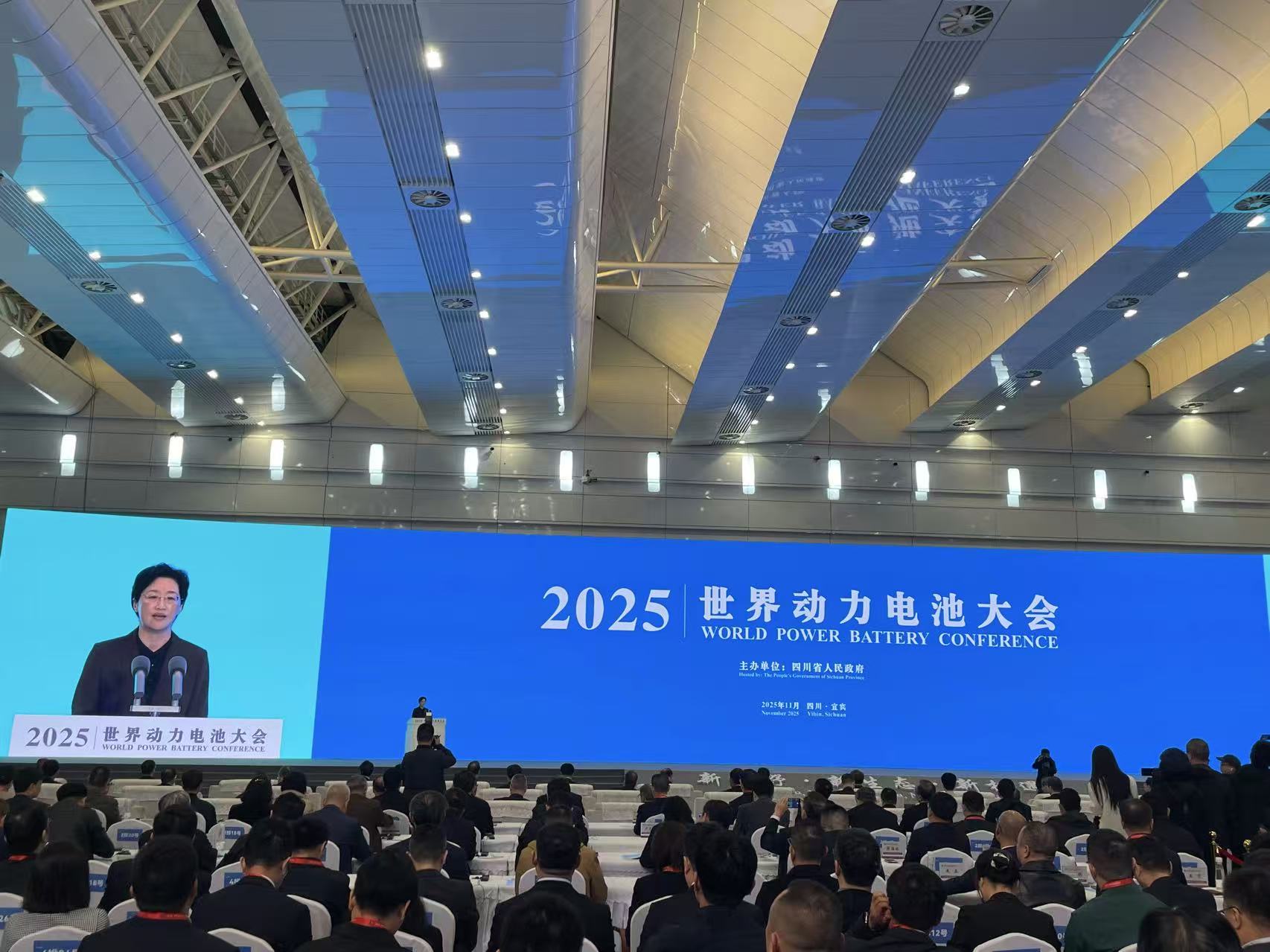
Core Insights - The concept of all-solid-state batteries is facing cautious responses from industry experts and entrepreneurs despite being popular in the capital market [1][3] - China's power battery industry has maintained its position as the world's largest for eight consecutive years, with significant sales and export growth [3] - The commercialization timeline for all-solid-state batteries is projected to be longer than anticipated, with estimates ranging from 2027 for small-scale demonstrations to as late as 2035 for large-scale commercialization [4][5] Industry Developments - In the first three quarters of this year, China's power battery sales reached 786 GWh, with exports exceeding 129 GWh, marking year-on-year growth of 48.9% and 32.75% respectively [3] - The industry is experiencing rapid technological advancements, with key innovations such as module-free battery packs and integrated battery chassis entering the market [3] - The focus on all-solid-state batteries is accompanied by the ongoing development of semi-solid batteries, which are expected to see increased application in the next 3-5 years [5] Expert Opinions - Industry leaders emphasize the need for a realistic perspective on the challenges facing all-solid-state batteries, including scientific, engineering, and cost-related hurdles [4][5] - There is a call for the industry to explore next-generation battery technologies rather than solely focusing on all-solid-state batteries, as the ultimate form of battery technology remains uncertain [5][6] - The potential of liquid batteries is still significant, with ongoing innovations expected to enhance their performance [5][6] Future Trends - A report presented at the conference outlines seven major trends in battery development, highlighting the rapid marketization of semi-solid batteries and the need for breakthroughs in all-solid-state battery technology [6] - By 2030, semi-solid batteries are expected to achieve a capacity density of over 450 Wh/kg, meeting high-performance automotive requirements [6] - The overall landscape for all-solid-state batteries is currently in a critical phase of scientific and industrial development, with expectations for pilot testing and small-scale applications by around 2030 [6][7] Conference Highlights - The 2025 World Power Battery Conference featured discussions on various industry topics, including battery recycling, quality enhancement, and international supply chain development [7] - The conference has become a significant platform for international collaboration in the battery and new energy vehicle sectors, with over 600 new technologies and products released in previous editions [7] - A total of 180 projects were signed at the conference, amounting to 861.3 billion yuan, covering key areas in green energy [7]

中科院物理研究所研究员黄学杰:研发“特殊胶水”,让全固态金属锂电池迈向产业化
Shen Zhen Shang Bao· 2025-10-29 06:29
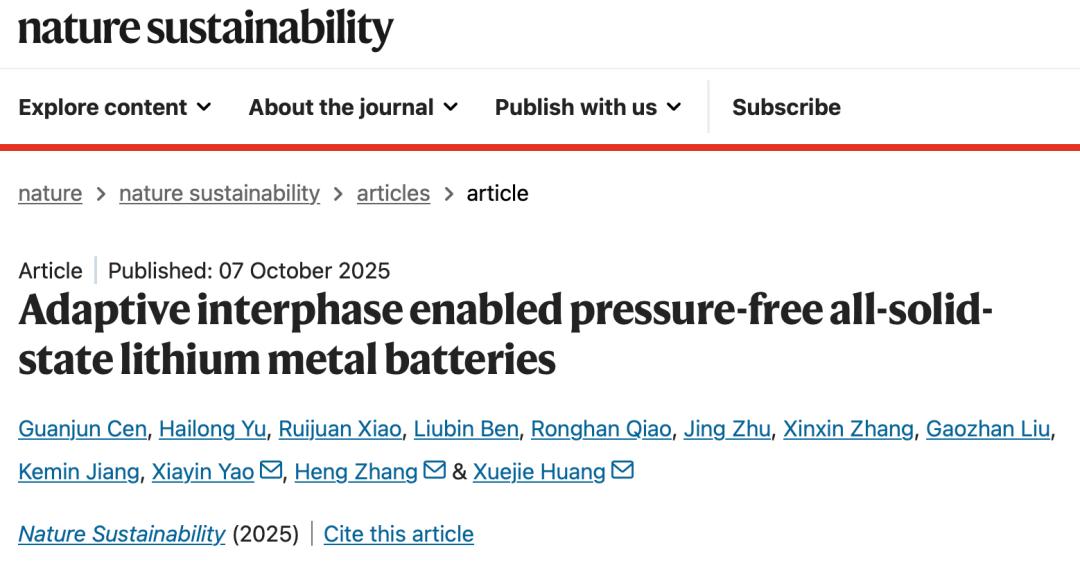
Core Insights - The research team led by Huang Xuejie from the Chinese Academy of Sciences has developed a breakthrough technology to address the long-standing issue of interface contact between electrolytes and lithium electrodes in all-solid-state lithium batteries, which is crucial for their commercialization [1][2][3] Group 1: Technology Breakthrough - The team introduced an anion regulation technology, likened to "special glue," which allows for dynamic self-adaptive interface technology, enabling tight contact between the electrolyte and electrode without external pressure [2][3] - The new approach involves incorporating iodine anions into the solid electrolyte, which helps fill micro-cracks and enhances battery stability, thus preventing short circuits caused by lithium dendrite formation [2][3] Group 2: Performance and Applications - Prototype batteries utilizing this technology have shown stable performance after hundreds of charge-discharge cycles, significantly surpassing existing battery levels [3] - The new design simplifies manufacturing, reduces material usage, and promises enhanced durability, with potential applications in humanoid robots, electric aviation, and electric vehicles [3] Group 3: Industry Impact and Future Outlook - The research has been recognized internationally as a decisive step in overcoming key bottlenecks in the commercialization of all-solid-state batteries [3] - Huang Xuejie emphasized the importance of the Guangdong-Hong Kong-Macao Greater Bay Area as a global hub for new materials, highlighting its robust manufacturing base and vibrant innovation ecosystem [5] - The industry is expected to see solid-state batteries reshape the energy landscape, particularly in sectors requiring safer and more efficient energy solutions [4][5]
全固态电池,这次真有重大进展
3 6 Ke· 2025-10-11 02:47
Core Insights - Recent breakthroughs in solid-state battery technology have been reported by multiple Chinese research teams, focusing on overcoming the "solid-solid interface" challenge, which is a significant barrier to commercialization [2][4][5] - The introduction of Dynamic Adaptive Interface (DAI) technology allows solid-state batteries to maintain stable cycling even under low or zero external pressure, achieving over 70% capacity retention after 300 cycles [2][5] - The advancements in solid-state batteries are still in the research phase, with experts estimating a potential timeline of 5 to 8 years for mass production, suggesting that large-scale commercialization may not occur until around 2030 [4][5] Research Breakthroughs - The research led by Huang Xuejie’s team at the Chinese Academy of Sciences has made significant progress in addressing the solid-solid interface issue, which has been a major challenge for solid-state lithium batteries [2][7] - Another team from the Institute of Metal Research has innovated at the molecular level to reduce interface impedance and enhance ion transport efficiency, with their findings published in Advanced Materials [2][16] - Tsinghua University’s team has developed a new fluorinated polymer electrolyte that significantly increases energy density, achieving 604 Wh/kg and 1027 Wh/L, nearly double that of current liquid electrolyte lithium batteries [14][16] Industry Implications - Despite the promising research, experts caution that the transition from laboratory breakthroughs to commercial applications remains a lengthy process, with significant challenges in manufacturing and cost still to be addressed [4][21] - Toyota, a leading player in the solid-state battery space, has set ambitious timelines for mass production, aiming for 2027-2028, while also investing heavily in partnerships and production facilities [18][21] - The solid-state battery technology race is ongoing, with various companies exploring different approaches, but the consensus is that solid-state batteries may only find niche applications in high-end markets, rather than becoming mainstream [21][23]

【科技日报】全固态金属锂电池固-固界面接触难题解决
Ke Ji Ri Bao· 2025-10-09 02:04
Core Insights - The research team has made significant progress in the study of all-solid-state lithium metal batteries by developing an anion regulation technology that creates a new interface between the electrode and electrolyte, allowing lithium ions to flow actively and fill gaps automatically, thus overcoming a major bottleneck for practical applications of solid-state batteries [3][4] Group 1: Research Findings - The new interface formed by the introduction of iodine ions in the sulfide electrolyte allows for self-repairing capabilities, ensuring tight contact between the electrode and electrolyte without the need for external pressure [4] - The prototype batteries developed using this technology have shown stable and superior performance after hundreds of charge-discharge cycles under standard testing conditions, significantly surpassing existing similar batteries [4] Group 2: Industry Implications - This breakthrough is expected to accelerate the development of high-energy-density all-solid-state lithium metal batteries, with potential applications in humanoid robots, electric aviation, and electric vehicles, providing safer and more efficient energy solutions [4] - The new technology simplifies manufacturing processes and reduces material usage, with the potential to achieve energy densities exceeding 500 watt-hours per kilogram, potentially doubling the battery life of electronic devices [4]

两大巨头宣布,全固态电池产线建成
DT新材料· 2025-09-16 16:04
Group 1: SK On Developments - SK On has officially launched its all-solid-state battery pilot plant in Daejeon, South Korea, aimed at sample production and product quality verification, marking a significant step towards sustainable development [3] - The company plans to commercialize all-solid-state batteries by 2029, one year ahead of the original target of 2030, focusing on achieving an energy density of 800Wh/L, with future plans to increase it to 1000Wh/L [3] - The new plant utilizes SK On's proprietary Warm Isostatic Pressing (WIP) technology, which enhances electrode density and battery performance under varying temperatures [3][4] Group 2: Technological Innovations - SK On has successfully integrated WIP technology into a continuous production line, overcoming traditional manufacturing limitations and improving production efficiency [4] - The company has optimized the ratio of active materials and conductive agents to reduce internal resistance and enhance battery performance, leading to a threefold increase in the lifespan of sulfide-based all-solid-state batteries [4] Group 3: Zhongxin Innovation Developments - Zhongxin Innovation has completed the construction of its all-solid-state battery production line, with plans to begin operations this year, focusing on a gradual transition from semi-solid to all-solid-state batteries [7] - The company has introduced a semi-solid battery with an energy density of 350Wh/kg, designed for eVTOL aircraft, and plans to launch a higher energy density all-solid-state battery with 430Wh/kg by 2027 [7][8] - Zhongxin Innovation emphasizes its position as one of the first companies in China to develop 400Wh/kg level hybrid solid-liquid battery technology, aiming for mass production [8]
韩国第二条全固态电池产线落地,等静压工艺进入规模化应用
高工锂电· 2025-09-16 10:55
Core Viewpoint - SK On has officially completed its all-solid-state battery production line in Daejeon, marking a significant step from laboratory research to customer validation, intensifying the global competition for all-solid-state battery commercialization [3][4]. Group 1: SK On's Developments - The production line's operation allows SK On to advance its commercialization target from 2030 to 2029, with initial energy density goals of 800Wh/L and a long-term aim of 1000Wh/L [4]. - The company focuses on sulfide-based all-solid-state batteries, leveraging high ionic conductivity as a key pathway for achieving high-performance batteries [5]. - SK On plans to introduce warm isostatic pressing (WIP) technology in its production line, which applies uniform pressure to electrodes to enhance energy density and battery lifespan [5]. - The Daejeon production line heavily relies on partnerships, particularly with Solid Power, which provided design and installation based on its Colorado facility [6]. Group 2: Competitors' Strategies - Samsung SDI has already established Korea's first all-solid-state battery pilot production line in Suwon, with a larger area than SK On's, and aims for mass production by 2027 [6][7]. - Samsung SDI has begun delivering B samples to automakers, including BMW, which are produced using future mass production processes for real vehicle assembly and performance evaluation [8]. - Samsung SDI's technology also focuses on sulfide systems but differentiates itself with a "no anode" design to maximize energy density, targeting 900Wh/L [9]. - LG Energy Solution (LGES) adopts a more cautious approach, planning to build a pilot production line by 2025 and aiming for commercialization by 2030, emphasizing open innovation and collaboration with academia [11]. Group 3: Government Support - The South Korean government plans to invest 182.4 billion KRW by 2028 to support sulfide, polymer, and oxide solid-state technology routes [13]. - The policy aims to ensure that South Korea maintains a leading position in the global next-generation battery industry, regardless of which technology path achieves breakthroughs first [14].