
国家区域医疗中心

Search documents
医疗保障筑起健康墙
Jing Ji Ri Bao· 2026-01-22 22:13
Core Insights - The establishment of the "Fifth Batch of National Regional Medical Centers" in Loudi, Hunan, represents a significant step towards improving local healthcare access and quality, with Guangzhou Medical University Affiliated First Hospital leading the initiative [1] - The hospital will focus on respiratory care, urology, thoracic surgery, critical care, infectious diseases, and emergency rescue, aiming to serve nearly 20 million people in Hunan and surrounding provinces [1] - The project, with a total investment of 2.234 billion yuan, is set to be operational by June 2026, addressing the uneven distribution of medical resources and enhancing the capacity of quality healthcare services [1] Group 1 - The hospital will have 1,200 beds and has already implemented 53 new medical technologies, filling several local healthcare gaps [1] - A "Lung Health" project has screened over 8,700 individuals for chronic obstructive pulmonary disease and lung cancer, promoting proactive disease prevention [1] - The hospital has conducted over 70 remote consultations and regular "Academician Grand Rounds" under the guidance of renowned experts like Academician Zhong Nanshan [1] Group 2 - The hospital's advancements include minimally invasive surgeries, such as a complex thoracoscopic procedure that allows patients to recover quickly without the need for extensive travel [2] - The shift from a "blood transfusion" model to a "blood production" model has been crucial, with over 500 expert visits and training for 319 local staff to enhance local medical capabilities [2] - The establishment of 73 tightly-knit medical alliances has expanded healthcare access to rural areas, with over 12,000 remote consultations and significant cost savings for patients [3] Group 3 - Since 2025, the proportion of outpatient patients from outside the city has increased to 12.46%, while the number of out-of-city inpatient cases has decreased by 2,566, saving 37.88 million yuan in medical expenses [3] - The initiative aligns with the broader goal of building a healthier China, with ongoing projects like the "Guangzhou Laboratory Tuberculosis Prevention Base" aiming to enhance community health [3] - The commitment to "people first, life first" underscores the hospital's dedication to providing equitable healthcare services to all families [3]
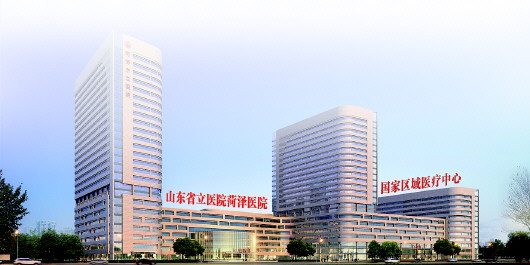
医心筑梦映初心 健行菏泽启新程——菏泽市立医院“十四五”高质量发展答卷
Xin Lang Cai Jing· 2025-12-31 16:58
Core Viewpoint - The Shandong Provincial Hospital Heze Hospital aims to establish itself as a national regional medical center, focusing on high-quality development through strategic planning and collaboration with top-tier medical institutions [3][11]. Group 1: Strategic Development - The hospital has set a strategic blueprint of "one-two-three-four-five" to drive its development, emphasizing the expansion of quality medical resources and refined management [3][4]. - The establishment of the national regional medical center during the "14th Five-Year Plan" period has provided unprecedented momentum for the hospital's growth [3]. Group 2: Infrastructure and Services - The modernization of the hospital's facilities has significantly improved the patient experience and increased the capacity for medical services [4][5]. - The new East Jiangsu Road campus, set to open in July 2025, will enhance access to healthcare for residents, reducing travel time for patients [5]. Group 3: Collaboration and Emergency Services - The hospital has deepened collaborations with top institutions like Beijing Xuanwu Hospital, enabling local residents to access high-level medical services [6]. - A comprehensive emergency response system has been established, ensuring efficient treatment for critical patients through dedicated green channels [6]. Group 4: Academic and Technical Advancements - The hospital is focused on building a robust academic framework, achieving significant breakthroughs in key specialties, and enhancing its overall technical capabilities [7]. - The introduction of advanced life support technologies has improved the success rates of critical care treatments [7]. Group 5: Talent Development - The hospital has implemented a "talent strong hospital" strategy, optimizing its workforce structure and attracting high-level professionals [8]. - Initiatives such as the establishment of research stations and training programs for young professionals are fostering a culture of continuous improvement and innovation [8]. Group 6: Community Engagement and Social Responsibility - The hospital prioritizes public health by extending its services and innovating care models, including home nursing services for the elderly [9][10]. - Active participation in community health education and outreach programs has enhanced public health literacy and access to medical care [10]. Group 7: Future Goals - The hospital is committed to achieving an A+ rating in the national public hospital performance assessment and will continue to enhance its medical services and technological innovations [11].

“国家级”中医落子苏州 中国中医科学院西苑医院苏州医院启用
Yang Zi Wan Bao Wang· 2025-12-22 02:26
Core Viewpoint - The inauguration of the Suzhou Hospital of the China Academy of Chinese Medical Sciences marks a significant step in enhancing regional healthcare by providing high-quality traditional Chinese medicine services to the local population, thereby supporting the construction of national regional medical centers [1][2]. Group 1: Hospital Overview - The Suzhou Hospital is a collaborative project between the Suzhou Municipal Government and the China Academy of Chinese Medical Sciences, designed as a tertiary public traditional Chinese medicine hospital with a total area of approximately 206,600 square meters and a planned capacity of 1,000 beds, with an initial opening of 340 beds [2]. - The hospital adopts an innovative management model of "one hospital, two zones, integrated management, and specialized development," aiming to provide high-standard, homogeneous services by leveraging the management practices and core technologies of the West Garden Hospital [2][3]. Group 2: Clinical and Research Focus - The hospital will focus on multi-disciplinary collaboration, covering various fields such as cardiovascular, pulmonary, gastrointestinal, hematological, and endocrine diseases, as well as specialties like orthopedics, proctology, gynecology, rehabilitation medicine, and critical care, establishing a comprehensive treatment system with 14 core and specialty departments [2][3]. - The hospital aims to build a high-level clinical diagnosis and treatment center, a talent training base, and a platform for technological innovation and transformation, particularly focusing on vascular diseases [3]. Group 3: Community Engagement and Services - The inauguration ceremony included the establishment of the "Qihuang Scholar" studio, which aims to bring top-tier medical expertise to the local community, enhancing clinical capabilities and fostering local talent through mentorship and collaborative research [4]. - A large-scale free clinic event was held, featuring nearly 40 renowned doctors from Beijing and Suzhou, providing direct medical services to the public and addressing common health issues, thereby reinforcing the hospital's commitment to community health [8][9]. Group 4: Future Development and Integration - The hospital's establishment is part of Suzhou's broader strategy to enhance healthcare services, including the integration of traditional Chinese medicine with modern health management and technological innovation, aiming to create a "15-minute traditional Chinese medicine service circle" for residents [6][7]. - The Suzhou branch of the National Clinical Research Center for Traditional Chinese Medicine in Cardiovascular Diseases was also inaugurated, highlighting the collaboration between national research platforms and regional medical centers to accelerate research and clinical application [5].
四川大学华西医院“落户”拉萨,助推当地医疗水平提升 在国家区域医疗中心感受医疗改善(大数据观察·点读“十四五”)
Ren Min Ri Bao· 2025-10-21 21:51
Core Insights - The establishment of the Sichuan University West China Hospital Tibet Hospital aims to enhance local healthcare services and reduce the need for patients to travel long distances for treatment [1][3] Group 1: Hospital Development and Services - The Sichuan University West China Hospital Tibet Hospital was built in collaboration with the Tibet Autonomous Region government and has been operational since June 2022, receiving over 7,000 patients to date [1][2] - The hospital focuses on providing high-quality medical services, including specialized departments such as internal medicine, critical care, and endoscopy, tailored to meet the needs of the local population [1][6] - The hospital's construction aligns with the national strategy to expand quality medical resources and improve regional healthcare distribution [1][3] Group 2: Training and Capacity Building - A significant emphasis is placed on training local medical staff, with over 498 personnel having undergone training at the West China Hospital's main campus [6][7] - The hospital has established a mentorship program where experienced medical staff from the main campus provide guidance to local healthcare workers, fostering skill development and knowledge transfer [6][7] - The hospital aims to maintain a high standard of care comparable to that of the main campus, ensuring that local patients receive quality healthcare services [6][7] Group 3: Community Impact and Future Goals - The establishment of the hospital is expected to significantly improve local healthcare capabilities, addressing the high referral rates for complex cases and enhancing emergency care systems [3][6] - The hospital's leadership expresses confidence in its role as a national regional medical center, committed to safeguarding the health of the local population and contributing to the development of healthcare in Tibet [6][7]