
中医药

Search documents
天津中医药大学李遇伯教授:告别中药“盲盒”,质谱“身份证”破解复杂成分之谜
仪器信息网· 2026-03-13 09:02
Core Viewpoint - The article discusses the development of the "Traditional Chinese Medicine Mass Spectrometry Identity Database" by Professor Li Yuber's team at Tianjin University of Traditional Chinese Medicine, aiming to advance the modernization of traditional Chinese medicine (TCM) and promote rational clinical use of TCM [2][5]. Group 1: Database Construction and Methodology - The core bottleneck in analyzing TCM components has been the lack of a large standardized spectral library for comparison, which the team addresses by creating a mass spectrometry identity database [5]. - The database has collected over 10,000 known standard samples, covering a wide range of TCM resources, enabling rapid identification and assisted judgment of TCM components [5][6]. - The construction of the database is supported by standardized data collection processes and consistent experimental conditions, transforming mass spectrometry from a detection tool to a scientific basis for identification and verification [6]. Group 2: Clinical Application and Technology Transfer - The team has expanded its research to include monitoring the safety of TCM use and industrial transformation, developing over 20 clinical test kits based on key metabolic indicators [8]. - The goal is to establish a complete system from detection and analysis to intervention, integrating instruments, software, databases, and test kits to facilitate the deep transfer of related technologies into clinical practice [8]. Group 3: Industry Collaboration and Talent Development - Successful technology commercialization relies on collaboration among clinical needs, market implementation by enterprises, technical problem-solving by research teams, and support from government departments [10]. - The establishment of the Tianjin Bio-Mass Spectrometry High-end Medical Equipment Innovation Consortium in 2023 aims to promote high-quality development of mass spectrometry technology through collaboration among universities, hospitals, and enterprises [10]. - The team is cultivating talent with a focus on the intersection of drug analysis and instrument technology, addressing the growing demand for professionals in clinical mass spectrometry and rational drug use monitoring [10]. Group 4: Future Prospects and Impact - The establishment of the mass spectrometry database is seen as a foundational step in creating a quantifiable and codified identity for complex TCM systems, which is crucial for shifting research paradigms [6]. - The integration of mass spectrometry databases, metabolomics, and clinical detection technologies is expected to enhance the scientific evaluation system of TCM, supporting its internationalization and industrial upgrading [11].


光大证券晨会速递-20260313
EBSCN· 2026-03-13 01:10
Group 1: Macro Analysis - The February US inflation data remains stable, indicating a mild transmission of tariffs. With recent tariff rate reductions and the time lag of previous transmission effects, it is expected that the impact of tariffs will peak in the first half of this year. However, the current data does not reflect the recent surge in oil prices, leading to market concerns about future inflation performance. If oil prices remain high at $80-90 per barrel for the next three months, it is projected to push the US CPI up by 0.3-0.4 percentage points, raising the reading to 3%-3.2%, which may restrict the Federal Reserve's rate cut operations in the short term [2]. Group 2: Industry Research - The demand for PCB drilling needles is expected to increase significantly due to the introduction of orthogonal backplane solutions in Nvidia's upcoming Rubin Ultra NVL576 architecture, replacing traditional copper cable connections. The core proposed solution currently involves "78-layer M9 resin + HVLP3/4 copper foil + Q cloth." The impact on PCB drilling needles includes: 1) a noticeable increase in consumption, 2) a rise in demand for high aspect ratio drilling needles, and 3) an increase in demand due to stringent back-drilling processes. Companies to watch in the high-end PCB drilling needle sector include Ding Tai High-Tech and World [3]. Group 3: Company Research - Tianqi Materials (002709.SZ) is expected to see a significant increase in lithium battery material demand, leading to an upward revision of profit forecasts for 2026-2028. The projected net profits for 2026, 2027, and 2028 are 6.179 billion (up 325%), 7.525 billion (up 277%), and 9.684 billion yuan, respectively, translating to EPS of 3.04, 3.70, and 4.76 yuan per share. The company maintains a "buy" rating [4]. - Jitu Express (1519.HK) is in a phase of scale expansion and accelerated profitability. The company has a solid foundation in Southeast Asia, with emerging markets (Latin America, Middle East) replicating its success, becoming a second growth engine. Strategic improvements in the Chinese market and the "anti-involution" policy are expected to boost single-ticket revenue, reinforcing the trend of profit recovery. The adjusted net profit forecasts for 2025-2027 are $4.12 million, $6.54 million, and $8.67 million, respectively, leading to a "buy" rating [5]. - Taiji Group (600129.SH) is focusing on its pharmaceutical core business, emphasizing "technological innovation" and "marketing innovation" as dual engines. The adverse effects of pharmaceutical policies and inventory digestion are expected to diminish, with the company's operating performance having bottomed out and beginning to recover. The net profit forecasts for 2025 and 2026 have been adjusted to 111 million and 213 million yuan, respectively, with a new forecast of 377 million yuan for 2027, leading to a downgrade to "hold" rating [7].


近99%收入依赖单一产品,这家中医药公司也要赴港上市!
IPO日报· 2026-02-28 14:14
Core Viewpoint - The article highlights the accelerating trend of Traditional Chinese Medicine (TCM) companies pursuing IPOs on the Hong Kong Stock Exchange, with a notable example being Shandong Hanfang Pharmaceutical Co., Ltd. which submitted its prospectus in February 2026 [1][5]. Group 1: Company Overview - Hanfang Pharmaceutical, established in June 2004, focuses on the production, sales, and research of TCM products, particularly in the treatment of skin and mucosal diseases [4]. - The company is a family-controlled entity, with the chairman holding 90% of the shares and the general manager holding 10% [5]. Group 2: Financial Performance - The total revenue for Hanfang Pharmaceutical was reported as 1.053 billion yuan in 2023, 992 million yuan in 2024, and 803 million yuan for the first nine months of 2025. Net profits were 237 million yuan, 199 million yuan, and 145 million yuan for the same periods respectively [5]. - The gross profit margin has consistently remained above 80%, with a gross profit of 677 million yuan and a gross margin of 84.3% for the first nine months of 2025 [5]. Group 3: Product Contribution - The flagship product, "Fangfang Huangbai Liquid," is a prescription topical TCM used for treating skin and mucosal diseases, contributing to nearly all of the company's revenue, with 99.8%, 99.8%, and 99.7% of total revenue from this product in 2023, 2024, and the first nine months of 2025 respectively [6][7]. - This product ranks fourth in the Chinese topical TCM market, holding a 1.1% market share [7]. Group 4: Competitive Advantage - "Fangfang Huangbai Liquid" is the only approved prescription topical TCM in China and is classified as a national second-level protected TCM variety, granting it exclusive market protection [8]. Group 5: Future Strategies - Despite strong competitive barriers, the company faces potential risks, including a slight revenue decline from 1.053 billion yuan in 2023 to 992 million yuan in 2024, and a decrease in net profit margin from approximately 22.5% to 20% [10]. - The company plans to diversify its product portfolio through three core strategies: developing new TCM products, converting clinically validated formulations into innovative TCM, and commercializing acquired classic TCM formulations [13].

“十五五”开局描绘科技新图景——2026年地方两会观察(下)
Ke Ji Ri Bao· 2026-02-27 08:50
Group 1 - The core viewpoint emphasizes that technological innovation is becoming the main engine for economic development, with local governments outlining clear paths for transformation and upgrading of traditional industries [1][2][3]. - Traditional industries are facing challenges such as low efficiency and low added value, prompting a strong signal for accelerated transformation from local governments [2][3]. - Cities like Dalian and Shanxi are focusing on smart, green, and integrated development to enhance traditional industries, with Dalian's bearing industry becoming a national model for revitalization [2][3]. Group 2 - Jilin is prioritizing the transformation of its manufacturing sector, leveraging digital technologies to enhance productivity, as evidenced by local university collaborations on smart assembly robots [3]. - The integration of talent and education with industry is crucial for traditional industry upgrades, as seen in Ningxia's focus on combining educational resources with local enterprises [3]. - Cities like Xiamen and Ningbo are enhancing their core competitiveness by focusing on technological innovation and industrial upgrades, with Xiamen emphasizing its strengths in new materials and biomedicine [4]. Group 3 - Jiangxi is promoting deep integration of innovation and industry, particularly in new materials and lithium battery sectors, to strengthen its economic foundation [5]. - Shanghai aims to increase R&D spending to 4.6% of its GDP by 2026, highlighting the importance of foundational research in driving future growth [6]. - Various regions are focusing on future industries, with initiatives in robotics, quantum information, and artificial intelligence, showcasing a commitment to technological advancement [7][8].
面向大海 承古启新(深度观察)
Ren Min Ri Bao· 2026-02-27 06:14
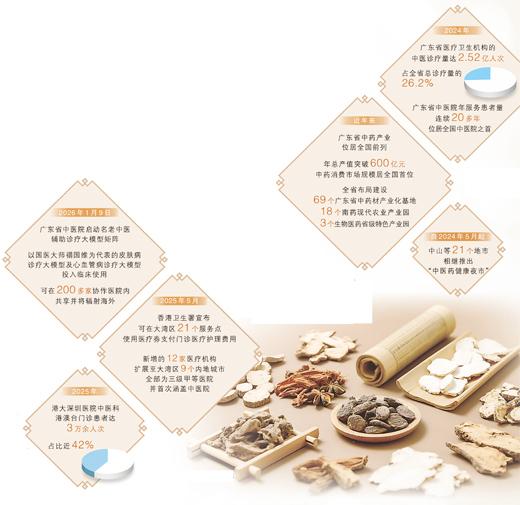
Core Viewpoint - The Chinese medicine industry is experiencing significant growth and modernization, driven by government support and innovative practices, particularly in Guangdong Province, which aims to promote traditional Chinese medicine (TCM) globally [1][2][4]. Group 1: Government Support and Initiatives - President Xi Jinping emphasized the importance of inheriting and innovating TCM, highlighting it as a treasure of Chinese civilization during his visits to Macau and Zhuhai [1][2]. - Guangdong Province has implemented various measures to promote the inheritance and innovation of TCM, establishing a comprehensive reform demonstration zone for TCM and aiming to create a TCM hub in the Greater Bay Area [1][2]. Group 2: TCM Practices and Popularity - In Guangdong, TCM is deeply integrated into daily life, with many residents familiar with herbal remedies and health practices [2][4]. - The Guangdong Provincial Hospital of Traditional Chinese Medicine has seen a significant increase in TCM consultations, with 252 million visits in 2024, accounting for 26.2% of the total medical consultations in the province [4]. Group 3: Innovative TCM Therapies - The Guangdong Provincial Hospital has introduced unique therapies such as bee therapy, which combines acupuncture and bee venom for treating various ailments [5][6]. - The hospital has also been active in preserving and promoting traditional TCM techniques through initiatives like the "杏林寻宝" program, which has introduced numerous unique therapies and trained over 330 practitioners [6][7]. Group 4: TCM Industry Development - Guangdong's TCM industry is one of the largest in China, with an annual output value exceeding 60 billion yuan, and the province is home to 69 TCM industrialization bases [12]. - The province is recognized for its rich medicinal plant resources, with over 4,500 species, contributing to its leading position in the national TCM market [12]. Group 5: Integration of Technology and TCM - The Guangdong Provincial Hospital has launched a smart pharmacy service that utilizes technology to enhance the preparation and delivery of herbal medicines, significantly reducing human error [7]. - AI-driven models have been developed to assist in TCM diagnosis and treatment, leveraging the expertise of renowned TCM practitioners [8][9]. Group 6: Internationalization of TCM - The Guangdong-Macao Traditional Chinese Medicine Technology Industrial Park serves as a strategic point for the internationalization of TCM, facilitating collaboration and product registration in Portuguese-speaking countries [17][19]. - Successful registration of TCM products in international markets, such as the "华佗再造丸," demonstrates the potential for TCM to penetrate global healthcare markets [20].
锦欣康养、天辰生物医药、汉方制药递表港交所;港交所、携程、银河娱乐公布2025年全年业绩丨港交所早参
Mei Ri Jing Ji Xin Wen· 2026-02-26 23:08
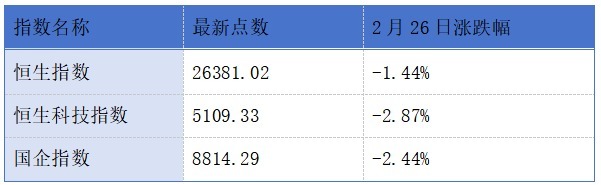
Group 1 - Three companies, Jinxin Kangyang, Tianchen Biopharmaceuticals, and Hanfang Pharmaceutical, have submitted listing applications to the Hong Kong Stock Exchange, indicating strong interest in the healthcare sector [1] - Jinxin Kangyang focuses on providing integrated medical and elderly care services to the aging population in China [1] - Tianchen Biopharmaceuticals specializes in the discovery and development of biopharmaceuticals for allergic and autoimmune diseases [1] - Hanfang Pharmaceutical is engaged in the production, sales, and research of traditional Chinese medicine, particularly in treating skin and mucosal diseases [1] Group 2 - Hong Kong Exchanges and Clearing Limited reported a record revenue and other income of HKD 29.161 billion for 2025, a 30% year-on-year increase [2] - The increase in trading and settlement fees was driven by record trading volumes in the spot, derivatives, and commodities markets, with main business revenue rising by 32% [2] - Shareholder profit attributable reached HKD 17.754 billion, up 36% year-on-year, reflecting a robust trading environment [2] Group 3 - Trip.com Group reported a significant increase in net profit attributable to shareholders, rising by 95.08% year-on-year to HKD 33.294 billion for 2025 [3] - The group's net operating revenue was HKD 62.4 billion, a 17% increase compared to the previous year [3] - Basic earnings per share were HKD 0.5062, indicating strong financial performance despite management changes [3] Group 4 - Galaxy Entertainment reported a 13% year-on-year increase in net revenue, reaching HKD 49.2 billion for the year ending December 31, 2025 [4] - Adjusted EBITDA rose by 19% to HKD 14.5 billion, while profit attributable to shareholders increased by 22% to HKD 10.7 billion [4] - Basic earnings per share were HKD 2.44, benefiting from the recovery of the Macau tourism and gaming market [4]



让中医药以新的姿态站到世界舞台(记者手记)
Ren Min Ri Bao· 2026-02-26 22:20
Core Viewpoint - Traditional Chinese medicine (TCM) is a unique health resource of China that requires protection, inheritance, and innovation to adapt to modern needs and contribute to global health [1][2]. Group 1: Inheritance of TCM - The essence of TCM must be preserved by adhering to its foundational theories and utilizing its unique advantages in disease prevention and treatment [1]. - There is a need to strengthen the transmission of the academic experiences of renowned TCM practitioners and traditional techniques, as well as to develop new TCM drugs based on ancient classic formulas and effective components [1]. Group 2: Innovation in TCM - Modern scientific methods should be employed to interpret TCM principles, clarifying its efficacy and promoting the integration of traditional TCM with modern science [1]. - The goal is to enhance the modernization of TCM diagnosis and treatment, transitioning from "experience inheritance" to "evidence-based" and "data-driven" approaches [1]. Group 3: Global Perspective - TCM is not only a treasure of the Chinese nation but also a wealth for people worldwide, emphasizing the need for cultural confidence in its inheritance and development [2]. - TCM should be positioned on the global medical stage to enhance human health and well-being [2].
“AI+中医”,为千年岐黄术注入数智新活力
Xin Hua Ri Bao· 2026-02-24 21:16
Core Insights - The integration of AI technology into traditional Chinese medicine (TCM) is enhancing healthcare accessibility and efficiency, particularly in community settings [2][3] - AI-assisted diagnostic tools, such as the AI TCM diagnostic device, are being utilized to provide personalized health assessments and recommendations based on traditional diagnostic methods [2][3] - The emergence of digital TCM practitioners, like "Dr. Meng," represents a significant advancement in preserving and transmitting traditional medical knowledge through modern technology [4][5] Group 1: AI Integration in TCM - AI technology is becoming a crucial tool in addressing the shortage of medical resources in grassroots healthcare, improving diagnostic accuracy and treatment plans [2][3] - The AI TCM diagnostic device collects data on patients' physical conditions and generates detailed health reports, allowing for more precise and personalized healthcare services [2][3] - The use of AI in TCM is supported by government initiatives aimed at promoting digital transformation in the healthcare sector [3] Group 2: Digital Practitioners and Knowledge Preservation - "Dr. Meng," a digital practitioner based on the Menghe medical school, exemplifies the fusion of traditional medical wisdom with AI technology, aiming to enhance TCM education and practice [4][5] - The system behind "Dr. Meng" incorporates a dynamic diagnostic engine that simulates the decision-making processes of experienced TCM practitioners, ensuring high accuracy in diagnosis [5][6] - The digital practitioner also serves as a cultural bridge, promoting the principles of the Menghe medical school globally through various communication channels [5][6] Group 3: Talent Development and Research - The collaboration between educational institutions and industry is fostering talent development in the field of AI and TCM, with initiatives aimed at creating specialized curricula and research projects [7][8] - The establishment of dedicated AI and TCM programs at universities is crucial for advancing the integration of AI technologies in traditional medicine [8] - Ongoing research and development efforts are focused on creating AI models that can enhance the effectiveness of TCM practices and improve patient outcomes [7][8]
工业旅游“热”起来 老字号“潮”向前
Zheng Quan Ri Bao· 2026-02-24 15:38
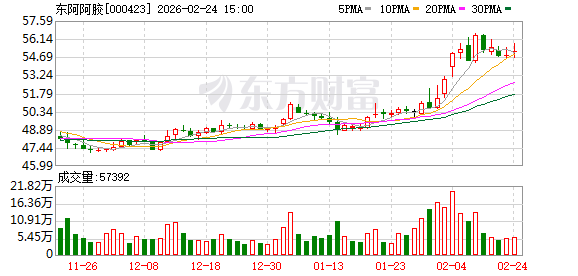
Core Viewpoint - Dong'e Ejiao has successfully integrated industrial tourism with traditional Chinese medicine culture, creating a unique experience that attracts visitors seeking a cultural and immersive holiday experience [2][7]. Group 1: Industrial Tourism Development - Dong'e Ejiao has developed a comprehensive industrial tourism chain that includes production lines, donkey breeding bases, and cultural attractions, providing a unique holiday experience away from crowded tourist spots [2]. - The company has redefined the boundaries of industrial tourism, offering visitors a sensory experience through various aromas associated with different production areas [5]. - The integration of advanced technology, such as AI visual recognition for quality control, showcases the company's commitment to innovation while maintaining traditional practices [6]. Group 2: Visitor Experience and Engagement - Families, like Mr. Xu's, are increasingly choosing Dong'e for its cultural richness and unique experiences, which exceed their expectations [4]. - The company offers interactive experiences, such as feeding donkeys and participating in traditional crafts, enhancing visitor engagement and cultural appreciation [4]. - The tourism area has seen significant visitor numbers, with projections indicating over 3 million visitors and 2 billion yuan in tourism revenue by 2025 [4]. Group 3: Future Growth and Investment - Dong'e Ejiao plans to invest 1.485 billion yuan in a health consumer goods industrial park, aiming to strengthen its position in the health industry and enhance its industrial tourism offerings [6]. - The company is recognized for its innovative approach to combining traditional culture with modern tourism, contributing to its transformation into a comprehensive cultural and tourism destination [6][8].

看清身体的“底色”,中医体质辨识让养生更精准
Xin Hua She· 2026-02-21 05:15
Core Insights - The newly published national standard "Classification and Determination of Traditional Chinese Medicine Constitution" outlines nine basic constitution types and their characteristics, allowing individuals to assess their constitution through a scoring scale [1] - Understanding one's constitution is crucial for effective health management, as different constitutions exhibit distinct symptoms and require tailored approaches to treatment [1] - The final determination of constitution should combine scoring with traditional diagnostic methods such as facial, tongue, and pulse diagnosis [1] Group 1 - The nine constitution types include characteristics that affect how individuals experience fatigue and other health issues, emphasizing the need for personalized health interventions [1] - Common health management strategies can be applied to individuals with the same constitution type, such as maintaining a regular routine for those with a balanced constitution [1] - The dynamic nature of constitution means that it can change over time, requiring patience and scientific intervention for effective adjustment [2] Group 2 - The "Nine Constitution User Manual" provides specific methods for adjusting imbalanced constitutions towards a more balanced state [2] - Experts highlight the importance of identifying core features like fatigue and temperature sensitivity in accurately determining an individual's constitution [1] - The integration of modern standards with traditional practices is essential for effective health management in Traditional Chinese Medicine [1][2]