国家恐怖主义行径

Search documents
特朗普又“瞄准”古巴、墨西哥
中国能源报· 2026-01-05 06:13
Group 1 - The article discusses the recent military action taken by the United States against Venezuela, where President Trump confirmed the forceful control of President Maduro and his wife [3][4]. - Trump has shifted focus towards Cuba, suggesting that without Venezuelan oil subsidies, Cuba is on the verge of collapse, although he downplayed the need for military action against Cuba [4]. - Following the military action in Venezuela, Trump also threatened Colombian President Petro, indicating potential military actions in Colombia [4]. Group 2 - The article highlights the international backlash against the U.S. military intervention in Venezuela, with various governments and organizations condemning the actions and calling for adherence to the United Nations Charter [4]. - In Cuba, citizens gathered to protest the U.S. actions, with Cuban leaders condemning the U.S. for what they termed "state terrorism" and accusing it of seeking to seize Venezuela's oil and natural resources [4]. - Trump has also hinted at possible military actions against Mexico, emphasizing the need for Mexico to better combat drug trafficking, which he believes warrants U.S. intervention [5][6].

外媒:美国突袭委内瑞拉后,特朗普将矛头再次对准古巴
Huan Qiu Wang· 2026-01-05 02:40
Core Viewpoint - The article discusses the recent military actions by the United States against Venezuela and the implications for Cuba, with President Trump indicating that Cuba may be the next target of U.S. attention following the military operation in Venezuela [1][3]. Group 1: U.S. Military Actions - On January 3, the U.S. military launched a large-scale operation against Venezuela, forcibly taking control of President Maduro and his wife [1][3]. - President Trump confirmed the military action and suggested that Cuba could be the next focus for the U.S. [3]. Group 2: Implications for Cuba - Trump stated that without substantial oil subsidies from Venezuela, Cuba would struggle to sustain itself, indicating a potential vulnerability for the Cuban government [3]. - Despite the threats, Trump downplayed the necessity for military action against Cuba, suggesting that the U.S. might not need to intervene militarily at this time [3]. Group 3: Regional Reactions - Various governments, political figures, and regional organizations condemned the U.S. military actions in Venezuela, calling for adherence to the United Nations Charter [3]. - In Cuba, citizens gathered at the U.S. embassy to protest against the military invasion of Venezuela, with Cuban leaders denouncing U.S. actions as "state terrorism" and accusing the U.S. of seeking to seize Venezuela's oil and natural resources [3].
第1现场|遭袭后的委内瑞拉:药店排队、油站关闭、民众集会抗议
Xin Lang Cai Jing· 2026-01-04 05:06
Core Viewpoint - The United States launched a large-scale military operation against Venezuela on January 3, capturing President Maduro and his wife, which has led to significant domestic unrest and international condemnation [1][33]. Group 1: Military Action and Immediate Impact - The military operation occurred at approximately 2 AM local time, targeting the capital Caracas and resulting in the capture of President Maduro [1][33]. - Reports indicate that the U.S. airstrike caused at least 40 deaths, including both civilians and military personnel [5][37]. - The attack led to widespread chaos in Caracas, with explosions reported near the La Carlota airport and smoke rising from multiple locations [5][37]. Group 2: Social and Economic Consequences - Following the military action, Caracas experienced a breakdown in social order, with empty streets and armed personnel patrolling key areas [11][43]. - Many residents queued outside pharmacies for supplies, and several gas stations were forced to close due to the unrest [11][49][50]. - The military strike resulted in the destruction of at least six buildings at the Tiuana military complex, further exacerbating the situation [11][43]. Group 3: Public Response and International Reaction - Venezuelan citizens took to the streets in protest, expressing their opposition to the U.S. intervention and showing support for President Maduro [23][28]. - Internationally, multiple governments and organizations condemned the U.S. military intervention as a violation of international law, urging respect for Venezuela's sovereignty [28][60]. - Cuban officials, including President Díaz-Canel, criticized the U.S. actions as acts of "state terrorism" aimed at seizing Venezuela's resources [31][64].
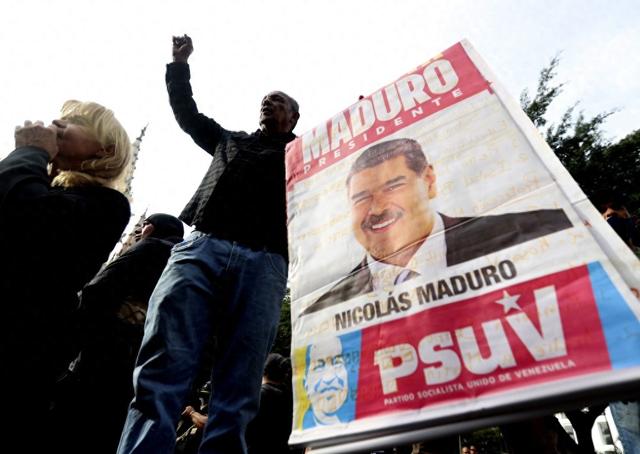
古巴民众集会谴责美国军事入侵委内瑞拉
Xin Lang Cai Jing· 2026-01-04 00:24
Core Viewpoint - The article highlights the strong condemnation by Cuban officials and citizens against the U.S. military intervention in Venezuela, emphasizing the perceived imperialistic motives behind the actions, particularly regarding the control of Venezuela's natural resources [1][2]. Group 1: Cuban Government Response - Cuban President Miguel Díaz-Canel criticized the U.S. actions as "state terrorism" and called for the immediate release of Venezuelan President Maduro and his wife, asserting that the U.S. aims to seize Venezuela's oil, land, and natural resources [1]. - Díaz-Canel emphasized that the U.S. actions represent a blatant violation of the sovereignty of nations and an unacceptable breach of international law, asserting that Latin America is not the U.S.'s "backyard" and rejecting the Monroe Doctrine [1]. Group 2: Historical Context and Reactions - Ricardo Ronquillo, President of the Cuban Journalists' Union, noted that U.S. military interventions in Latin America are not new, citing past actions in Guatemala and Cuba, and warned that the Cuban people are prepared to resist any attempts to undermine the Cuban Revolution [2]. - U.S. President Trump confirmed a large-scale military strike against Venezuela, capturing Maduro and his wife, and hinted that Cuba might be the next target of U.S. attention, prompting widespread condemnation from various governments and organizations calling for adherence to the United Nations Charter [2].
俄罗斯表态
Zhong Guo Ji Jin Bao· 2026-01-03 11:27
Group 1 - The core viewpoint of the article is that the U.S. military actions against Venezuela are deemed a violation of international law and will face widespread condemnation globally [1][2] - Russian Federation Council Vice Chairman Kosachev stated that Venezuela poses no threat to the U.S., indicating that the military actions lack substantial justification [1] - Reports indicate that U.S. Delta Force has captured Venezuelan President Maduro, drawing parallels to previous operations against terrorist leaders [1] Group 2 - Colombian President Petro reported that at least 10 targets in Venezuela, including key infrastructure, have been bombed, leading to significant destruction [3] - Petro called for an urgent meeting of the United Nations and the Organization of American States to address the situation, highlighting the severity of the attacks [3] - Cuban President Diaz-Canel condemned the U.S. actions as a crime and urged the international community to take immediate action against what he described as terrorism against the Venezuelan people [3]
特朗普称已抓获委内瑞拉总统
21世纪经济报道· 2026-01-03 09:40
Core Viewpoint - The article discusses the recent military actions taken by the United States against Venezuela, including the capture of President Maduro and the declaration of a national emergency by the Venezuelan government in response to these actions [1][3]. Group 1: Military Actions and Responses - The U.S. has successfully conducted military operations in Venezuela, capturing President Maduro and his wife [1]. - The Venezuelan government condemned the U.S. actions as a severe military invasion and declared a national emergency across the country [3]. - The military strikes targeted civilian and military sites in Caracas and surrounding states, violating the United Nations Charter [3]. Group 2: International Reactions - Colombian President Petro called for an immediate meeting of the UN Security Council to discuss the aggression against Venezuela, highlighting that at least ten locations were bombed, including the National Assembly building and military bases [7][8]. - Cuban President Díaz-Canel condemned the U.S. attacks as acts of terrorism against the Venezuelan people and called for urgent international action [9]. Group 3: Impact on Civil Aviation - The U.S. Federal Aviation Administration prohibited American commercial flights from entering Venezuelan airspace due to ongoing military activities [6].
古巴国家主席谴责美国袭击委内瑞拉的“罪行”
Yang Shi Xin Wen Ke Hu Duan· 2026-01-03 08:55
Core Viewpoint - The President of Cuba, Díaz-Canel, condemned the U.S. attack on Venezuela as a "crime" and called for urgent action from the international community [1] Group 1: Political Reactions - Díaz-Canel stated that Latin America, a region of peace, is facing brutal attacks, labeling the actions as terrorism against the brave Venezuelan people and the nations of the Americas [1] Group 2: Incident Details - On the same day, explosions were reported in Caracas, Venezuela, followed by air raid sirens, with eyewitnesses noting multiple explosions near military facilities in southern Caracas [1] - Reports indicated that the area experienced power outages, and helicopters were seen circling above Caracas, with some regions experiencing disruptions in telecommunications services [1]
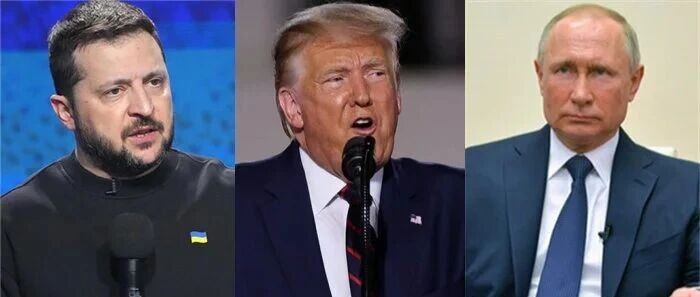
普京官邸遭袭?泽连斯基否认,特朗普“很生气”,俄方发声
第一财经· 2025-12-30 00:31
Core Viewpoint - The article discusses the recent phone conversation between Russian President Putin and U.S. President Trump regarding the ongoing conflict in Ukraine, highlighting the tensions following a drone attack on the Russian presidential residence by Ukraine, which has led to a reassessment of negotiation positions by Russia [3][4]. Group 1: Phone Conversation Insights - Putin and Trump discussed the progress of negotiations concerning Ukraine, with Trump expressing shock and anger over Ukraine's drone attack on the Russian presidential residence [3]. - Trump emphasized that Ukraine must take concrete steps to resolve the conflict rather than merely seeking a temporary ceasefire, suggesting that President Zelensky should focus on achieving a comprehensive agreement to end the conflict [3]. - Russia indicated that the results of the talks still leave room for Ukraine to evade obligations, and Putin noted the timing of the drone attack shortly after what was perceived as a successful meeting [3]. Group 2: Russian Response - Russian Foreign Minister Lavrov reported that Ukraine launched a terror attack using 91 long-range drones against the Russian presidential residence, all of which were intercepted by Russian air defense [4]. - Lavrov stated that while Russia does not intend to withdraw from negotiations with the U.S. regarding Ukraine, the shift towards "state terrorism" by Ukraine will lead to adjustments in Russia's negotiation stance [4]. Group 3: Ukrainian Position - President Zelensky responded on social media, claiming that Russia's assertions about the drone attack are fabricated and that such statements are dangerous, aiming to undermine the cooperation between Ukraine and the U.S. [5].