国家骨干冷链物流基地

Search documents
拉萨建成国家骨干冷链物流基地——打造高原民生产业新支点
Xin Lang Cai Jing· 2026-02-18 15:12
Core Insights - The establishment of a national-level cold chain logistics hub in Lhasa marks a significant transformation in the cold chain logistics landscape of the Qinghai-Tibet Plateau, promoting standardization, scaling, and modernization [1][3] - The hub, with a total investment of approximately 500 million yuan and covering an area of about 56,610 square meters, aims to reshape the regional logistics framework and enhance livelihood security and industrial upgrading in the snow-covered plateau [1] Summary by Sections - **Cold Chain Logistics Hub Development** - Lhasa has been included in the latest list of national backbone cold chain logistics bases, achieving a breakthrough in the region's cold chain logistics development [1] - The hub employs a "government planning coordination, enterprise alliance operation" model, dividing the facility into eastern and western functional areas [1] - **Operational Structure and Services** - The eastern area focuses on the complete cold storage, trading, and distribution processes for vegetables, fruits, and seafood, facilitating rapid distribution to Lhasa and other regions [1][2] - The western area features modern cold storage facilities dedicated to the specialized storage, refined processing, and precise distribution of meat and frozen foods [2] - **Comprehensive Cold Chain Service System** - The hub integrates various core projects, enhancing its competitive edge and establishing a full-category, full-chain cold chain service system [3] - The base's core business revolves around warehouse leasing, complemented by market operations and last-mile delivery services [3] - **Investment and Efficiency Improvements** - Since the 14th Five-Year Plan, the region has consolidated nearly 1.5 billion yuan in various funds to advance cold chain storage and smart logistics hub construction [3] - The establishment of cross-regional cold chain logistics centers has significantly reduced product loss rates from 30% in traditional transport to below 8% [3] - **Future Development Plans** - Lhasa aims to continuously enhance service quality, upgrade logistics technology, and optimize market planning, positioning the cold chain logistics base as a core engine for high-quality development in the region [4]
【硬核“十四五”】通江达海畅全球 物流“加速度”激活中国经济高质量发展澎湃新动能
Yang Shi Wang· 2025-10-22 03:04
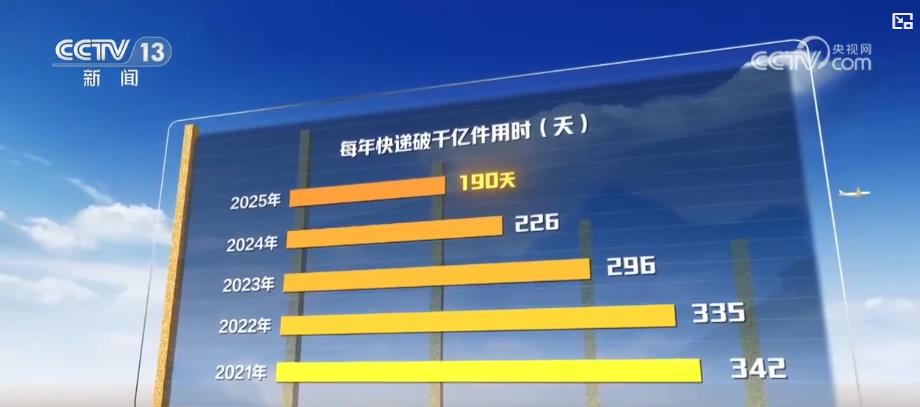
Core Insights - The logistics sector in China has significantly improved its efficiency and connectivity during the "14th Five-Year Plan" period, enhancing the speed and reach of logistics services across the country [1][5][9] Group 1: Logistics Growth and Efficiency - The number of next-day delivery routes for live agricultural products, such as hairy crabs, has increased by 23,000 over the past five years [1] - The logistics costs for the entire society are expected to save over 1.1 trillion yuan in the last five years, with logistics expenses dropping to below 14 yuan for every 100 yuan of GDP created [3] - Instant logistics orders in China have surpassed 48 billion annually, indicating a shift towards "everything delivered to home" as a common practice [5] Group 2: Infrastructure Development - A total of 105 national backbone cold chain logistics bases have been established across 31 provinces, enhancing the cold storage capacity equivalent to 277 million household refrigerators [7] - The logistics network has expanded to over 30,000 rural towns, with an average of more than 100 new service stations added daily to cover remote villages [7] - The construction of logistics hubs has evolved from port-based to production and trade service hubs, linking production, consumption, and regional economies [5] Group 3: Market Position - China has built the world's largest postal express network, with the logistics industry expected to maintain the largest market size globally for the next decade [9]