
冷链物流

Search documents
链接19万货主、27万司机,物流老兵用算法把冷链价格“打下来”
创业邦· 2026-03-01 05:00
Core Viewpoint - The article discusses the challenges and opportunities in the cold chain logistics industry, highlighting the innovative approach of Ruiyun Cold Chain in addressing operational inefficiencies and market fragmentation through a networked model and digital platform [4][10][25]. Group 1: Industry Challenges - Cold chain logistics is characterized by high operational costs and complex temperature control requirements, making it a challenging sector within logistics [4]. - The market is fragmented, with many small operators facing unstable order sources, leading to inefficiencies and high empty running rates [4][10]. - Traditional cold chain logistics often relies on heavy asset investments, which can lead to financial strain, while pure franchise models struggle with food safety and temperature control [12][13]. Group 2: Ruiyun Cold Chain's Business Model - Ruiyun Cold Chain employs a hybrid model combining self-operated transfer centers and a franchise network, rapidly expanding its reach across China with 33 transfer centers and over 1,000 franchise partners [4][6]. - The company has developed the "Cold Transport Treasure" platform, creating a nationwide digital network for cold chain transportation, aiming to improve speed and cost efficiency for fresh food delivery [4][6][10]. - Ruiyun's strategy includes a dual approach: establishing a direct transportation network in key regions while partnering with local cold chain operators to cover less dense areas [13][14]. Group 3: Technological Innovations - The company has implemented an intelligent routing system to reduce empty running rates by 15%, significantly improving operational efficiency [19]. - Ruiyun's fleet includes 80% new energy vehicles, which lowers operational costs by 15% to 20% compared to traditional fuel vehicles, contributing to competitive pricing [20]. - The introduction of algorithmic pricing through the Cold Transport Treasure platform allows for dynamic pricing based on real-time supply and demand, enhancing profitability [21]. Group 4: Financial Performance and Growth Strategy - In 2024, Ruiyun shifted its focus from rapid growth to high-quality growth, resulting in profitability amidst a generally loss-making industry [23]. - The company has successfully raised significant funding, including a 500 million RMB Series A round, attracting interest from strategic investors [7][23]. - Ruiyun aims to evolve from a logistics service provider to an integrated supply chain service platform, addressing broader customer needs in cross-border trade and sourcing [26][31]. Group 5: Market Position and Future Outlook - Ruiyun Cold Chain is positioned among the top players in China's cold chain logistics market, competing with major companies like SF Express and JD Logistics [25]. - The company plans to expand its cross-border cold chain services and deepen supply chain integration, targeting high-value products like Thai durians and Norwegian salmon [26][28]. - Ruiyun's long-term goal is to achieve over 10 billion RMB in revenue within three years, aiming for significant influence in industry standardization [30][31].


【前瞻分析】2026年中国冷链物流行业务需求量及发展趋势分析
Sou Hu Cai Jing· 2026-02-28 01:58
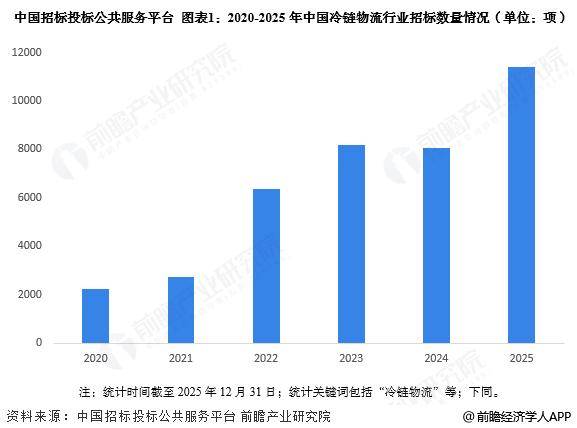
Group 1 - The core viewpoint of the articles indicates a significant increase in the demand and market size of the cold chain logistics industry in China, driven by factors such as rising agricultural production and the emergence of new business models like central kitchens and fresh e-commerce [5][8][10] Group 2 - The number of tenders in the cold chain logistics sector is projected to rise, with over 11,000 tenders expected by 2025, marking the highest level in recent years [1][4] - The total demand for food cold chain logistics in China is anticipated to reach 365 million tons in 2024, reflecting a year-on-year growth of 4.3% [5] - State-owned enterprises dominate the tendering landscape, accounting for 47% of the total tenders, while public institutions and government agencies follow with approximately 17% and 15% respectively [9]
【前瞻分析】2025年全球冷链物流行业市场规模及发展趋势分析
Sou Hu Cai Jing· 2026-02-28 01:45
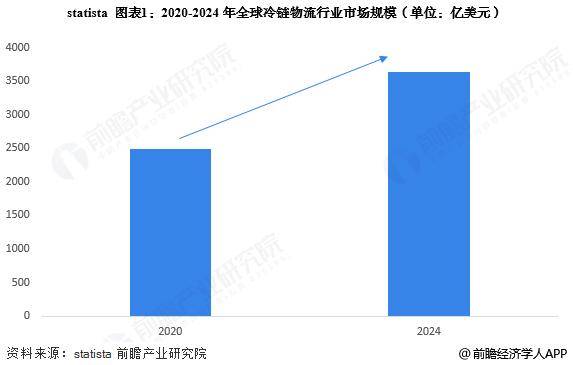
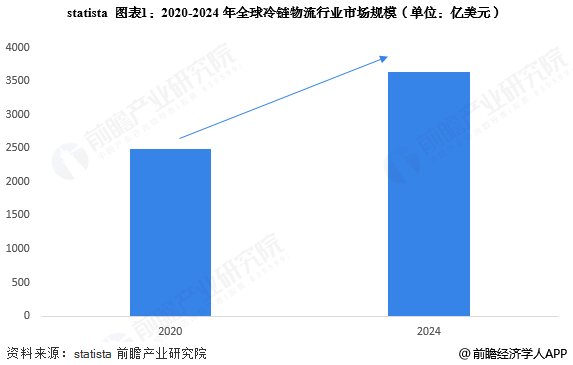
Group 1 - The global cold chain market size is projected to grow from $248.4 billion in 2020 to $363.8 billion by 2024, with a CAGR of approximately 6% over five years [1] - By 2030, the global cold chain logistics market is expected to exceed $820 billion, driven by consumer upgrades, increased e-commerce penetration, and the ongoing development of the biopharmaceutical industry [4] Group 2 - China's national-level policies for cold chain logistics were introduced relatively late, with significant guidance emerging during the "12th Five-Year Plan" period as the government began to plan for the industry's development [7] - Various provinces in China have set specific development goals for the cold chain logistics industry, such as Tianjin aiming for 30 large-scale cold chain product processing enterprises by 2027, with a target output value of 10 billion yuan, and Zhejiang planning to build 100 cold chain distribution centers by 2027 [11]



双鸭山:招商消费外贸“三箭齐发” 实现首季“开门红”
Zhong Guo Fa Zhan Wang· 2026-02-27 14:32
Core Insights - The city of Shuangyashan is actively promoting winter investment attraction and enhancing consumption vitality through various measures, aiming for a strong start in the first quarter of the "14th Five-Year Plan" [1][2] Group 1: Investment Attraction - Shuangyashan has initiated a new wave of winter investment attraction, breaking through seasonal barriers with a focus on key industries such as coal, new energy, and green food processing [2] - The city has planned 116 projects and created three investment maps for advantageous industrial chains, enhancing the precision and efficiency of investment promotion [2] - A total of 21 projects have been signed with a total investment of 6.715 billion yuan, with 11 projects successfully integrated into the statistics [2] Group 2: Consumption Promotion - The city is leveraging a government-led, enterprise-driven approach to stimulate consumption across various sectors, planning 38 promotional activities in the first quarter [3] - A total of 9.45 million yuan has been allocated for government-led consumption promotion, with additional investments from local counties exceeding 6 million yuan [3] - The launch of the 2026 Shuangyashan Online New Year Goods Festival aims to enhance online-to-offline consumer engagement through live streaming and social media [3] Group 3: Foreign Trade Enhancement - Shuangyashan is focusing on improving foreign trade quality and efficiency, with the establishment of a public bonded warehouse marking a significant milestone in cold chain logistics and trade with Russia [4] - The city has identified 16 enterprises willing to cooperate in foreign trade, promoting compliance and facilitating exports [4] - The local government has reported a significant increase in passenger and cargo traffic at the Rhaohe port, indicating robust trade activity [4] Group 4: Future Directions - The Shuangyashan Business Bureau emphasizes the need to deepen the bundled investment attraction model and ensure seamless project implementation [5] - Continued focus on optimizing the consumption environment and enhancing supply to safeguard the livelihood of residents is planned [5] - The city aims to strengthen foreign trade capabilities and deepen cooperation with Russia as part of its strategic development goals [5]
智能产业园里的“鲜活滋味”
Ren Min Ri Bao· 2026-02-26 13:33
Core Insights - The Chongqing Cold Chain (Chongqing) Smart Industrial Park operates a fully integrated cold chain intelligent control system, utilizing IoT and big data technologies for real-time temperature monitoring and automatic adjustments across various storage areas [1][2] - The park is experiencing high operational throughput due to increased food consumption demand during the Spring Festival, ensuring the supply of essential goods remains stable and sufficient [1] Group 1: Operational Efficiency - The smart cold storage facility features multi-temperature zones, including ultra-low temperature storage at -40 degrees Celsius and fresh produce storage at 0-5 degrees Celsius, ensuring optimal conditions for various products [1] - An intelligent lighting system guides vehicle traffic efficiently within the park, facilitating smooth loading and unloading processes [1] Group 2: Demand Management - Real-time updates on the electronic display boards within the integrated storage system allow for quick adjustments in logistics based on customer demand, particularly for fruits during peak seasons [1] - The park prioritizes the distribution of Southeast Asian fruits and local vegetables to supermarkets, demonstrating a proactive approach to meet consumer needs [1] Group 3: Commitment to Supply Security - The park hosts several supply guarantee enterprises, emphasizing its role in maintaining the freshness and availability of food products for households [2]
预见2025:《2025年中国冷链物流行业全景图谱》(附市场现状、竞争格局和发展趋势等)
Qian Zhan Wang· 2026-02-26 02:09
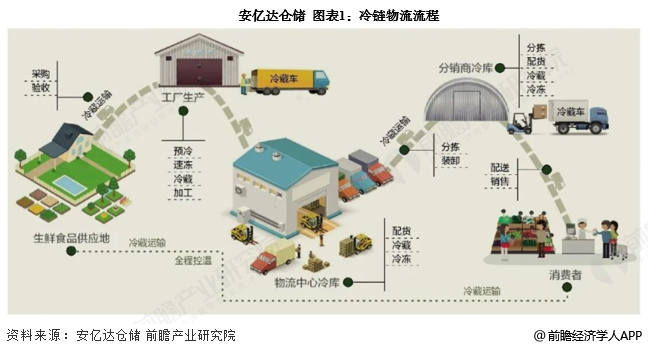
Industry Overview - Cold chain logistics is defined as a specialized logistics process that utilizes temperature control and preservation technologies to ensure that cold chain products remain within specified temperature environments throughout their entire lifecycle, including processing, storage, transportation, and distribution [1] - The products involved in cold chain logistics include agricultural products, poultry, seafood, flowers, processed foods, frozen foods, ice cream, dairy products, fast food ingredients, and beverages, as well as special items like pharmaceuticals and chemicals [1] Industry Chain Analysis - The cold chain logistics industry chain consists of upstream segments such as refrigerated vehicle manufacturing, cold storage construction, and equipment manufacturing; midstream segments include transportation (both trunk and distribution), warehousing, and value-added services; and downstream applications span food, pharmaceuticals, chemicals, and floriculture [3][4] Industry Development History - The cold chain logistics industry in China has evolved through three stages since 1998: 1. The initial stage (1998-2007) was characterized by a lack of resources and outdated facilities, with many companies relying on second-hand refrigerated vehicles [6][9] 2. The rapid expansion stage (2008-2017) saw the emergence of organized operations and the establishment of national distribution networks, driven by the growth of the frozen food industry and the entry of major players [9] 3. The current stage (2018-present) marks the transition to cold chain logistics 3.0, characterized by upgrades in industry environment, awareness, technology, management, and business philosophy [9] Industry Policy Background - Cold chain logistics is recognized as a crucial component of modern agricultural development, significantly impacting food quality, safety, and public health [10] - Recent policies emphasize enhancing cold chain infrastructure, particularly in rural areas, to improve agricultural product distribution and consumption [11] Current Industry Status - The total demand for food cold chain logistics in China is projected to reach 365 million tons in 2024, reflecting a year-on-year growth of 4.3% [12] - The cold chain logistics market size is expected to exceed 530 billion yuan in 2024, driven by rising demand for agricultural product refrigeration [13] - The total capacity of cold storage facilities in China is estimated at 25.3 million cubic meters, with a year-on-year increase of 10.96% [14] - The number of refrigerated vehicles in China is projected to reach 495,000 by 2024, marking a year-on-year growth of 14.58% [17] Industry Competition Landscape - The competitive landscape of the cold chain logistics industry is categorized into three tiers: leading companies like SF Express, JD Logistics, and Rongqing Logistics dominate the national market; regional players such as Hongxing Cold Chain and Daxiang Logistics have established strong local networks; while smaller enterprises face challenges in scaling [18][20] - The provinces with the highest number of star-rated cold chain logistics companies are Anhui and Shandong, each with 32 companies, followed by Henan with 28 [22] Industry Development Outlook and Trends - The cold chain logistics market in China is expected to exceed 670 billion yuan by 2030, with a compound annual growth rate (CAGR) of approximately 4% over the next five years [24][25] - Key trends include the expansion of infrastructure, the evolution of business models, and the enhancement of industry standards, driven by economic growth, urbanization, and increasing consumer demand for food safety [27][29]
智能产业园里的“鲜活滋味”(新春走基层)
Ren Min Ri Bao· 2026-02-25 22:15
Core Insights - The Chongqing Cold Chain (Intelligent Industry Park) is utilizing an intelligent temperature control platform to create a comprehensive cold chain management system, ensuring efficient monitoring and adjustment of temperatures across various storage areas [1] - The park is experiencing high operational throughput due to increased food consumption demand during the Spring Festival, leveraging digital tools and supply assurance systems to maintain stable prices and sufficient supply of essential goods [1][2] Group 1 - The park features a multi-temperature intelligent cold storage system that employs IoT and big data technologies for real-time temperature monitoring and automatic adjustments [1] - The operational director emphasizes the importance of prioritizing the distribution of Southeast Asian fruits and local vegetables to supermarkets, reflecting the park's commitment to timely delivery [1] - The electronic display boards within the integrated intelligent storage system provide real-time updates on cargo flow and operational progress, facilitating quick decision-making in response to customer demand [1] Group 2 - The park has attracted several supply assurance enterprises, indicating its role as a critical hub for ensuring the freshness of food products for households [2] - The continuous operation of the park during nighttime highlights its commitment to maintaining a steady flow of goods and services [2]
红星冷链启动港股IPO,三年分红2亿引关注
Sou Hu Cai Jing· 2026-02-25 01:36
Group 1 - The core viewpoint of the article highlights that Hongxing Cold Chain (Hunan) Co., Ltd. has successfully passed the IPO hearing at the Hong Kong Stock Exchange and is set to officially launch its public offering on December 31, 2023, with plans to list on January 13, 2026 [2] - The company plans to issue 23.263 million H-shares, with 10% allocated for public offering in Hong Kong, at an issue price of HKD 12.26 per share, aiming to raise approximately HKD 290 million, resulting in a post-issue market capitalization of about HKD 1.205 billion [2] - The market response has been enthusiastic, with the company securing HKD 1.92 billion in margin financing by January 7, 2024, and the public offering being oversubscribed by 66 times, indicating strong investor interest [2] Group 2 - Hongxing Cold Chain, established in 2006, is a leading player in the cold chain industry in Hunan, primarily engaged in frozen food storage services and rental services for frozen food stores, connecting wholesalers and retailers through a "storage + rental" model [2] - As of June 30, 2025, the company operates two self-owned frozen food storage bases in Changsha, with a total available storage capacity exceeding 230,000 tons and a historical utilization rate of over 88%, serving more than 700 clients [2] - Financially, the company has shown stable profitability but faces growth pressures, with revenues of CNY 237 million, CNY 202 million, and CNY 234 million from 2022 to 2024, and net profits of CNY 79.112 million, CNY 75.312 million, and CNY 82.88 million during the same period [3] - The company declared a total cash dividend of CNY 200 million from 2022 to 2024, accounting for over 80% of the total net profit during these three years, raising discussions about the rationale behind its fundraising efforts [3]

2025年全球冷链物流行业发展现状分析 市场规模超过3600亿美元【组图】
Qian Zhan Wang· 2026-02-24 05:21
Group 1 - The global cold chain logistics market size is projected to grow from $248.4 billion in 2020 to $363.8 billion by 2024, with a CAGR of approximately 6% over five years [1] - North America holds the largest market share in the global cold chain logistics industry, accounting for about 39% in 2024, followed by Europe at around 29% [3] - The North American cold chain logistics market is expected to reach $142.6 billion in 2024, reflecting a year-on-year increase of approximately 10% [5] Group 2 - By the end of 2024, Ryan Logistics is projected to have the largest temperature-controlled storage space at 8,382 cubic meters, which is about twice the size of the second-largest, Americold Logistics [6] - The global cold chain logistics market is anticipated to exceed $820 billion by 2030, driven by global consumption upgrades, increased e-commerce penetration, and the ongoing development of the biopharmaceutical industry [10]
挥“农”墨于岭南大地,执“工”笔绘“两业融合”新篇
Nan Fang Nong Cun Bao· 2026-02-24 03:06
Core Viewpoint - Guangdong is focusing on high-quality development through the integration of manufacturing and service industries, aiming to transition from scale to quality leadership in its economy [11][12][13]. Group 1: Economic Strategy - Guangdong has been the "first engine" of the national economy for 37 consecutive years and is strategizing to maintain its leadership in the "14th Five-Year Plan" period [7][9]. - The 2026 Guangdong High-Quality Development Conference will emphasize the collaborative development of manufacturing and service industries [11]. Group 2: Industry Integration - The province is implementing measures to promote the deep integration of manufacturing and productive services, with a focus on transforming from "manufacturing" to "intelligent manufacturing" [25][30]. - Guangdong's agricultural sector is evolving by integrating agricultural equipment manufacturing with socialized agricultural services, enhancing production relationships and value chains [33][34]. Group 3: Talent Development - Guangdong is prioritizing "investment in people," emphasizing the integration of human resources with manufacturing to drive long-term economic development [73][75]. - The province is cultivating "new farmers" and rural leaders through various training programs, such as the "Rural CEO" training initiative [83][86]. Group 4: Cultural and Consumer Experience - The integration of manufacturing and service industries is redefining "Guangdong goods," transforming products into cultural experiences and consumption scenes [116][118]. - Industrial design is becoming a key driver for high-quality development, with initiatives like the "Mayor's Cup" Industrial Design Competition promoting innovation [120][123]. Group 5: Agricultural Innovation - The establishment of smart farms in Guangdong is showcasing the collaboration between manufacturing and technology services, with examples of fully automated agricultural processes [46][49]. - The province is leveraging modern logistics and digital marketing to enhance the agricultural value chain, as seen in the case of lychee production in Maoming [128][130].
