国有资产监督体系

Search documents
完善监督体系 守好国资“家底”
Xin Lang Cai Jing· 2026-02-07 20:47
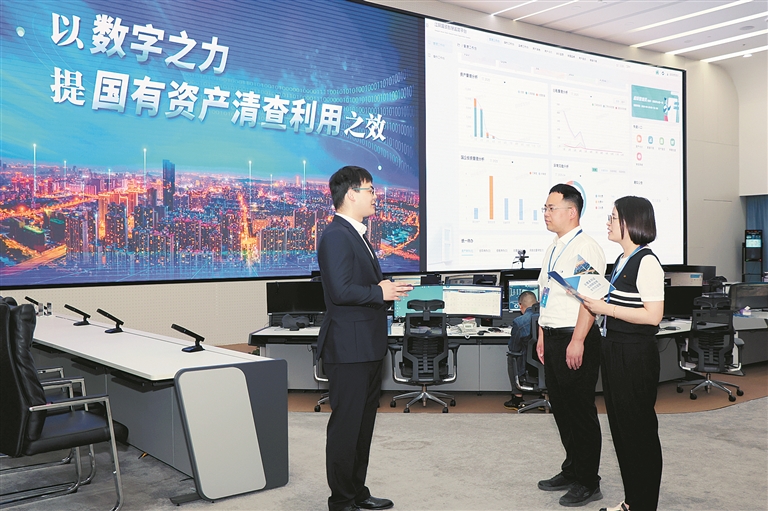
Core Viewpoint - The transformation of state-owned assets in Jiangsu Province is crucial for economic stability and public welfare, driven by a comprehensive overhaul of the supervision system and asset utilization [2][10]. Group 1: Asset Transformation and Utilization - The demolition of old buildings in Nantong and the construction of modern housing for over 500 former state enterprise employees highlight the positive impact of revitalizing state-owned assets [1]. - The establishment of a modern logistics park in Dongtai, processing over 540,000 packages daily, exemplifies the successful repurposing of previously problematic land [1]. - Jiangsu's government has taken significant steps to clarify asset ownership and management responsibilities, ensuring effective utilization of state-owned assets [8]. Group 2: Supervision and Accountability - The provincial discipline inspection commission has implemented a robust case-handling approach, leading to the investigation of high-profile officials in the state-owned sector, thereby enhancing accountability [3][4]. - A systematic review of state-owned asset management has identified 24 types of typical violations, providing a framework for targeted investigations and corrective actions [5]. - The establishment of a "2+2+N" collaborative mechanism for supervision and case handling aims to enhance coordination among various oversight bodies [4]. Group 3: Technological Integration in Supervision - The launch of a smart regulatory platform for state-owned assets in Jiangsu aims to unify asset management and enhance monitoring through advanced technology [10][12]. - The platform integrates various supervisory models to proactively identify and address potential issues, shifting from reactive to preventive measures [11][12]. - The successful case of reallocating idle resources, such as air conditioners, demonstrates the platform's effectiveness in optimizing asset utilization and saving public funds [12]. Group 4: Continuous Improvement and Long-term Strategy - The ongoing efforts to refine the supervision system are seen as a long-term commitment to eliminate corruption and enhance the governance of state-owned assets [12]. - Jiangsu's approach emphasizes the importance of strategic consistency and sustained efforts in transforming institutional advantages into effective governance outcomes [12].
年中看进展 | 织密监督网络 守好国资“家底”
Zhong Yang Ji Wei Guo Jia Jian Wei Wang Zhan· 2025-08-25 00:15
Core Viewpoint - The article emphasizes the importance of strengthening the supervision of state-owned assets to prevent misuse and ensure efficient management, as mandated by the Central Commission for Discipline Inspection's fourth plenary session [3][11]. Group 1: Supervision and Governance - Jiangsu Province's disciplinary inspection and supervision authorities are focusing on the allocation, use, operation, and disposal of state-owned assets, utilizing a smart regulatory platform for real-time monitoring and problem detection [3][4]. - The Central Commission's directive calls for systematic rectification in areas with concentrated power and resources, particularly in state-owned enterprises, to address significant losses due to abuse of power and negligence [3][6]. - The trial implementation of a supervision system in cities like Jiangyin, Nantong, and Dongtai aims to enhance the efficiency and quality of state-owned asset management [3][8]. Group 2: Case Studies and Findings - A case involving a former accountant in Nantong revealed significant issues such as embezzlement and mismanagement of collective funds, leading to the investigation of 17 individuals for dereliction of duty [5][6]. - The investigation into the New San Garden Village case highlighted regulatory gaps and failures in supervision, prompting a thorough review of responsibility chains and management practices [6][8]. - The trial regions have identified 3,801 problematic assets, categorizing them into lost, idle, and inefficient assets, which has helped clarify management responsibilities and improve oversight [8][9]. Group 3: Solutions and Improvements - The article discusses the need to clarify asset ownership, usage, management, and supervision responsibilities to ensure accountability and collaborative governance [7][8]. - Jiangyin's smart regulatory platform has successfully integrated 1.17 trillion yuan of state-owned assets, enabling automated monitoring and early warning of anomalies, with a timely response rate of 92% [9][10]. - The establishment of a comprehensive responsibility framework has led to the identification and rectification of various issues, including the successful recovery of underutilized land for productive use [8][11]. Group 4: Future Directions - The ongoing efforts to enhance the state-owned asset supervision system are seen as a long-term project requiring continuous improvement and accountability [11]. - The article highlights the importance of leveraging technology and data analytics to strengthen oversight and prevent future issues in asset management [10][11].