国际碳抵消机制

Search documents
当极端高温遇上减排博弈:欧盟这步棋,能否走活全球气候困局?
Sou Hu Cai Jing· 2025-07-03 03:11
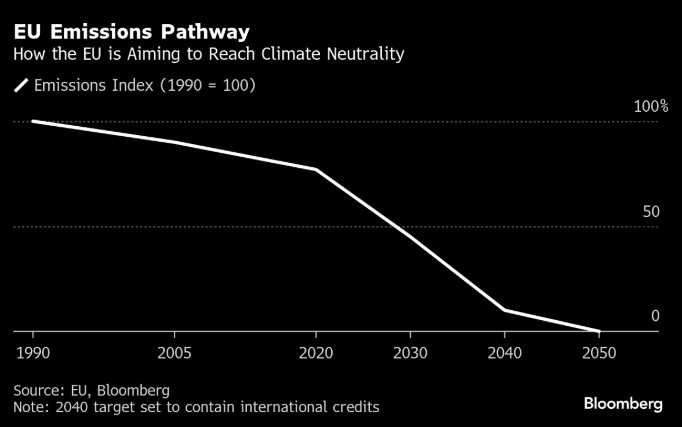
Group 1 - The European Commission has proposed a legislative plan to reduce greenhouse gas emissions by 90% by 2040 compared to 1990 levels, marking a critical milestone towards the 2050 carbon neutrality goal [1][3] - The proposal allows member states to use an international carbon offset mechanism to fulfill up to 3% of their reduction targets starting in 2036, which has sparked disagreements among member countries and criticism from environmental organizations [3][4] - The proposal reflects a balance between ambitious climate goals and practical implementation, as highlighted by the EU Climate Commissioner Wopke Hoekstra [3][4] Group 2 - There are significant divisions among member states regarding the feasibility of the 2040 target, with some leaders linking decarbonization to industrial competitiveness, while others express concerns about the impact on heavy industries [4] - The European Parliament is also divided, with the largest party, the European People's Party, caught between climate activists and industrial protectionists, facing pressure from other political groups [4] - The new carbon offset mechanism has been criticized for potentially undermining local fossil fuel phase-out efforts, as funds may be directed towards overseas projects [5][6] Group 3 - The EU plans to submit an updated Nationally Determined Contribution (NDC) by September and aims to demonstrate leadership at the upcoming COP30 climate conference in Brazil [6] - The proposed reduction curve from 2030 to 2040 is expected to achieve a reduction of approximately 72.5%, contingent on unanimous agreement from member states [6] - The EU's ability to reconcile internal divisions is crucial for maintaining its image as a climate leader, especially in light of global trust issues following the U.S. withdrawal from the Paris Agreement [6]