地下管网投资

Search documents
如何看待六网七万亿中的地下管网投资
2026-03-09 05:18
Summary of Key Points from Conference Call on Underground Pipeline Investment Industry Overview - The focus is on the underground pipeline investment sector, which is expected to see a significant expansion from a previously estimated 4 trillion yuan for 600,000 kilometers to 5 trillion yuan for 700,000 kilometers, with an average annual investment of approximately 1 trillion yuan, and a peak expected in 2026-2027 [1][5][13]. Core Insights and Arguments - **Investment Expansion**: The investment in underground pipelines is projected to triple, with 2024's investment at 350 billion yuan, compared to the anticipated annual average of 1 trillion yuan during the 14th Five-Year Plan [1][8]. - **Funding Structure Shift**: The funding structure has fundamentally changed, with central government funding rising to about 50% and local government funding dropping to 10%. Special long-term bonds are expected to contribute 2.5 trillion yuan, accounting for 40%-50% of the funding [1][6]. - **User-Pay Principle**: The financing model is shifting towards a "user pays" system, which includes adjustments in water pricing and the exploration of a rainwater tax to address the lack of revenue sources for drainage systems [1][9]. - **Material Trends**: There is a trend of "metal return" in the pipeline market, with the proportion of steel pipes in municipal pipelines expected to increase from 17% to 25%. The domestic production rate of non-excavation repair materials is also rising, indicating a phase of industry consolidation [1][5]. - **Governance Shift**: The focus of governance is shifting from incident-driven responses to addressing root causes, with an emphasis on drainage, gas, and heating networks [1][4]. Additional Important Insights - **Technological Advancements**: The sector is seeing growth in smart technologies, including AI for leak detection and 3D geological radar for monitoring [2][24]. - **Investment Gaps**: There is a structural mismatch between the growth in pipeline mileage (18% increase over five years) and the stagnation in investment levels, which has remained relatively flat [3][11]. - **Legislative Framework**: The legislative process for underground pipeline regulations is underway, with the Ministry of Housing and Urban-Rural Development initiating the "Urban Underground Pipeline Regulations" [3][4]. - **Market Dynamics**: The investment landscape is evolving, with a notable decrease in local government funding and an increase in central government support, reflecting a shift in the investment burden [11][12]. - **Challenges in Funding**: The main challenges in the financing chain include low marketization levels and a lack of effective incentives for social capital participation, necessitating reforms in the financing system [9][10]. This summary encapsulates the critical aspects of the underground pipeline investment sector as discussed in the conference call, highlighting the anticipated growth, funding shifts, governance changes, and technological advancements.
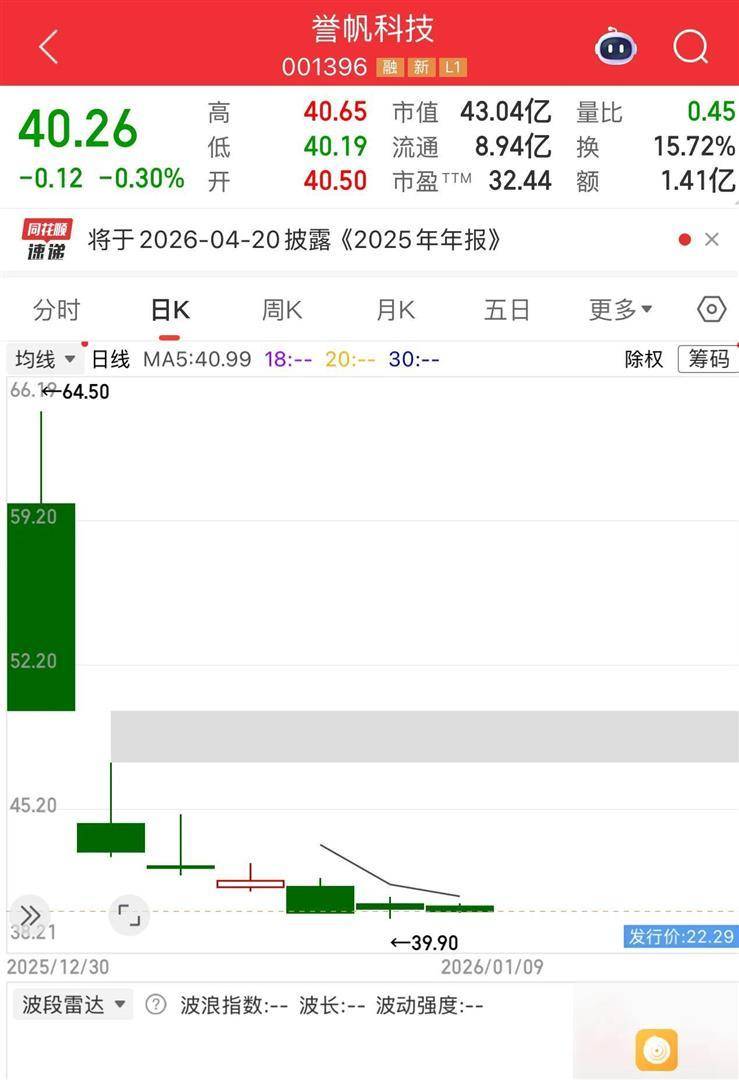
上市7天跌去近四成!散户抄底反被抄家,4766万保荐费却稳入囊中,这新股怎么了?
Sou Hu Cai Jing· 2026-01-13 04:42
Core Viewpoint - The stock of Yufan Technology experienced a dramatic rise on its debut, only to face significant declines in the following days, raising concerns about its financial health and the sustainability of its business model [1][3][12]. Company Overview - Yufan Technology specializes in the operation and maintenance services of urban underground water supply and drainage networks, claiming to be a leader in this niche market with operations across 32 provinces in China [3][5]. Financial Performance - The company reported a revenue increase from 513 million yuan in 2022 to 730 million yuan in 2024, with net profit rising from 73.37 million yuan to an expected 140 million yuan in 2025 [5][7]. - Despite revenue growth, the company has faced continuous negative cash flow from operating activities over the past three years, indicating a lack of real cash inflow [7][10]. Asset Structure - A significant portion of the company's assets, over 80%, consists of accounts receivable and contract assets, suggesting that much of its reported profit is not backed by actual cash [5][7]. Market Reaction - On the second trading day, the stock price fell by 13.72%, and by January 7, it had dropped nearly 40% from its peak, leading to substantial losses for investors who bought at the high [3][12]. - The initial trading frenzy saw a turnover rate exceeding 75%, indicating that most shares were sold on the first day, primarily by lucky lottery winners and institutions, leaving retail investors to bear the losses [10][12]. Underlying Issues - Analysts pointed out that despite a low initial price-to-earnings ratio, the stock's valuation soared above 40 times earnings after the first day, creating pressure for a valuation correction [12]. - The long-term nature of the company's business model, tied to urban infrastructure projects, means that immediate financial returns may not align with high stock price expectations [12].