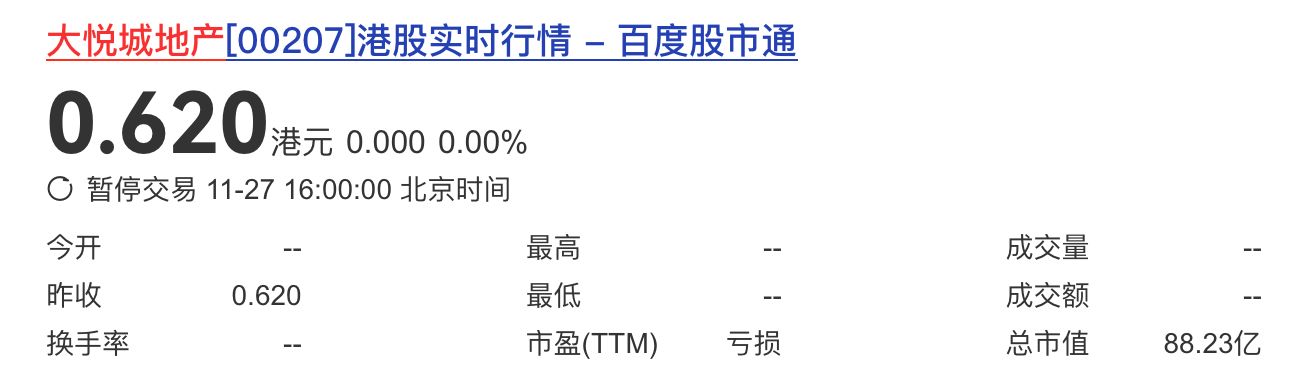
地产企业私有化

Search documents
上市12年,大悦城地产从港交所退市,中粮集团地产平台仅剩A股大悦城
Mei Ri Jing Ji Xin Wen· 2025-11-28 01:32
Core Viewpoint - The privatization plan of Joy City Property is a strategic response to cyclical changes in the industry, aimed at optimizing governance and enhancing decision-making efficiency [2] Company Summary - Joy City Property's privatization transaction is valued at approximately HKD 29.32 billion, effective from November 25, with all conditions met [1] - The company, listed on the Hong Kong Stock Exchange since 2013, focuses on the development and operation of urban complexes under the Joy City brand, including investment properties and hotel management [1] - Following the privatization, Joy City will only have its A-share listed entity remaining, with a market value of approximately CNY 13.42 billion [1] Financial Performance - For the first half of 2025, Joy City Property reported revenue of approximately CNY 8.12 billion, a year-on-year decrease of about 5.78%, primarily due to reduced area for property development [2] - The overall gross profit margin improved by 2.9 percentage points to 34.43% [2] - Specific revenue breakdown includes CNY 5.48 billion from property development (down 8.3% year-on-year) and CNY 2.04 billion from investment properties (down 2.5% year-on-year) [2] Project Performance - New projects have shown strong performance, with Nanchang Joy City achieving 240,000 visitors and sales of CNY 16.3 million on its opening day [3] - The hotel business maintained revenue of CNY 466 million, with an occupancy rate rising to 84% [3] - Management output revenue increased by 47% year-on-year to CNY 107 million, benefiting from new income from COFCO Joy City Commercial REIT [3] Industry Perspective - The privatization is seen as a way for the company to maintain strategic focus during industry adjustments, enhancing its competitive advantage in the mid-to-high-end commercial real estate sector [3] - Since 2022, over 30 A-share and H-share listed real estate companies have delisted, with five opting for voluntary delisting, including Joy City Property [3]


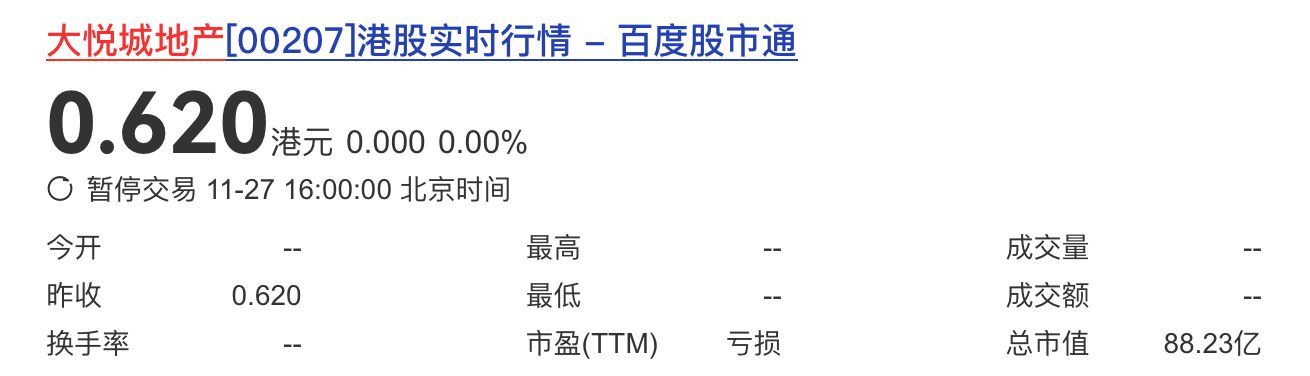
大悦城地产,港交所退市
Mei Ri Jing Ji Xin Wen· 2025-11-27 12:40
Core Viewpoint - The privatization of Joy City Property is a strategic response to cyclical changes in the real estate industry, aimed at optimizing governance and enhancing management efficiency [2]. Company Summary - Joy City Property's privatization plan was effective from November 25, with a total transaction value of approximately HKD 29.32 billion, leaving only the A-share listed Joy City [1]. - The company, part of COFCO Group, focuses on the development and operation of urban complexes under the Joy City brand, including investment properties and hotel operations [1]. - Joy City Property's last interim performance report indicated a revenue of approximately CNY 8.12 billion for the first half of 2025, a year-on-year decrease of about 5.78%, primarily due to reduced property development area [2]. Industry Summary - The privatization is seen as a way to maintain strategic focus during industry adjustments, allowing for more flexible asset disposal and broader financial planning [4]. - Since 2022, over 30 listed real estate companies have delisted, with five opting for voluntary delisting, including Joy City Property [4].
上市12年,大悦城地产今日从港交所退市,中粮集团地产平台仅剩A股大悦城
Mei Ri Jing Ji Xin Wen· 2025-11-27 09:00
Core Viewpoint - Dalian Wanda Commercial Properties officially delisted from the Hong Kong Stock Exchange on November 27, 2023, after 12 years of listing, due to its privatization plan which became effective on November 25, 2023 [1][2]. Company Summary - The total consideration for the privatization transaction is approximately HKD 29.32 billion, leaving only the A-share listed Dalian Wanda (000031.SZ) under COFCO Group's real estate platform [2]. - Dalian Wanda Commercial Properties was listed in 2013 and focused on the development and operation of urban complexes under the Dalian Wanda brand, including investment properties, property development, and hotel operations [2][3]. - The company underwent a significant asset restructuring in 2019, acquiring 64.18% of the Hong Kong-listed Dalian Wanda Commercial Properties, forming a dual-platform structure [3]. Industry Perspective - The privatization is viewed as a strategic response to cyclical changes in the industry, with Dalian Wanda stating that market performance has shown periodic fluctuations and liquidity pressures [3]. - The privatization is expected to optimize the company's governance framework, integrate organizational and equity structures, and enhance management decision-making efficiency [3]. - Following the transaction, Dalian Wanda's equity in Dalian Wanda Commercial Properties will be further strengthened, benefiting net profit attributable to the parent company and enhancing asset allocation capabilities [3]. Financial Performance - For the first half of 2025, Dalian Wanda Commercial Properties reported revenue of approximately HKD 8.12 billion, a year-on-year decrease of about 5.78%, primarily due to a reduction in the area of property development recognized [4]. - The overall gross profit margin improved by 2.9 percentage points to 34.43% [3]. - Specific revenue breakdown includes: - Property development revenue of HKD 5.48 billion (down 8.3% year-on-year) with a 32% decrease in settlement area but a 33% increase in average price, leading to a gross margin of 18% [4]. - Investment property rental and related income of HKD 2.04 billion (down 2.5% year-on-year) with a gross margin of 78% [4]. - Hotel business revenue remained stable at HKD 466 million with an occupancy rate of 84% [4]. Market Trends - The privatization trend is noted among real estate companies, with over 30 A-share and H-share listed real estate firms delisting since 2022, including five actively choosing to delist [5].