
地区稳定与安全

Search documents
伊朗外长与沙特外交大臣通电话,就地区形势交换意见
Xin Lang Cai Jing· 2026-01-28 13:38
Core Viewpoint - The conversation between Iranian Foreign Minister Zarif and Saudi Foreign Minister Faisal highlighted the constructive dialogue between Iranian President Raisi and Saudi Crown Prince Mohammed bin Salman, emphasizing the shared responsibility of regional countries to maintain stability and security in the region [1] Group 1 - The discussion included a review of key points from the dialogue between the Iranian President and the Saudi Crown Prince [1] - Both parties warned that escalating regional tensions could have dangerous consequences for peace and stability [1] - The emphasis was placed on the spirit of cooperation among all regional countries to uphold stability and security [1]
俄外长:日本领土上出现美国陆基打击系统“不可接受”
Xin Lang Cai Jing· 2026-01-21 11:18
Group 1 - The core viewpoint of the article is that Russia has expressed strong concerns regarding Japan's military cooperation with the United States, particularly the deployment of U.S. land-based strike systems on Japanese territory, which Russia deems unacceptable [1][3]. - Russian Foreign Minister Lavrov highlighted that the strategic military cooperation between Japan and the U.S. and the involvement of external entities in military activities on Japanese soil are alarming, especially given the current chaotic international situation [3]. - Lavrov reiterated that Russia has communicated its security concerns to Japan through diplomatic channels and has warned that Japan's actions negatively impact regional stability and security [3]. Group 2 - The article mentions that Japan's government approved a defense budget for the fiscal year 2026, which is set to reach a historical high, raising further concerns from Russia [3]. - Kremlin spokesperson Peskov warned that any increase in defense spending by regional actors should be approached with caution to avoid escalating tensions [3].

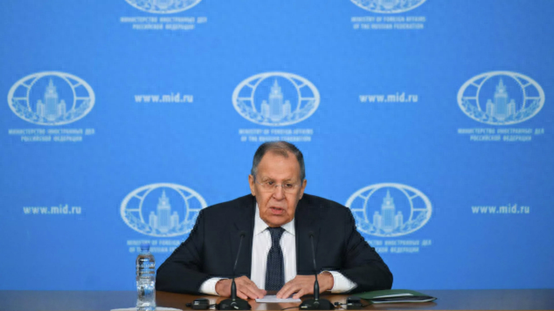
俄外长:俄曾通过外交渠道告诉日方,日本领土上出现美国陆基打击系统“不可接受”
Huan Qiu Wang· 2026-01-21 10:40
Group 1 - The core viewpoint of the article highlights Russia's strong opposition to the deployment of U.S. land-based strike systems on Japanese territory, which is deemed "unacceptable" by Russian Foreign Minister Lavrov [1][3] - Lavrov expressed concerns regarding Japan's military cooperation with the U.S. and the involvement of external entities in military activities on Japanese soil, particularly given the proximity to Russian borders [3] - The Russian government has previously communicated its worries about Japan's actions negatively impacting regional stability and security, urging Japan to refrain from a path of "remilitarization" [3] Group 2 - The article mentions that Japan's government approved a defense budget for the fiscal year 2026, which sets a new historical high, raising concerns from Russian officials [3] - Kremlin spokesperson Peskov warned that any increase in defense spending by regional actors should be approached with caution to avoid escalating tensions further [3]
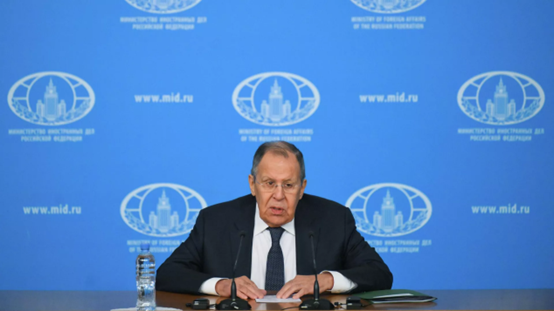
俄外长:日本欲部署中程导弹并非爱好和平之举
Zhong Guo Xin Wen Wang· 2026-01-21 02:52
Group 1 - Russian Foreign Minister Lavrov stated that Japan's plan to deploy medium-range missiles near Taiwan is not a peaceful initiative, but rather the opposite [1] - Discussions within Japan regarding constitutional amendments are becoming more active, aimed at enhancing offensive military capabilities and potentially altering the country's non-nuclear status [1] - Russia expressed concerns over the presence of U.S. land-based "Tomahawk" missile systems in Japan, indicating that such actions could negatively impact regional stability and security [1] Group 2 - Lavrov emphasized Russia's commitment to resolving the Ukraine crisis through diplomatic means, asserting that European countries have been undermining political agreements since 2014 [2] - The Russian stance on the Ukraine issue is that the root causes of the crisis must be addressed, as it has been deliberately manufactured by the West to pose a threat to Russian security [2] - Russia aims to continue cooperation within multilateral frameworks such as the CIS, EAEU, CSTO, and SCO, promoting the establishment of a "Greater Eurasian Partnership" for a secure Eurasian security architecture [2]
伊朗外长与阿联酋外长通话 强调加强地区稳定
Yang Shi Xin Wen· 2026-01-14 05:57
Core Viewpoint - The conversation between Iranian Foreign Minister Zarif and UAE Foreign Minister Abdullah focused on regional stability and the recent unrest in Iran, which Zarif attributed to external provocations by Israel and the U.S. [1] Group 1: Discussion of Unrest - Zarif mentioned that the recent unrest in Iran was incited by the "Zionist regime" of Israel and the U.S., leading to chaos from peaceful protests [1] - He emphasized that due to the vigilance of the public and law enforcement, the situation has returned to calm [1] Group 2: National Sovereignty and Security - Zarif expressed the determination of the Iranian people to defend national sovereignty and security against malicious actions and foreign interference [1] Group 3: Importance of Regional Cooperation - Abdullah highlighted the importance of ongoing consultations among Iran, the UAE, and regional countries to enhance stability and security in the region [1]
阿联酋总统与伊拉克总理讨论双边关系及地区发展
Yang Shi Xin Wen· 2025-10-01 17:56
Core Viewpoint - The meeting between UAE President Mohammed and Iraqi Prime Minister Sudani focused on enhancing bilateral cooperation, particularly in development and economic sectors, while addressing regional and international issues [1]. Group 1: Bilateral Relations - The leaders reviewed the close relationship between the UAE and Iraq and expressed commitment to further strengthen cooperation in alignment with both countries' interests [1]. - They emphasized the importance of Arab unity in addressing regional challenges and enhancing stability and security [1]. Group 2: Regional Issues - Discussions included the need for a clear path to lasting peace in the region and the promotion of diplomatic initiatives to support security, stability, and development [1]. - The leaders acknowledged the recent international recognition of Palestine and viewed it as a step towards fulfilling the legitimate aspirations of the Palestinian people [1].