地震监测

Search documents
青藏高原地震监测69年,14名工作者为地球把脉
Xin Lang Cai Jing· 2026-02-22 01:28
Core Viewpoint - The article highlights the significance of the Lhasa Earthquake Monitoring Center in Tibet, which has been operational for over 60 years, providing crucial data for earthquake monitoring and prediction in a challenging high-altitude environment [1][6]. Group 1: Earthquake Monitoring Operations - The Lhasa Earthquake Monitoring Center, established in 1956, has been continuously monitoring seismic activities in Tibet, known as the "Earth's Third Pole" [1]. - The center is responsible for analyzing seismic waveforms from three national earthquake stations in the region, ensuring data accuracy and reliability through various technical methods [2][3]. - The monitoring team consists of 14 members who work tirelessly to analyze earthquake data, likening their work to providing a "health check" for the Earth [3]. Group 2: Challenges Faced - The vast area of 620,000 square kilometers monitored by the Lhasa center presents significant challenges, with only four personnel managing operations across this expanse [4]. - The team has established over 200 monitoring stations, with most being unmanned, requiring extensive travel for maintenance and data collection [4][5]. - Extreme weather conditions and high altitudes complicate the monitoring efforts, with personnel often experiencing altitude sickness during fieldwork [5]. Group 3: Commitment and Dedication - The monitoring staff work 24/7, ensuring continuous data collection and system functionality, even during holidays and festivals [6][7]. - The commitment to earthquake monitoring is underscored by the personal sacrifices made by the staff, who often miss family gatherings to fulfill their responsibilities [7]. - The historical data collected over decades is vital for improving earthquake prediction and response efforts, emphasizing the long-term dedication required in this field [6].
海拔4000米以上,他们为地球“把脉”
Zhong Guo Qing Nian Bao· 2026-02-16 13:28
Core Viewpoint - The article highlights the significant role of the Lhasa Earthquake Monitoring Center in Tibet, which has been monitoring seismic activity for over 60 years, providing crucial data for earthquake prediction and response efforts in a challenging high-altitude environment [2][8]. Group 1: Earthquake Monitoring Operations - The Lhasa Earthquake Monitoring Center, established in 1956, has been essential in ensuring the continuity and integrity of earthquake observation data in Tibet, known as the "Earth's Third Pole" [2][8]. - The center operates three national seismic stations and employs advanced techniques to filter noise and enhance data reliability, requiring extensive data processing and analysis [3][4]. - The monitoring team consists of 14 members who work tirelessly to analyze seismic data, conduct field investigations, and set up emergency monitoring stations in response to significant earthquakes [4][5]. Group 2: Geographic and Environmental Challenges - The monitoring area spans 620,000 square kilometers, covering about half of Tibet, which presents logistical challenges for the small team of four responsible for maintaining the monitoring stations [5][6]. - Extreme weather conditions, including hail, strong winds, and freezing rain, complicate the work, especially at high altitudes where the team faces physical challenges [7][8]. - The team often travels long distances for maintenance and inspections, with some trips requiring significant time and effort due to the remote locations of the monitoring stations [6][7]. Group 3: Commitment and Work Ethic - The monitoring personnel work 24/7, even during holidays, to ensure the continuous operation of monitoring systems and the integrity of data collection [8][9]. - The dedication of the team is evident as they often sacrifice personal time, including holidays, to fulfill their responsibilities in earthquake monitoring [9].


新春走基层|海拔4000米往上,他们为地球“把脉”
Xin Lang Cai Jing· 2026-02-14 11:25
Core Viewpoint - The article highlights the importance of the Lhasa Earthquake Monitoring Center in Tibet, which has been monitoring seismic activity for over 60 years, providing crucial data for earthquake prediction and response efforts [2][10]. Group 1: Earthquake Monitoring Operations - The Lhasa Earthquake Monitoring Center, established in 1956, is responsible for continuous seismic monitoring in Tibet, a region characterized by high altitude and geological activity [2][10]. - The center operates three national seismic stations and employs 14 monitoring personnel who analyze seismic waveforms and conduct data processing to ensure accurate monitoring [3][5]. - The monitoring team utilizes various techniques to filter noise and enhance data reliability, often spending four hours on data analysis each morning [3][5]. Group 2: Challenges in Monitoring - The vast area of 620,000 square kilometers covered by the Lhasa center presents significant challenges, with only three staffed stations among over 200 monitoring sites [6]. - The harsh climatic conditions of the Tibetan Plateau, including extreme weather and high altitudes, pose physical challenges for monitoring personnel [9][10]. - The monitoring team often travels long distances for inspections, with some trips taking up to 12 hours each way, highlighting the logistical difficulties in maintaining the monitoring network [7][9]. Group 3: Commitment and Dedication - The monitoring staff, including individuals like Bai Ma Sang Bu, demonstrate a strong commitment to their work, often sacrificing personal time, including holidays, to ensure continuous monitoring [13][10]. - The data collected over decades serves as a critical resource for earthquake prediction and response, emphasizing the long-term nature of seismic research [10][12]. - The monitoring operations are conducted year-round, with personnel required to be on duty 24/7, reflecting the ongoing need for vigilance in earthquake monitoring [10][12].

误差不超过万分之二!我国首套强震动加速度计检定装置获批
Yang Shi Xin Wen· 2025-12-17 19:42
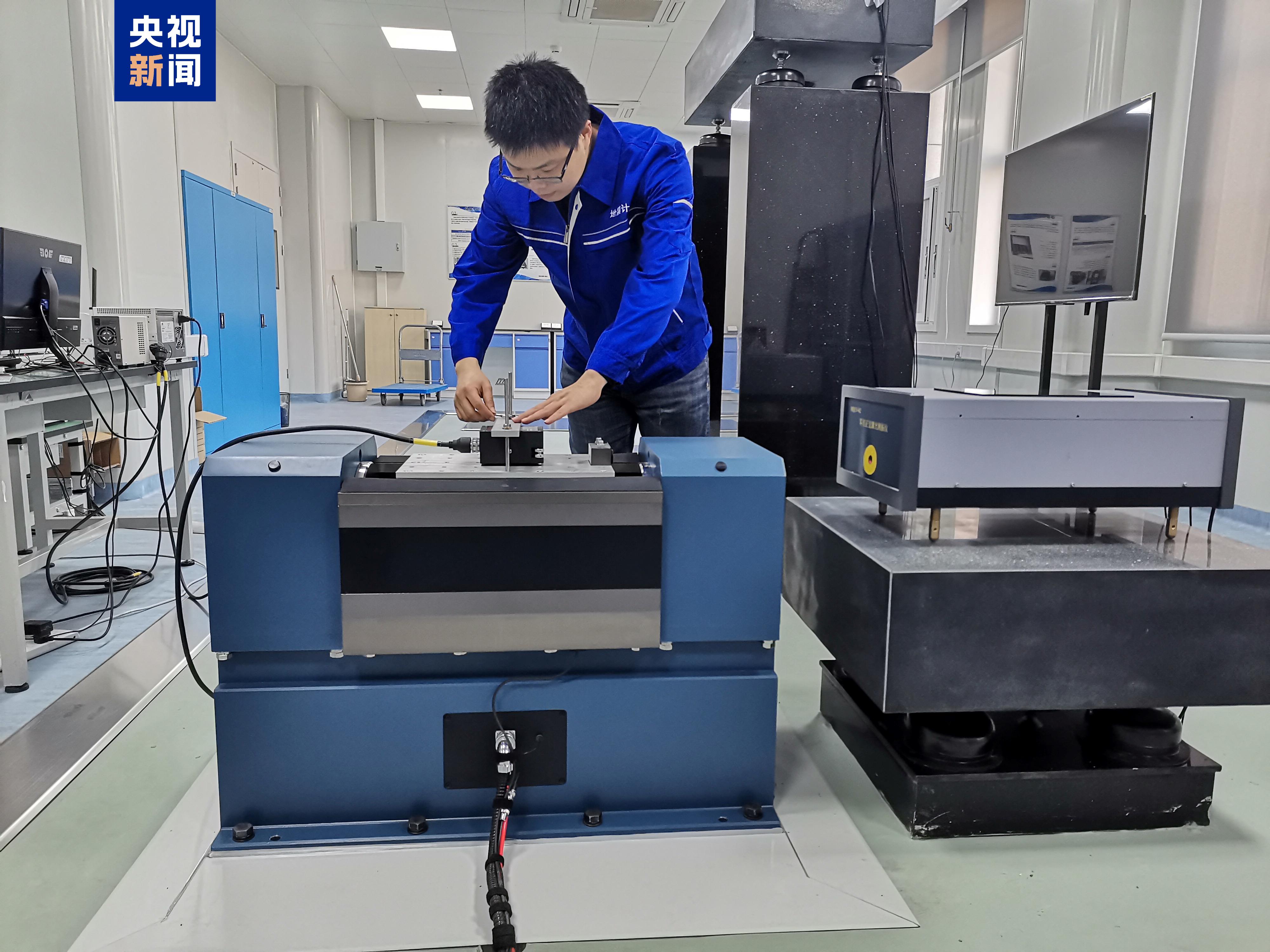
Core Insights - The establishment of the first national strong motion accelerometer calibration device at the China Earthquake Administration's First Monitoring Center is aimed at enhancing the precision of earthquake monitoring [1][4]. Group 1: Strong Motion Accelerometers - Strong motion accelerometers are critical instruments for rapid earthquake intensity assessment and are currently deployed in over 5,000 units across the national seismic monitoring network, with plans to expand to over 20,000 units during the 14th Five-Year Plan [4]. - These devices capture ground vibration signals immediately after an earthquake occurs, providing essential data for determining earthquake intensity, calculating the epicenter, and identifying the time of occurrence [4][9]. Group 2: Calibration Device Features - The newly established calibration device features advanced vibration simulation capabilities and high measurement precision, capable of simulating maximum vibration intensity equivalent to a car accelerating from rest to 216 kilometers per hour in 2 seconds [8]. - It can accurately replicate ground vibrations caused by earthquakes ranging from magnitude 1 to 8, ensuring that calibrated devices can reliably respond to various earthquake intensities [8]. Group 3: Impact on Earthquake Monitoring - The calibration device's measurement error is less than 0.0002 of the earthquake magnitude, significantly below human perception limits, which enhances the scientific analysis and assessment of earthquake damage [8]. - China has built the world's largest and most comprehensive earthquake early warning network based on domestically produced high-precision instruments, which provides critical time for public safety and emergency responses in sectors like high-speed rail and precision manufacturing [9].
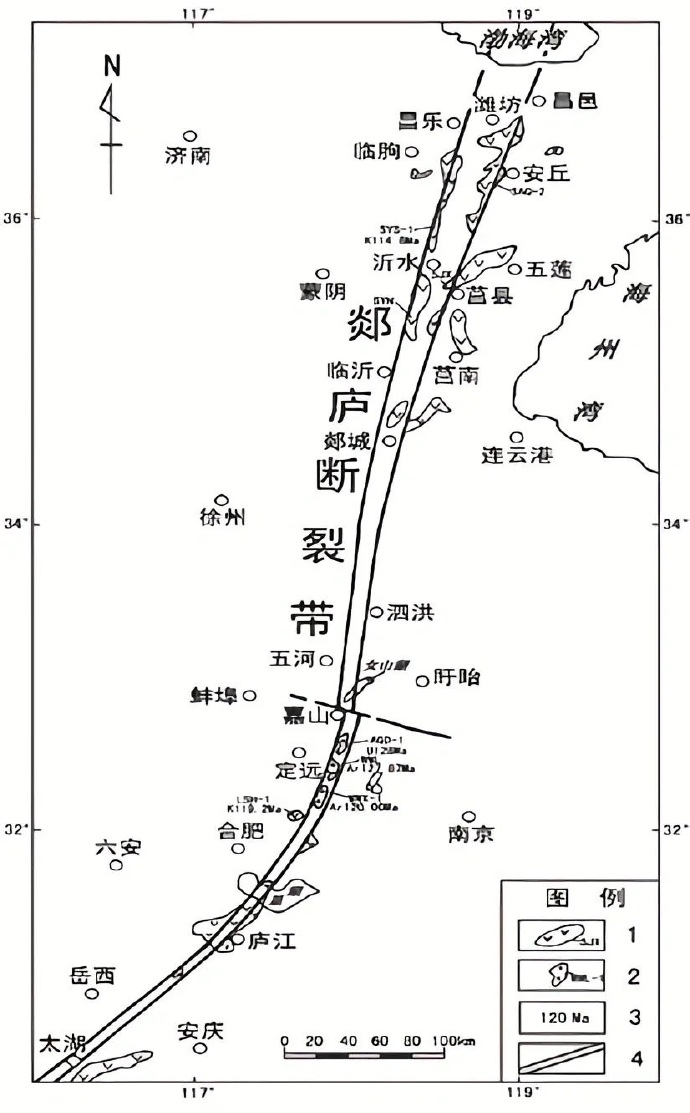
倾听大地的脉搏:郯庐断裂带上的六十载守望
Qi Lu Wan Bao· 2025-09-26 11:58
Core Viewpoint - The Tancheng-Lujiang Fault Zone is a significant geological feature in East Asia, known for its historical seismic activity and ongoing monitoring efforts to ensure public safety and disaster preparedness [1][4]. Group 1: Monitoring and Measurement - The Tancheng-Lujiang Fault Zone extends over 2400 kilometers, with a history of significant earthquakes, including the 8.5 magnitude earthquake in 1668 [1]. - The Anqiu Earthquake Monitoring Station, established in 1969, plays a crucial role in monitoring the fault zone, utilizing advanced equipment such as superconducting gravimeters and strong motion accelerometers [4][5]. - The station has conducted cross-fault leveling measurements since 1991, with monthly assessments at nine sites and six fixed-point measurements at the fault [4]. Group 2: Earthquake Early Warning - The Anqiu Earthquake Monitoring Station is equipped with a comprehensive earthquake early warning system, capable of issuing alerts within 5-30 seconds after an earthquake occurs [5]. - The national earthquake early warning project, initiated in 2018, has established 15,899 observation stations and three national warning centers, enhancing the monitoring and response capabilities [5]. - The system provides critical information such as the time of occurrence, epicenter location, and magnitude within 1-2 minutes, and generates intensity distribution maps within 2-5 minutes [5]. Group 3: Public Education and Community Engagement - The Anqiu Earthquake Monitoring Station serves as a national disaster prevention and reduction education base, having hosted over 100,000 visitors for educational activities [6]. - The station actively engages with local communities and enterprises to provide services such as fault location assessments and disaster loss evaluations [6]. - Educational initiatives include hands-on experiences for students, such as VR simulations of earthquakes and emergency preparedness training [6]. Group 4: Future Outlook - The ongoing efforts of the monitoring station reflect a commitment to public safety and economic development, with staff dedicated to capturing seismic activity and enhancing community resilience [7].