坚守正义

Search documents
给人一份正道直行的勇气(新作速评)
Ren Min Ri Bao· 2025-11-17 23:06
Core Viewpoint - The drama "Tree Shadow Labyrinth" effectively combines suspenseful storytelling with deep philosophical reflections on justice, showcasing the struggles of characters over an extended period to uphold righteousness in a changing society [1][2]. Group 1: Plot Summary - The story is set in 1994 in the northern city of Yanchuan, where a series of murders lead two police officers, a mentor and his apprentice, to investigate the "Hutong Killer" over 18 years, facing numerous challenges and evolving societal changes [1][2]. - The protagonist, young officer Zhao Gan'e, becomes obsessed with solving his first major case due to his guilt over the victim Liu Ke, demonstrating a personal commitment to justice despite the passage of time and the loss of hope from others [1][2]. Group 2: Themes and Messages - The narrative emphasizes that the pursuit of justice is a collective effort across generations, illustrated by the mentor-student relationship between Zhao Gan'e and his senior officer, Ran Xi, who continues to inspire perseverance even in the face of terminal illness [2]. - The show reflects on the concept of "delayed justice," questioning its significance while highlighting the importance of maintaining hope and the human connections within the community, represented by the evolving Hutong and its inhabitants [2][3]. - The overarching theme of "walking the righteous path" resonates with cultural values, suggesting that even fleeting lives can leave a lasting impact through the steadfast pursuit of justice [3].
文物诉说跨越国界的生死情谊(以物鉴史)
Ren Min Ri Bao· 2025-10-25 22:12
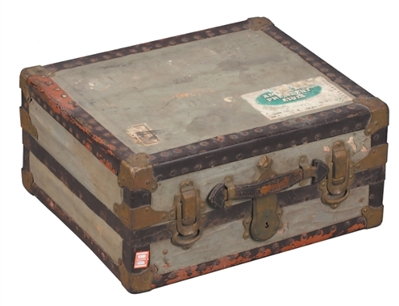
Core Viewpoint - The exhibition "International Friends and China's Anti-Japanese War" at the National Museum of China highlights the deep connections and support from international allies during China's struggle against Japanese aggression, showcasing artifacts that embody the spirit of resilience and solidarity [6][9]. Group 1: Artifacts and Their Significance - The exhibition features significant artifacts such as Edgar Snow's travel suitcase and the "Lugou Bridge" medical pack invented by Norman Bethune, which symbolize the profound friendships and the indomitable spirit of the Chinese people during wartime [7][8]. - Snow's fountain pen, used to write the initial manuscript of "Red Star Over China," played a crucial role in breaking the information blockade imposed by the Nationalist government, allowing the world to see the reality of the Communist-led Shaanxi-Gansu-Ningxia Border Region [7]. - The "Lugou Bridge" medical pack, designed to facilitate surgeries in the field, represents Bethune's dedication to saving lives, having successfully operated on 115 wounded soldiers over 69 hours before his untimely death due to infection [8]. Group 2: Stories of International Support - The exhibition also highlights the contributions of the Indian Medical Team, whose members adopted names with the character "Hua" to express their solidarity with the Chinese people, and their perilous journey to deliver medical supplies during the war [8]. - The stories of Soviet volunteer pilots and American Flying Tigers illustrate the global support for China's resistance, with many sacrificing their lives in the process [9]. - The narratives of individuals like John Rabe, who provided refuge for Chinese refugees, emphasize the collective effort and moral responsibility shared by the international community in the fight against oppression [9]. Group 3: Lessons and Values - The artifacts serve as a living history, conveying messages of truth-seeking, justice, selflessness, and unity, which are essential values for future generations [9][10]. - The exhibition aims to instill a sense of responsibility and courage in facing challenges, reminding people of the importance of solidarity and mutual assistance in achieving a better life [9].