城市文化赋能

Search documents
多国视角共探“文化赋能城市发展”的实践样本
Huan Qiu Wang· 2025-11-14 04:14
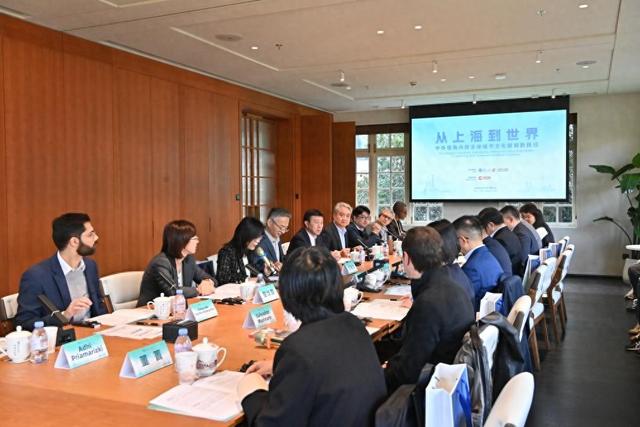
Group 1 - The event "From Shanghai to the World: Exploring New Paths for Global Urban Cultural Empowerment" was successfully held, gathering around 20 experts and leaders from various countries to discuss innovative paths for urban cultural development [1][3] - The conference emphasized "cross-border perspectives" and "multinational perspectives," focusing on how to better integrate Shanghai's narrative into global storytelling [3][6] Group 2 - Keynote speeches addressed urban cultural empowerment from various angles, including international relations, aviation and tourism, and technological archaeology, highlighting the need for global cities to redefine their roles in the context of China's participation in global order [6][9] - The "Aviation+" strategy by China Eastern Airlines was discussed as a means to empower urban culture, including initiatives like the world's first "Aerial Museum" themed flight and the "Shanghai Pass" tourism product [6][9] Group 3 - The discussion included the recovery trends in global tourism and aviation, emphasizing the importance of enhancing international routes and inbound tourism to promote economic prosperity [9][10] - Various case studies were presented, such as integrating cultural elements into international sporting events to enhance global urban cultural narratives [10][11] Group 4 - The event featured immersive cultural visits, allowing participants to experience Shanghai's role as a model city for cultural exchange, providing a reference for global urban cultural development [13][14] - The discussions aimed to inject new vitality into urban cultural innovation and explore practical solutions for cultural development [14]



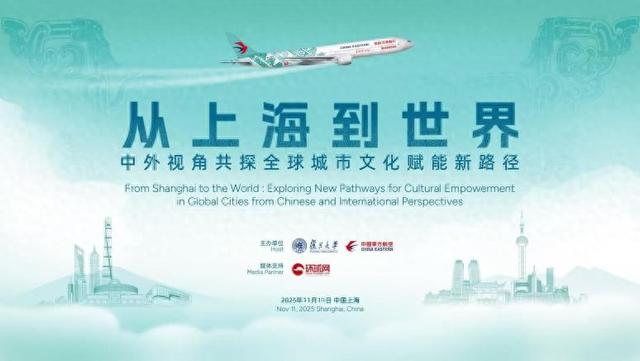
“从上海到世界:中外视角共探全球城市文化赋能新路径”活动在沪成功举办
Huan Qiu Wang· 2025-11-12 10:37
Core Insights - The event "From Shanghai to the World: Exploring New Paths for Global Urban Cultural Empowerment" was successfully held, gathering representatives from various countries to discuss urban cultural empowerment and its integration into global narratives [1][3]. Group 1: Event Overview - The event was co-hosted by China Eastern Airlines and Fudan University, with media support from Global Times, and featured around 20 representatives from countries including China, Singapore, Indonesia, Cameroon, Germany, Serbia, and Brazil [1]. - The seminar aimed to create a multi-dimensional dialogue platform focusing on Shanghai's urban cultural empowerment and how to better integrate Shanghai's story into global narratives [3]. Group 2: Key Discussions - Chinese experts emphasized the need to build a modern narrative that reflects Chinese characteristics while resonating internationally, advocating for deep integration of urban culture with related industries [3]. - Practical examples from various sectors, including aviation, tourism, media, and sports, demonstrated that market-oriented and international operations can effectively convert the significant traffic generated by cities into cultural dissemination energy [3]. Group 3: International Perspectives - Overseas scholars provided constructive feedback based on cultural observations from different regions, recognizing Shanghai's unique development model that successfully integrates traditional elements while achieving remarkable modernization [3]. - Participants agreed that enhancing cultural, economic, and educational exchanges, increasing direct flight routes, and encouraging more authentic and diverse grassroots interactions are crucial for advancing mutual understanding between Chinese and foreign civilizations [3]. Group 4: Cultural Exchange and Tourism - The event featured a "thematic discussion + immersive visit" format, allowing guests to experience Shanghai's charm as a model city for cultural exchange [4]. - With the expansion of China's visa-free "circle," global tourists are increasingly drawn to China, highlighting Shanghai's role as a gateway city and its efforts to transform "visa-free traffic" into "consumption growth" [4]. - The exploration of Shanghai's cultural soft power practices has become a significant topic of interest for both domestic and international industries and academia [4].