
航空运输业

Search documents
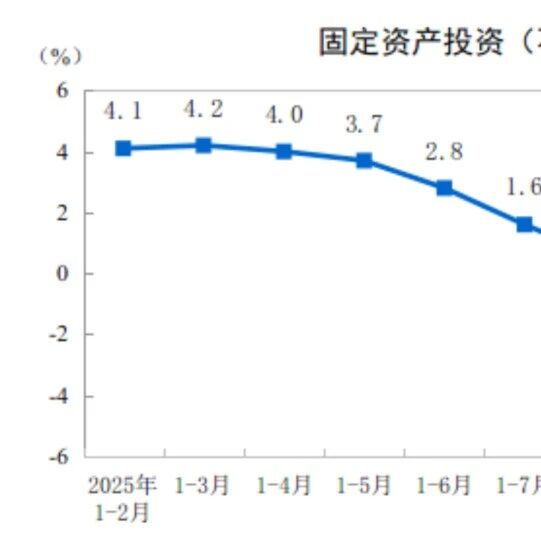
【数据发布】2026年1—2月份全国固定资产投资同比增长1.8%
中汽协会数据· 2026-03-16 08:35
Core Viewpoint - In the first two months, China's fixed asset investment (excluding rural households) reached 52,721 billion yuan, showing a year-on-year growth of 1.8%. However, private fixed asset investment decreased by 2.6% [1][4]. Investment by Industry - Investment in the primary industry was 1,093 billion yuan, with a year-on-year increase of 17.4% - Investment in the secondary industry was 17,434 billion yuan, growing by 5.4% - Investment in the tertiary industry was 34,194 billion yuan, declining by 0.4% [3][4]. Industrial Investment Breakdown - Industrial investment increased by 5.4% year-on-year, with mining investment up by 13.0%, manufacturing investment up by 3.1%, and investment in electricity, heat, gas, and water production and supply up by 13.1% [3][4]. Infrastructure Investment - Infrastructure investment grew by 11.4% year-on-year, with notable increases in aviation transport investment (31.1%), gas production and supply investment (20.0%), and water transport investment (17.9%) [3][4]. Regional Investment Analysis - Investment in the eastern region increased by 1.8% year-on-year, while the central region saw a growth of 1.9%. In contrast, the western region experienced a decline of 0.5%, and the northeastern region saw a significant drop of 11.4% [3][4]. Investment by Registration Type - Domestic enterprises' fixed asset investment grew by 2.1% year-on-year, while investment from Hong Kong, Macau, and Taiwan enterprises decreased by 3.0%, and foreign-invested enterprises saw a decline of 9.1% [3][4].

【广发宏观陈嘉荔】美国通胀数据:预期与现实
郭磊宏观茶座· 2026-03-12 02:09
Core Viewpoint - The article discusses the stability of U.S. inflation data in February 2026, with the Consumer Price Index (CPI) increasing by 2.4% year-on-year and the core CPI rising by 2.5%, both in line with expectations and previous values. It highlights the impact of tariff transmission effects on core goods and anticipates potential upward pressure on the Personal Consumption Expenditures (PCE) index due to rising energy prices and other factors [1][6]. Group 1: Inflation Data Analysis - In February, the core goods prices increased by 0.1% month-on-month, rebounding from 0% in the previous month. Notable increases were seen in appliances (3.1%), clothing (1.3%), and software (6.5%) due to tariff impacts [2][11]. - The PCE inflation index, which has a higher weight for goods compared to CPI (approximately 38% vs. 25%), is expected to reflect a more pronounced effect from the rebound in core goods inflation, with Cleveland Fed predicting a month-on-month increase of 0.3% for February PCE [11][12]. Group 2: Service Sector Insights - The core service prices increased by 0.3% month-on-month in February, down from 0.4% in the previous month, while year-on-year growth remained stable at 2.9% [3][13]. - Rent prices showed a slight increase of 0.2%, with owner’s equivalent rent (OER) continuing to slow down, indicating a downward trend in housing inflation [15][13]. Group 3: Future Inflation Expectations - The article suggests that U.S. core inflation is in a state of asymmetric risk, with expectations for the core CPI to center between 2.6% and 2.9% over the next three months. Factors influencing this include ongoing tariff cost transmission, energy price shocks from geopolitical conflicts, and a tight labor market [4][15][17]. - The geopolitical situation, particularly regarding Iran and oil prices, is identified as a critical factor for future inflation trends, with potential upward pressure on prices due to energy costs not yet fully reflected in the data [19][20]. Group 4: Market Reactions - The market has shown signs of tightening expectations regarding interest rate cuts, with the next anticipated cut projected for July 2026. The 2-year and 10-year U.S. Treasury yields have increased, reflecting market adjustments to inflation data and geopolitical developments [5][19]. - Stock market performance has been mixed, with sectors such as software and energy outperforming, while others like private equity and transportation lagged behind [5][19].

2月制造业PMI点评:春节影响之外的三点关注
Huachuang Securities· 2026-03-04 10:48
Report Industry Investment Rating No information provided in the content. Core Viewpoints - The February PMI was mainly influenced by the Spring Festival holiday, with the slowdown in production and new orders in line with seasonality. In years when the Spring Festival falls in mid - February, the PMI in March usually recovers sharply and is likely to return above the boom - bust line due to concentrated resumption of work and end - of - quarter sprint demand [4][12]. - For the bond market, three aspects of marginal changes in the PMI are worth noting: price, export, and investment. In February, the factory - gate price expansion was relatively strong, the new export orders declined significantly, and investment demand may be building up [4]. Summary by Directory 1. Manufacturing PMI - **Supply and Demand**: New orders continued to decline seasonally in February, with a more significant contraction. The gap between new orders and new export orders widened to 3.6%, indicating that export orders contracted more than domestic orders. Production was dragged down by the Spring Festival, with a month - on - month decrease of 1.0 pct to 49.6%, and high - energy - consuming industries had the largest production decline [2][18][19]. - **Foreign Trade**: New export orders decreased by 2.8 pct to 45.0%, the lowest level in the same period since 2019. Small - sized enterprises' business climate also dropped significantly, suggesting a possible short - term decline in external demand due to the Spring Festival and geopolitical factors [2][22]. - **Price**: The purchase price of raw materials decreased by 1.3 pct to 54.8%, while the factory - gate price remained at 50.6%. The PPI month - on - month may still be strong, as the factory - gate price maintained a strong expansion slope [24]. - **Inventory**: The raw material inventory increased slightly by 0.1 pct, while the finished - product inventory decreased by 2.8 pct to 45.8% due to the Spring Festival, indicating accelerated passive destocking of finished products [31]. 2. Non - manufacturing PMI - **Construction Industry**: The construction industry PMI contracted more severely in February due to project shutdowns during the Spring Festival. However, new orders, employees, and business activity expectations improved, suggesting strong investment demand in the future, especially in March when projects resume work [3][33]. - **Service Industry**: The service industry PMI increased by 0.2 pct to 49.7% in February, boosted by holiday consumption. Industries such as retail, aviation, accommodation, catering, and cultural and entertainment reached a business climate level of 50% - 55% [3][35].
PMI再回落,什么信号
HUAXI Securities· 2026-03-04 09:30
Manufacturing Sector - February Manufacturing PMI decreased to 49.0%, down 0.3 percentage points from January, marking the second consecutive month below the threshold of 50[1] - Production index fell by 1.0 percentage points to 49.6%, while new orders dropped by 0.6 percentage points to 48.6%, contributing to a combined PMI decline of 0.43 percentage points[1][2] - Historical data shows that similar February declines in manufacturing production ranged from -0.3 to -2.8 percentage points in previous years, with this year's decline aligning closely with the average[2] Construction Sector - The construction business activity index fell by 0.6 percentage points to 48.8%, while new orders rebounded by 2.1 percentage points to 42.2%[2] - The decline in construction activity is attributed to the impact of the Spring Festival, which caused project delays due to employee returns home[2] Services Sector - The services PMI increased by 0.2 percentage points to 49.7%, remaining below 50 for the fourth consecutive month[3] - New orders in the services sector saw a significant drop of 1.4 percentage points to 45.7%, indicating that the PMI increase was primarily driven by short-term holiday effects rather than sustained demand recovery[3] Price Trends - Manufacturing output prices remained stable at 50.6%, suggesting that the Producer Price Index (PPI) may still show positive month-on-month changes[4] - The purchasing prices for raw materials in manufacturing decreased by 1.3 percentage points to 54.8%, indicating a narrowing gap between raw material costs and finished product prices, which could pressure downstream profits[4] Economic Outlook - The overall PMI indicates a year-on-year economic slowdown at the beginning of the year, with a composite PMI of 49.5%, down 0.3 percentage points from January[4] - The weighted new orders for both manufacturing and non-manufacturing sectors fell by 0.8 percentage points to 46.4%, matching levels seen in April of the previous year[4] - The upcoming Two Sessions are expected to provide clarity on economic policy direction, particularly regarding fiscal deficit rates and special bond issuance[4][5]
2月制造业PMI放缓,服务业数据亮眼
第一财经· 2026-03-04 03:10
Core Viewpoint - The manufacturing PMI in February decreased to 49.0%, indicating ongoing economic pressure, while the non-manufacturing business activity index rose slightly to 49.5%, reflecting some positive sentiment due to upcoming policy changes [2][5]. Manufacturing Sector Analysis - The manufacturing PMI dropped by 0.3 percentage points from the previous month, primarily due to the impact of the Spring Festival and ongoing economic pressures [2][5]. - The new orders index for manufacturing fell to 48.6%, down 0.6 percentage points, with significant declines in export orders, which dropped to 45%, a decrease of 2.8 percentage points [5][6]. - Production activities slowed, with the production index at 49.6%, down 1 percentage point, particularly affecting high-energy-consuming industries [6][8]. - The purchasing price index for raw materials decreased to 54.8%, down 1.3 percentage points, indicating a slowdown in price increases, while the factory price index remained stable at 50.6% [8]. Non-Manufacturing Sector Analysis - The non-manufacturing business activity index increased by 0.1 percentage points to 49.5%, with the service sector showing resilience despite remaining below the 50% threshold [10][12]. - The construction industry index fell to 48.2%, while the service industry index rose to 49.7%, driven by strong performance in consumer-related services such as retail and hospitality [11][12]. - The retail and new orders indices for the service sector rose above 50%, indicating a recovery in consumer spending post-Spring Festival [12].

春节假期民航运输旅客2205万人次
Zheng Quan Ri Bao· 2026-02-24 15:42
Summary of Key Points Core Viewpoint - The Chinese civil aviation industry experienced significant growth during the Spring Festival holiday, with a notable increase in passenger transport and flight operations compared to the previous year. Group 1: Passenger Transport and Flight Operations - From February 15 to February 23, the national civil aviation transported a total of 22.05 million passengers and operated 171,000 flights, averaging 2.45 million passengers and 18,956 flights per day, representing a year-on-year increase of 7.7% and 4.4% respectively compared to the 2025 Spring Festival [1] - On February 23, 2026, the passenger transport reached a record high of 2.668 million, marking a 7.6% increase from the same day in 2025, with 19,601 flights operated, up 4.4% year-on-year [1] Group 2: Airline Performance - China Eastern Airlines transported over 4.33 million passengers during the nine-day holiday, averaging over 481,000 passengers per day, which is a 6.5% increase year-on-year, and executed 28,500 flights, averaging over 3,169 flights per day, up 2.2% [2] - China Southern Airlines reported nearly 4.65 million passengers transported and over 27,000 flights executed during the same period, reflecting a year-on-year growth of nearly 7% [2] Group 3: Operational Measures and Popular Routes - The Civil Aviation Administration of China (CAAC) ensured smooth operations by implementing measures such as increasing flight capacity and deploying wide-body aircraft to meet the high demand for return travel, particularly in Hainan [3] - Popular domestic airports included Guangzhou Baiyun, Shanghai Pudong, and Beijing Capital, while major routes involved Shanghai Hongqiao to Beijing Capital and Shenzhen Bao'an to Shanghai Hongqiao [2][3] Group 4: International Travel Trends - The international travel market saw significant growth, with popular outbound destinations including Thailand, South Korea, and Singapore, and notable increases in passenger volume to countries like Malaysia and Vietnam [3] - The inbound tourism market also grew, with a substantial increase in travelers from countries such as South Korea and Vietnam [4]
石河子—昭苏—喀什航线开通
Xin Lang Cai Jing· 2026-02-23 20:39
Core Viewpoint - The opening of the new flight route from Shihezi to Zhaosu and Kashgar marks a significant development in regional connectivity and transportation options for travelers [1] Group 1: Flight Operations - The new route is operated by Huaxia Airlines, featuring a daily flight schedule [1] - The outbound flight G52781 departs from Kashgar at 16:55 and arrives in Zhaosu at 18:35, then continues to Shihezi, arriving at 20:15 [1] - The return flight G52782 departs from Shihezi at 21:00, arrives in Zhaosu at 21:55, and then departs for Kashgar, arriving at 00:05 the next day [1]

海南机场迎来返程客流高峰,第三批民航加班已批复
Xin Lang Cai Jing· 2026-02-22 12:43
Core Viewpoint - Hainan Airport is experiencing a peak in return passenger flow as the Spring Festival holiday concludes, prompting airlines to increase flight capacity to meet travel demand [1] Group 1: Flight Arrangements - China National Airlines will add flights from Haikou Meilan to Beijing Capital and Chengdu Tianfu from February 23 to 25, and to Shanghai Pudong and Hangzhou Xiaoshan on February 24 and 25, with one flight each day [1] - Eastern Airlines will increase flights from Haikou Meilan to Shanghai Pudong daily from February 24 to March 5 [1] - Southern Airlines will add one flight each from Sanya Phoenix to Guangzhou Baiyun on February 23 and from Guangzhou Baiyun to Sanya Phoenix on February 24 [1] Group 2: Overall Capacity Increase - Airlines have scheduled over 2,000 additional flights during the Spring Festival travel period, expected to increase seating capacity by 600,000 [1] - A total of over 10 million seats will be deployed during the 40-day Spring Festival period, representing a 10% year-on-year increase [1] - The Civil Aviation Administration has approved a second batch of additional flights to popular destinations such as Shanghai, Beijing, Chengdu, Fuzhou, and Shenzhen to address the return peak [1] Group 3: Flight Frequency - From the fifth to the seventh day of the Lunar New Year, flights between Hainan and Beijing, Shanghai will exceed 100 flights daily [1]




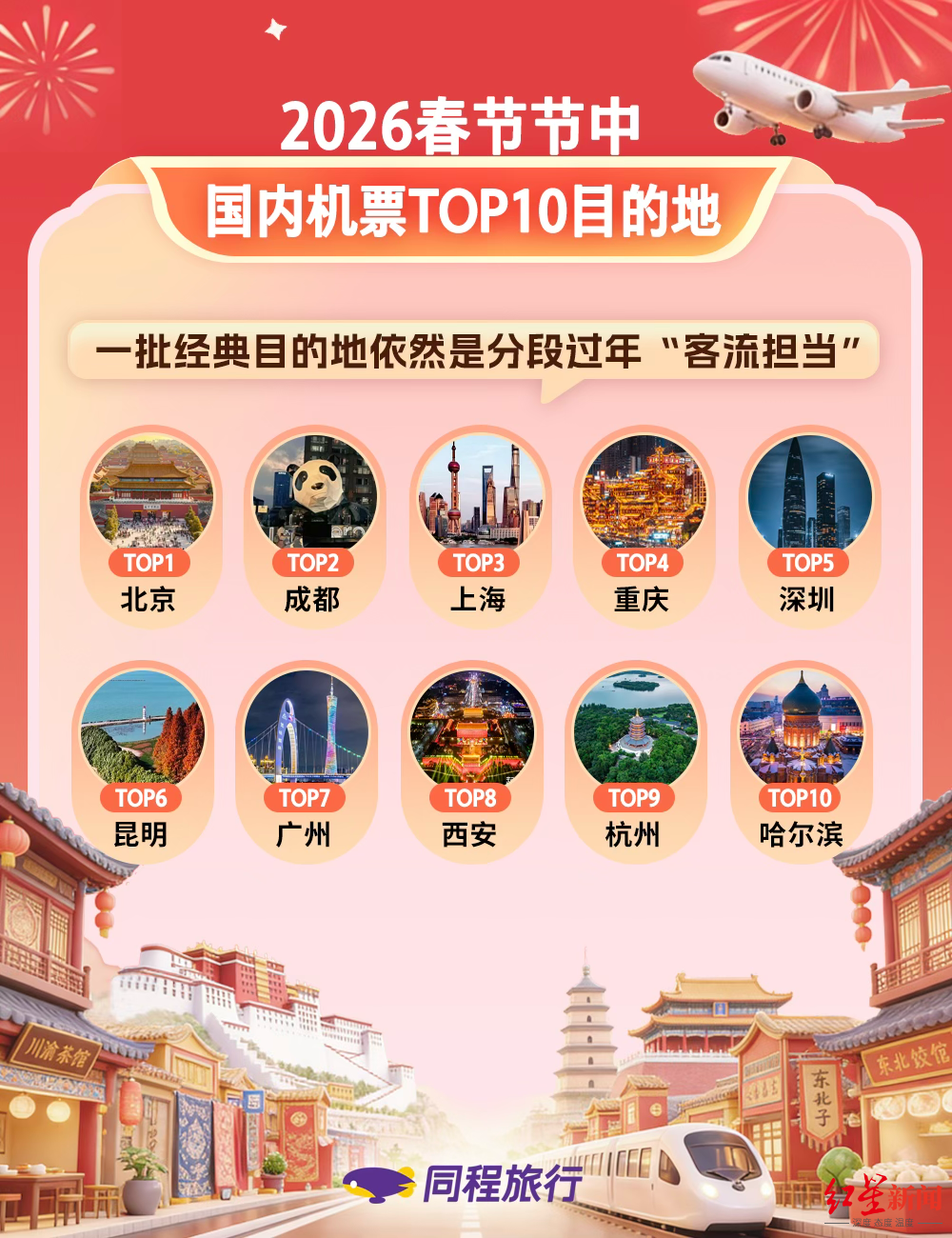
“打飞的”来过年!成都火到全国第二
Xin Lang Cai Jing· 2026-02-22 12:27
Core Insights - The "segmented New Year" travel pattern has become mainstream during the nine-day Spring Festival holiday, leading to explosive growth in the national cultural tourism and aviation markets [1][2] Aviation Market - The demand for air travel surged during the Spring Festival, with civil aviation travel heat increasing by 38% compared to the previous year [2] - Chengdu ranked as the second most popular destination for air travel, with significant increases in passenger flow at both Tianfu and Shuangliu airports [4] - On February 15, Tianfu Airport recorded a single-day passenger flow of 174,000, with a seat occupancy rate of 85.28%, while Shuangliu Airport saw a 15.4% year-on-year increase in passenger flow [4] - By February 19, Tianfu Airport's daily capacity reached 203,000 passengers, a 12.2% increase, and Shuangliu Airport's capacity grew by 19.0% [4][5] Travel Demand - The total expected passenger throughput for civil aviation from New Year's Eve to the sixth day of the new year is 33.23 million, a 6% increase from last year [5] - Chengdu's Tianfu Airport is projected to handle 1.247 million passengers, a 3.9% increase, while Shuangliu Airport is expected to see a 15.9% increase in passenger throughput [5] Cultural Tourism - Chengdu's cultural tourism market experienced a strong start, with significant growth in domestic travel product orders during the first three days of the holiday [6] - Chengdu received 2.963 million visitors from outside the city during the first three days, a 6.5% increase, and international visitors increased by 41.6% [6] - The city's A-level scenic spots welcomed 3.878 million visitors, generating ticket revenue of 23.135 million yuan [6] Culinary Tourism - Food consumption has become a key attraction for tourists in Chengdu, with a nearly 40% increase in the overall flow of the "must-eat list" compared to last year [7] - The trend of "reverse New Year" has driven significant interest in Chengdu's local cuisine, with the city ranking among the top five in overall flow for food orders [7] Hotel Market - The hotel market in Chengdu remained robust, with average hotel prices during the holiday rising by over 30% compared to pre-holiday levels [7] - The demand for short-term and experiential travel has surged, with Chengdu serving as a central hub for regional tourism [7]
【环球财经】东京股市下跌 日经225指数跌1.12%
Xin Hua Cai Jing· 2026-02-20 08:50
Market Overview - The Tokyo stock market experienced declines on February 20, with the Nikkei 225 index closing down by 1.12% and the Tokyo Stock Exchange Price Index down by 1.13% [1] - The decline was influenced by escalating geopolitical risks in the Middle East, which led to a comprehensive drop in the three major U.S. stock indices overnight [1] Market Dynamics - The Tokyo stock market opened lower and faced pressure throughout the day, with significant selling activity observed [1] - The market was further impacted by the news that Blue Owl Capital, a U.S. private credit firm, restricted redemptions from its funds, causing additional market turbulence [1] Investor Behavior - Following a substantial increase of over 900 points in the Nikkei index over the previous two trading days, investors opted to lock in profits ahead of an upcoming three-day holiday, leading to increased profit-taking activities [1] - The Nikkei index closed down by 642.13 points at 56,825.70 points, while the Tokyo Stock Exchange index fell by 43.61 points to 3,808.48 points [1] Sector Performance - Among the 33 industry sectors on the Tokyo Stock Exchange, most sectors experienced declines, particularly in securities and commodity futures trading, transportation machinery, and airline transportation [1] - Conversely, sectors such as non-ferrous metals, petroleum and coal products, and pharmaceuticals saw gains [1]