
城市文脉

Search documents
中国著名作家南昌市东湖区采风行活动圆满收官
Zhong Guo Xin Wen Wang· 2025-10-21 06:47
Core Insights - The event "Thousand-Year Donghu: Nanchang Origin" concluded successfully, showcasing the cultural heritage of Nanchang through a four-day writer's exploration [1][3] Group 1: Event Overview - The writer's exploration was organized by various local cultural and governmental bodies, including the Nanchang Municipal Party Committee Propaganda Department and the East Lake District Cultural Bureau [3] - The event featured six renowned writers and local cultural figures who aimed to explore Nanchang's cultural roots and inject new literary energy into cultural heritage [3][5] Group 2: Activities and Engagement - The exploration included visits to significant cultural landmarks such as the Memorial Tower, the original site of the Nanchang Wind Tunnel, and the Tengwang Pavilion, allowing writers to engage with the city's history and culture [5][6] - A "Famous Writers Dialogue Salon" was held to discuss the core values of East Lake as the cultural origin of Nanchang, emphasizing contemporary expressions of red culture and the role of bookstore culture in urban empowerment [6][7] Group 3: Writer Reflections - Writer Xu Jian praised the meticulous preparation of the event, highlighting the blend of Nanchang's historical and contemporary cultural elements, and suggested establishing a literary creation base [9] - Other writers shared their impressions, noting the unique understanding of contemporary life by Nanchang residents and the potential for literary exploration in themes such as local cuisine and the spirit of aviation [9]

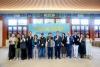
文化强国建设高峰论坛主论坛开启,专家热议文化创新
Nan Fang Du Shi Bao· 2025-05-27 02:36
Group 1: Cultural Development and Innovation - The 2025 Cultural Power Construction Summit Forum was held in Shenzhen, focusing on deepening cultural system reform and stimulating cultural innovation [1] - Zhang Zhqiang emphasized the concept of "cultural life body," highlighting the organic connection between nature and culture, and the need for cultural subjectivity to foster growth [2] - The forum discussed the importance of integrating digital intelligence technology to enhance human creativity and cultural responsibility [5][6] Group 2: National Identity and Community - Qiang Shigong proposed the establishment of a new interdisciplinary "Chinese Studies" framework centered on the concept of the "Chinese national community," which transcends Western nation-state constructs [3][4] - The construction of the Chinese national community is seen as a historical mission for Chinese philosophy and social sciences, aiming to create a new form of human civilization [3] Group 3: Media and Technology Integration - Gong Zhengwen highlighted the critical moment of cultural and technological integration, advocating for mainstream media to adapt and thrive in the digital age [7][8] - The need for a dual innovation capability combining "cultural insight and technological sensitivity" was emphasized to navigate the evolving media landscape [8] Group 4: Artificial Intelligence in Cultural Industries - Gao Wen discussed the strategic role of artificial intelligence in driving technological revolutions and its deep integration with cultural innovation [9][10] - Recommendations were made to strengthen policy guidance and ethical standards for AI applications in the cultural sector, ensuring the protection of creators' rights [10] Group 5: Urban Culture and Memory - Xie Youshun addressed the importance of historical context in urban development, suggesting that cultural memory should be integrated into city governance and community engagement [11][12] - The concept of urban memory as a living entity was presented, emphasizing the need for emotional governance in city planning to preserve cultural heritage [12]