
数智技术

Search documents
中国中车:2025年营收净利双增长
Zhong Guo Zheng Quan Bao· 2026-03-28 08:48
Core Viewpoint - China CNR reported a revenue of 273.06 billion yuan for 2025, marking a year-on-year growth of 10.79%, with net profit attributable to shareholders reaching 13.18 billion yuan, reflecting a 6.4% increase [1] Group 1: Financial Performance - The company achieved a net profit of 13.18 billion yuan and a net profit excluding non-recurring items of 10.98 billion yuan, with respective year-on-year growth rates of 6.4% and 8.2% [1] - The railway equipment business generated a revenue of 123.61 billion yuan, up 11.9%, driven by increased sales in high-speed trains and locomotives [1] - New industry business revenue reached 103.12 billion yuan, a growth of 19.39%, primarily due to the rise in clean energy equipment sales [1] Group 2: Strategic Initiatives - China CNR is focusing on a "one core, two businesses, and one first-class" strategic positioning, advancing its dual-track and dual-cluster business layout in rail transit and clean energy equipment [1] - The company signed new orders totaling 346.1 billion yuan in 2025, with international business revenue reaching 34.82 billion yuan, a year-on-year increase of 22.88% [2] Group 3: Research and Development - R&D investment for 2025 amounted to 18.16 billion yuan, maintaining a high intensity in R&D efforts [3] - The company has made significant advancements in rail transit equipment, including the commercial operation of the world's first carbon fiber subway train and the testing of hydrogen-powered trains [3] Group 4: Shareholder Returns - In 2025, China CNR initiated a mid-term dividend distribution of 3.16 billion yuan and proposed a cash dividend of 3.44 billion yuan, totaling 6.6 billion yuan, which represents 50.08% of the net profit attributable to shareholders [4] - The company has consistently implemented dividends for 18 years, with a cumulative dividend total of 67.04 billion yuan, maintaining a high cash dividend ratio of around 50% over the past three years [4]

国网临汾供电公司 :以18类业务全覆盖 构建主业发展新支撑
Zhong Guo Neng Yuan Wang· 2026-02-26 01:13
Core Viewpoint - The company is enhancing its core business and promoting comprehensive upgrades through the establishment of a closed-loop management system for retired power grid assets, focusing on green recycling and resource utilization [3][7]. Group 1: Business Development and Upgrades - The company has achieved full coverage of 18 business types, including cable channel inspection, drone patrol, and software development, creating a multi-dimensional support system for efficient power grid operation [2][4]. - A systematic approach has been developed to address the industry pain points of "non-standard and low efficiency" in the disposal of retired equipment, leading to the establishment of a professional dismantling team and a green recycling workshop [3][4]. - The company has formed partnerships with Xi'an Jiaotong University to establish a research institute focused on smart technology applications, enhancing the technological capabilities of its business [4]. Group 2: Resource Recovery and Environmental Impact - The company expects to recover over 2,000 tons of raw materials such as copper and aluminum annually, with a recycling purity of 99.2% and an added value rate of 37.1%, significantly increasing resource reuse value [3]. - The establishment of a green intelligent workshop for prefabricated components aims to produce 12,000 cubic meters of assembly-type components annually while processing 2,000 tons of waste materials, promoting resource recycling [7]. Group 3: Talent Development and Collaboration - The company has selected 42 core field experts and implemented incentive policies to encourage employees to obtain certifications, resulting in a 149% year-on-year increase in high-skilled personnel by the end of 2025 [6]. - A weekly review of core operational needs has been established, promoting a "one business, one special team" work model to enhance service quality and efficiency [6].


数智技术重构非遗传承新生态
Xin Hua Ri Bao· 2026-02-25 23:34
Core Viewpoint - The article emphasizes the importance of intangible cultural heritage (ICH) as a vital part of local history and culture, highlighting the need for digital transformation to address challenges in its transmission and preservation [1] Group 1: Digital Transformation of ICH - The construction of a digital knowledge graph is crucial for the systematic protection of regional ICH, integrating both explicit and implicit cultural elements to create a dynamic preservation model [2][3] - The launch of the "Henan ICH Map" exemplifies the integration of ICH resources through digital technology, mapping various cultural dimensions such as geographical distribution and talent lineage [3] Group 2: Multi-modal Experience and Immersive Transmission - The inherent non-material nature of ICH necessitates innovative transmission methods that incorporate multi-sensory experiences, breaking traditional barriers and enhancing engagement [4] - Technologies like VR, AR, and MR are being utilized to create immersive experiences, allowing users to interact with ICH in a virtual environment, thus addressing the challenges of traditional transmission methods [5] Group 3: Media Integration and Enhanced Communication - The rise of new media platforms has transformed the way ICH is communicated, with platforms like Douyin and Xiaohongshu significantly increasing the visibility and engagement of ICH content [6][7] - The integration of traditional and new media enhances the effectiveness of ICH dissemination, allowing for targeted and interactive storytelling that resonates with audiences [7] Group 4: Challenges of Digitalization - The reliance on algorithms in ICH transmission raises concerns about the potential loss of individual style and regional characteristics, leading to homogenization of cultural expressions [8][9] - There is a need to establish mechanisms for protecting local cultural genes while navigating the challenges posed by digital technologies, ensuring that the essence of ICH is preserved [9]
建设数字中国支撑新质生产力发展
Jing Ji Ri Bao· 2026-02-24 22:07
Core Viewpoint - The article emphasizes the importance of developing new quality productivity through digital China construction, which is essential for promoting high-quality economic development during the 14th Five-Year Plan period [1]. Group 1: New Quality Productivity Development - New quality productivity is driven by technological breakthroughs, innovative allocation of production factors, and deep industrial transformation [2]. - The development and application of intelligent technologies, such as artificial intelligence, significantly enhance labor productivity and reshape production paradigms, leading to more efficient and precise production processes [2]. - The agricultural sector benefits from intelligent agricultural equipment that utilizes data analysis for precise irrigation and fertilization, resulting in increased crop yields and a shift from traditional farming to data-driven practices [2]. Group 2: Industrial System Transformation - The transformation of traditional industries towards intelligence, greenness, and integration is crucial for developing new quality productivity [3]. - The application of intelligent technologies in manufacturing leads to a shift from "manufacturing" to "intelligent manufacturing," enhancing customization and elevating the value chain [3]. - Emerging industries, such as virtual reality and intelligent robotics, are vital carriers for the growth of new quality productivity, created through the integration of digital technologies with existing industries [3]. Group 3: Systematic Relationship Management - A systematic approach is necessary to balance technological and institutional innovation, development and security, as well as autonomy and openness, to establish a solid foundation for new quality productivity [4][5]. - Continuous investment in cutting-edge technologies and reforms in administrative, economic, and scientific systems are essential to remove barriers to the free flow of production factors and deep integration of technology and industry [4]. - The development of responsible artificial intelligence and robust legal frameworks for data and network security is critical to mitigate risks associated with the digital economy [4]. Group 4: Digital Ecosystem Construction - The construction of a comprehensive digital ecosystem that integrates computing power supply, factor empowerment, industrial support, and talent assurance is essential for supporting new quality productivity [6]. - The establishment of advanced digital infrastructure and a unified data market is necessary to facilitate the orderly flow and application of data across various sectors [6]. - Promoting high-quality data supply and creating valuable data sets in key areas like artificial intelligence and biotechnology will enhance the application of data as a productive factor [6]. Group 5: Talent Development and Integration - The integration of artificial intelligence with the real economy, particularly in key sectors like manufacturing and agriculture, is crucial for driving innovation [7]. - A robust talent development mechanism that aligns with digital economic growth is needed to cultivate skilled professionals capable of bridging technology and industry [7]. - Enhancing digital literacy and skills across the population is vital to address disparities and ensure inclusive participation in the digital economy [7].
全省首个“天空地水工”一体化智能堤防试点项目即将启建
Xin Lang Cai Jing· 2026-02-23 23:45
Core Viewpoint - The article discusses the initiation of Jiangsu Province's first integrated intelligent levee project, which utilizes advanced technologies for comprehensive monitoring and early warning of levee safety, marking a significant advancement in flood protection measures along the Yangtze River [1][2]. Group 1: Project Overview - The project, named "Intelligent Levee Pilot Construction Project at the Yangtze River Nanjing Dashengguan Section," has passed the review and will soon commence construction, representing a significant step in the integration of monitoring technologies [1]. - The project is led by the Nanjing Hydraulic Research Institute and funded by provincial water conservancy development funds, employing technologies such as Beidou satellite GNSS monitoring, unmanned inspection devices, and AI learning [1][2]. Group 2: Monitoring Technologies - The project implements a "five-dimensional" monitoring system that includes aerial, terrestrial, and underwater monitoring, breaking away from traditional methods that only focus on the levee structure itself [2][3]. - GNSS technology serves as a remote monitoring tool, capable of detecting minute displacements with millimeter-level precision and providing real-time data updates [2]. - Unmanned aerial vehicles (UAVs) are utilized for visual inspections and temperature monitoring, enabling early detection of potential leaks through temperature anomalies [2][3]. Group 3: Data Integration and Analysis - The integration of diverse data sources from various monitoring devices is crucial for generating actionable risk alerts, transforming raw data into clear safety assessments [4]. - A digital twin visualization platform has been developed to provide real-time monitoring data, allowing management personnel to easily identify risk areas without needing to manually check data or visit sites [5]. Group 4: Project Scalability and Future Development - The project focuses on a representative 2-kilometer section of the 7-kilometer levee, aiming to establish a scalable intelligent levee model that can be replicated across other regions [5]. - The intelligent monitoring system is designed for continuous upgrades, with potential for further development of UAV and unmanned vessel functionalities to enhance the system's intelligence [5][6]. - The project is positioned as a key example of integrating advanced technologies in water conservancy, with the potential to provide valuable insights for future intelligent levee transformations along the Yangtze River [6].
数智时代如何促进高水平区域联动
Xin Lang Cai Jing· 2026-02-23 21:43
Core Viewpoint - Regional coordinated development is an inherent requirement of Chinese-style modernization, emphasizing the importance of promoting regional linkage development through advanced technologies like artificial intelligence and digital innovation [1]. Group 1: Theoretical Foundations and Requirements - The dialectical relationship between "first nature" (natural resources) and "second nature" (human-modified economic environments) provides a theoretical basis for regional linkage development [2]. - Objective constraints from the first nature, such as geography and climate, and issues like administrative fragmentation in the second nature hinder optimal resource allocation and high-level regional linkage [2]. Group 2: Challenges and Opportunities in the Digital Age - The integration of new information technologies into regional governance and economic operations breaks geographical constraints, enabling collaboration that transcends first nature limitations [3]. - Traditional challenges such as resource misallocation and ecological governance remain prominent, while issues like the digital divide and unclear data ownership increasingly complicate regional linkage efforts [3]. Group 3: Logic of Promoting High-Level Regional Linkage - In the digital age, promoting high-level regional linkage requires leveraging digital technologies to optimize resource allocation and enhance overall regional collaboration [4]. - The arrival of digital technologies offers opportunities to overcome geographical and institutional barriers, allowing for a more efficient allocation of resources and production capabilities [4]. Group 4: Importance of Digital Collaboration - High-level regional linkage signifies a systemic leap from unbalanced to coordinated development, with past strategies focusing on reducing regional disparities [5][6]. - The transition from physical connectivity to intelligent integration is marked by initiatives like the "East Data West Calculation" project, which enhances domestic data and industrial cycles [6]. Group 5: Strategies for Enhancing Regional Linkage - Strengthening digital infrastructure and ensuring cross-regional digital connectivity is essential for promoting regional linkage development [7]. - Key strategies include building a unified data-sharing platform, enhancing public service integration, and optimizing industrial collaboration within urban clusters [8][9].
【春运进行时】“数字哨兵”护归途
Xin Lang Cai Jing· 2026-02-22 21:01
Group 1 - The core viewpoint of the articles highlights the advancements in monitoring systems for railway communication towers and the implementation of intelligent detection technologies to enhance operational safety and efficiency in the railway sector [1][2]. Group 2 - The Taiyuan Communication Section has developed an "Online Monitoring System for Railway Side Tower Inclination," which integrates data collection, precise monitoring, and intelligent diagnosis, allowing for 24-hour online monitoring and trend analysis of over 8,398 communication towers [1]. - The new monitoring system has replaced manual inspections, significantly reducing labor intensity and improving the accuracy of detecting deformation trends in communication towers [1]. - During the Spring Festival travel season, the Taiyuan North Vehicle Section operates over 330 trains and 18,000 vehicles daily, with the TFDS (Freight Car Fault Edge Image Detection Intelligent Recognition System) enhancing the efficiency and accuracy of fault detection in freight trains [2]. - The TFDS system allows for high-speed photography and rapid identification of faults, thereby alleviating the workload of operators and improving fault identification accuracy [2].
“数智时代的主流媒体系统性变革”综述
Bei Jing Ri Bao Ke Hu Duan· 2026-02-11 06:30
Core Insights - The 2025 Media Integration Development Ordos Annual Conference focuses on the systemic transformation of mainstream media in the digital age, emphasizing the need for innovative thinking, technological empowerment, and institutional reform to enhance media influence and communication capabilities [1][2]. Group 1: Systemic Transformation of Mainstream Media - The conference highlights the necessity for mainstream media to break away from traditional thinking and develop an open, collaborative media ecosystem to adapt to the digital communication landscape [3]. - Experts emphasize the importance of shifting from a "transmitter-centered" mindset to a "dialogue-centered" approach, enhancing interaction between media and users [4]. - The integration of AI and digital technologies is seen as a crucial driver for the transformation of media production and dissemination processes, enhancing efficiency and content quality [6][7]. Group 2: Content Production and User Engagement - The focus on content production is critical, with experts advocating for the use of internet thinking and emerging technologies to create content that resonates with users [8]. - A unified technology platform is recommended to streamline the content production process, ensuring that user needs are met through data-driven insights [10]. - The establishment of a dynamic talent ecosystem is essential for adapting to the evolving media landscape, with an emphasis on training and integrating new skills [11][12]. Group 3: Institutional and Structural Reforms - The need for a modernized institutional framework that supports comprehensive media integration across various dimensions, including content, technology, and talent, is highlighted [9]. - Successful case studies from various media centers demonstrate the effectiveness of resource reallocation and structural optimization in enhancing media productivity [10][12]. - The development of multi-layered, interactive communication systems is proposed to amplify the influence of mainstream narratives and improve engagement across different audience segments [13].
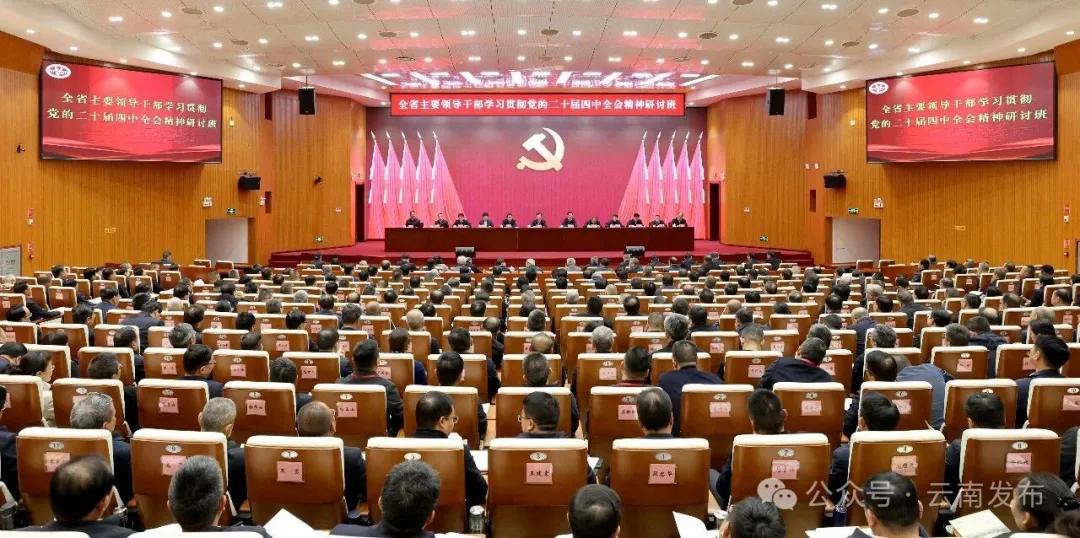
打牢三根桩 深耕五领域!省委书记围绕“夯实基础 全面发力”为云南“十五五”开局划重点
Xin Lang Cai Jing· 2026-02-05 14:08
Core Viewpoint - The "14th Five-Year Plan" period has seen solid steps in the practice of Chinese-style modernization in Yunnan, with the "15th Five-Year Plan" period being crucial for laying a solid foundation and fully exerting efforts towards socialist modernization [1] Group 1: Economic Development - The "3815" strategic development goal emphasizes the importance of solidifying the foundation of livelihood as a fundamental task [1] - The focus on increasing farmers' income is paramount, with leaders being responsible for ensuring that income levels for the underprivileged are addressed [6] - Employment is highlighted as the most basic aspect of livelihood, necessitating skill enhancement and local job creation [8] Group 2: Social Stability - Stability is crucial for development, requiring a balance between development and security, and effective grassroots governance [10] - The three foundational tasks of increasing income, ensuring employment, and maintaining social harmony are likened to pillars that support overall stability [10] Group 3: Industry and Innovation - The industrial sector is identified as the backbone of the economy, with a push towards industrial development and diversification of tourism products [13] - Emphasis on expanding openness as a pathway to high-quality development, particularly through leveraging the China-Laos railway for trade [15] - The importance of ecological protection is noted, with a focus on green electricity and advanced manufacturing as new advantages [17] - The role of technology in driving industrial upgrades is underscored, with a focus on integrating technology with industry, particularly in smart technology and low-altitude economy [21]
杨静:数字时代推动共同富裕的实践路径
Jing Ji Ri Bao· 2026-02-05 00:02
Group 1 - The core concept of Chinese-style modernization emphasizes the common prosperity of all people as a socialist modernization goal, with the "14th Five-Year Plan" highlighting the need for solid steps towards this objective [1] - The impact of the new technological revolution and industrial transformation on promoting common prosperity is significant, necessitating a focus on converting digital dividends into tangible benefits for the populace [1] - A comprehensive approach is required to address regional disparities, employment challenges, and the expansion of the middle-income group, ensuring coordinated development across various sectors and regions [2] Group 2 - The promotion of common prosperity must integrate both material and spiritual wealth, with cultural development being a key focus area to achieve a higher level of unity between material and spiritual civilization [3] - The relationship between government and market must be effectively managed to ensure a balance between efficiency and fairness, particularly in the context of digital economic development [4] - The distribution system is fundamental to promoting common prosperity, emphasizing the need for a coordinated approach to initial distribution, redistribution, and third distribution mechanisms [5] Group 3 - Enhancing the well-being of the populace is essential for achieving common prosperity and reflecting social justice, with a focus on high-quality employment and the protection of labor rights in the face of new employment models [7] - The application of digital technology in social security is crucial for improving service quality and accessibility for flexible and new employment groups [8] - Policies must be integrated to address the full lifecycle needs of citizens, enhancing public service delivery through digital means and breaking down departmental data barriers [9]