基层应急管理能力提升

Search documents
进一步提升基层应急管理能力 龚正主持市政府常务会议
Jie Fang Ri Bao· 2025-10-10 02:04
Group 1: Emergency Management Enhancement - The meeting emphasized the need to improve grassroots emergency management capabilities under the strong leadership of the municipal party committee [1] - It highlighted the importance of enhancing organizational command capabilities, refining management systems, and ensuring accountability at the community level [1] - The focus is on strengthening resource support to ensure that grassroots units can effectively undertake tasks and maintain defenses [1] Group 2: Development of Intelligent Terminal Industry - The meeting approved the "Shanghai Intelligent Terminal Industry High-Quality Development Action Plan (2026-2027)" aiming to create globally influential consumer terminal brands through technological innovation and ecosystem cultivation [2] - It stressed the need for technical breakthroughs and collaboration between terminal companies and chip/algorithm firms to build a secure and efficient supply chain [2] - The plan aims to leverage data-driven strategies to enhance the competitive advantage of "Shanghai Intelligent Manufacturing" [2] Group 3: Support for Leading Technology Enterprises - The meeting agreed on the "Implementation Opinions on Cultivating and Expanding Leading Technology Enterprises" to enhance the cultivation mechanism for these enterprises [2] - It aims to accelerate the improvement of independent innovation capabilities and core competitiveness of enterprises, fostering more leading companies in future industries [2] - The plan includes establishing a collaborative mechanism for city and district coordination to provide targeted and customized policy support [2]
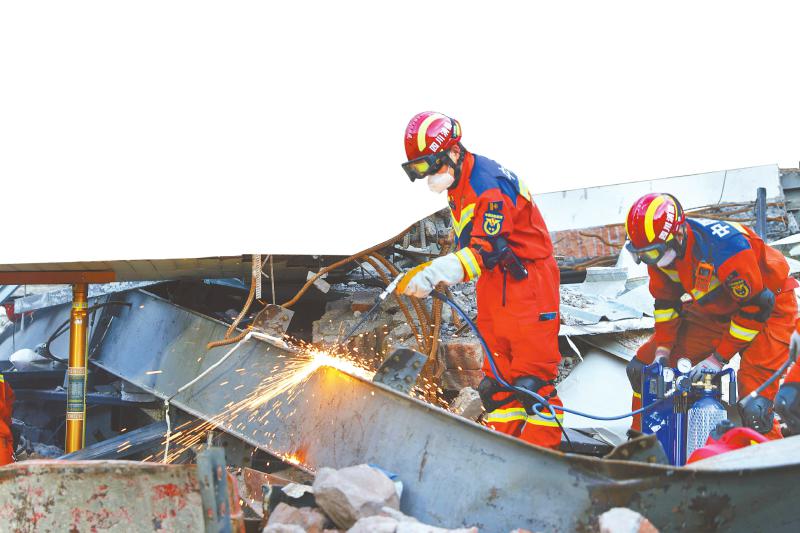
四川多措并举提升基层应急管理能力 激活应急管理神经末梢
Si Chuan Ri Bao· 2025-08-28 00:28
Core Viewpoint - The "Emergency Mission 2025" exercise highlights the improvements in disaster prevention and response capabilities in Sichuan, showcasing the establishment of a robust emergency management framework and the integration of technology in enhancing communication and rescue operations [4][10][12]. Group 1: Emergency Management Structure - Sichuan has formed over 34,000 emergency response teams composed of central town fire rescue stations, township emergency teams, and community emergency squads [6]. - The provincial government has issued implementation opinions to enhance grassroots emergency management capabilities, aiming for a well-organized, adequately staffed, and efficient emergency management system [4][12]. - The establishment of standardized emergency command centers connected to municipal emergency management platforms is underway in various towns [5]. Group 2: Training and Capacity Building - Regular emergency drills are conducted to improve the response capabilities of the emergency teams, ensuring a one-hour response time at the county level and a half-hour response time at the township level [6]. - A three-tier training system has been developed, focusing on county-level training, practical equipment training at the township level, and self-rescue training at the village level [7]. Group 3: Risk Assessment and Safety Management - Grassroots emergency management agencies are tasked with safety risk inspections, and there is a push for enhanced training and guidance for local enforcement teams [8]. - The integration of expert committees to assist in safety risk diagnosis has been implemented, with over 5,000 enterprises assessed for safety risks [8]. Group 4: Technology Integration - Sichuan is advancing technology-driven initiatives to enhance disaster response, including the deployment of drones and satellite communication systems in high-risk areas [10][11]. - The establishment of 219 emergency communication support teams across 183 counties has improved communication capabilities during extreme conditions [11]. Group 5: Resource Management - Emergency resource management is being optimized through the establishment of public warehouses for emergency supplies, allowing for efficient allocation and management of resources [9]. - A comprehensive inventory of over 890,000 emergency supplies has been created, facilitating quick access and deployment during emergencies [9].