基本医疗保险参保长效机制

Search documents
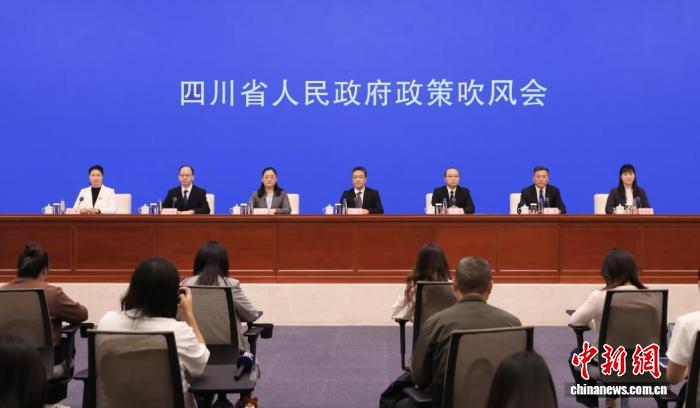
保障病有所医 四川基本医保参保率稳定在95%以上
Zhong Guo Xin Wen Wang· 2025-10-16 13:59
Core Viewpoint - The Sichuan provincial government has established a long-term mechanism for basic medical insurance, maintaining a participation rate of over 95% in recent years [1][3]. Group 1: Policy Implementation - The Sichuan provincial government issued the "Implementation Opinions on Improving the Long-term Mechanism for Basic Medical Insurance Participation" in September 2025 [3]. - The policy removes household registration restrictions for insurance participation at the place of employment, allowing students and children to enroll at their place of residence or school [3]. - University students can pay their medical insurance fees in a lump sum according to their study duration [3]. Group 2: Insurance Coverage Expansion - The policy expands the scope of personal accounts for employee medical insurance, allowing coverage to extend from family members to close relatives [3]. - The payment coverage has been broadened from just paying resident medical insurance fees to also covering out-of-pocket medical expenses incurred at designated medical institutions [3]. - The maximum payment limit for serious illness insurance for continuously enrolled residents has been increased, with an incentive amount of 4,000 yuan per instance, potentially reaching up to 20% of the original cap for serious illness insurance [3]. Group 3: Incentive Mechanisms - A reward mechanism has been established for individuals with zero reimbursements from the resident medical insurance fund, increasing the maximum payment limit for serious illness insurance by 4,000 yuan the following year [3]. - The continuous enrollment incentive and the zero reimbursement reward can be combined, with a cumulative increase not exceeding 20% of the original cap for serious illness insurance [3]. Group 4: Overall Impact - The implementation of these policies aims to enhance the insurance participation framework, address policy gaps, and improve the management and service mechanisms for insurance participation [3].

四川就健全基本医疗保险参保长效机制公开征求意见 连续参保或将获得更高大病保险支付金额
Si Chuan Ri Bao· 2025-07-21 08:16
Group 1 - The annual cap for serious illness insurance for urban and rural residents in Sichuan Province is set uniformly at 300,000 yuan [1][2] - Starting from 2025, for residents who have participated in the medical insurance for four consecutive years, the maximum payment limit for serious illness insurance will increase by 4,000 yuan for each additional year of continuous participation [1][2] - For residents whose medical insurance fund reimbursement is zero in the current year, the maximum payment limit for serious illness insurance will also increase by 4,000 yuan in the following year [1][2] Group 2 - The incentives for continuous participation and zero reimbursement can be combined, with a total increase not exceeding 20% of the original cap for serious illness insurance [1][2] - For individuals who have interrupted their insurance, the maximum payment limit for serious illness insurance will be reduced by 4,000 yuan for each year of interruption, with a cumulative reduction not exceeding 20% of the original cap [2] - Individuals who re-enroll after a break will have their continuous participation years recalculated, but previously accumulated rewards for continuous participation will be retained [2] Group 3 - A waiting period for benefits will be established for individuals who have interrupted their insurance, with a fixed waiting period of three months for those who do not enroll during the concentrated enrollment period [3] - For each additional year of interruption, the variable waiting period will increase by one month, which can be reduced by paying additional premiums [3] - The total waiting period for those who have interrupted their insurance for four years or more will not be less than six months after restoration [3]
《重庆市健全基本医疗保险参保长效机制实施方案》来了渝府办发〔2025〕35号
蓝色柳林财税室· 2025-06-14 14:29
Core Viewpoint - The article outlines the implementation plan for establishing a long-term mechanism for basic medical insurance enrollment in Chongqing, aiming to address demographic changes and enhance the insurance system's foundation [2]. Group 1: Policy Measures for Enrollment and Benefits - The plan includes relaxing household registration restrictions to encourage participation from various groups, including flexible workers and students, with specific age limits for participation [3]. - It proposes optimizing funding policies, allowing personal accounts to cover relatives' insurance payments and adjusting payment methods for flexible employment [3]. - Improvements in maternity benefits are outlined, ensuring coverage for various scenarios related to childbirth and maternity care [4]. Group 2: Incentive and Constraint Mechanisms - A mechanism to incentivize continuous enrollment and address zero reimbursement cases is established, increasing the maximum payout for serious illness insurance for long-term participants [5]. - A constraint mechanism is introduced for those with interrupted enrollment, imposing waiting periods for benefits based on the duration of non-participation [6]. Group 3: Digital Empowerment and Service Optimization - The plan emphasizes the use of digital tools to enhance enrollment management and service delivery, including a comprehensive database for tracking participants [7]. - It aims to improve service capabilities and user experience through streamlined processes and the implementation of electronic systems for claims and reimbursements [8]. Group 4: Collaborative Efforts - Clear responsibilities are assigned to various departments to ensure effective coordination in enrollment and fund management [9]. - The plan encourages inter-departmental collaboration to support the enrollment of specific groups, such as newborns and unemployed individuals [10]. Group 5: Organizational Support and Funding - The article stresses the importance of strong organizational leadership and collaboration among departments to facilitate the implementation of the enrollment mechanism [12]. - Financial support mechanisms are outlined to incentivize local governments in promoting enrollment and ensuring adequate funding for related activities [14].