
基金行业费率改革

Search documents
壹快评|以持续改革破解“基金公司赚钱,基民不赚钱”怪圈
Di Yi Cai Jing· 2025-11-01 08:35
Core Viewpoint - The recent regulatory changes aim to address the disparity between fund managers' earnings and investors' returns, emphasizing the need for a performance-based compensation system for fund managers [1][3][4] Group 1: Regulatory Changes - The China Securities Regulatory Commission (CSRC) has introduced a plan to enhance the quality of public funds, which includes establishing a mechanism that links fund company income to investor returns [1][2] - A draft guideline has been released for public consultation, focusing on strengthening the constraints of performance benchmarks and requiring fund managers to develop a comprehensive management mechanism for benchmark selection, disclosure, monitoring, correction, and accountability [1][3] Group 2: Industry Issues - The fund industry faces criticism for issues such as style drift and poor investor experience, where fund companies profit while investors incur losses, leading to a significant gap in expectations [1][2] - The disparity in earnings during market downturns has led to widespread dissatisfaction among investors, who feel that fund managers are insulated from the risks faced by their clients [2][3] Group 3: Performance and Compensation - The draft guidelines propose that fund managers' performance compensation should decrease significantly if their long-term performance is notably below the established benchmarks [3] - There is a growing consensus that the fund industry must reform its fee structures and compensation mechanisms to align with market realities and investor expectations [2][4] Group 4: Future Outlook - The implementation of these regulatory measures is expected to lead to a more standardized and reasonable income and compensation system within the fund industry, fostering a culture of accountability and long-term investor trust [4]
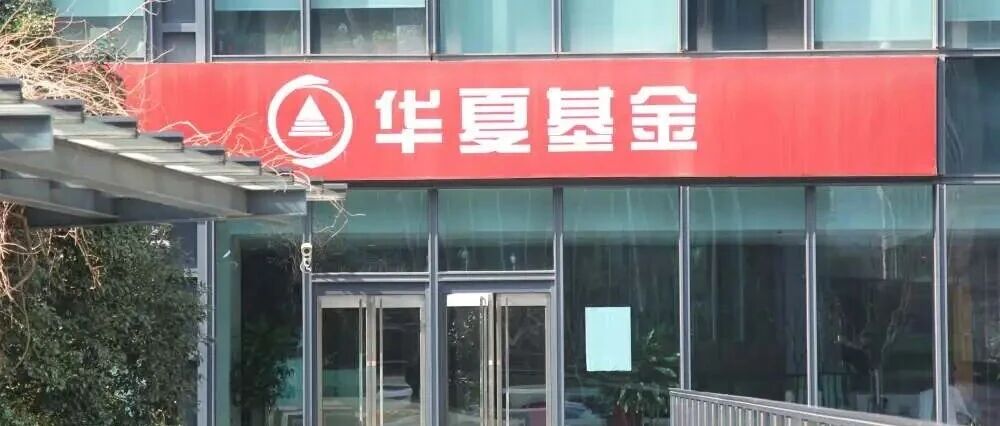
华夏基金换帅
21世纪经济报道· 2025-10-02 04:24
Core Viewpoint - The article discusses the significant leadership changes at Huaxia Fund Management Co., with Zou Yingguang appointed as the new chairman and Li Yimei as the vice chairman, effective September 30, 2025. This transition occurs amidst the company's recent completion of a major equity restructuring and its position as a leading asset management giant in China [1][10][13]. Leadership Changes - Huaxia Fund announced the departure of former chairman Zhang Youjun due to work requirements, with Zou Yingguang taking over the role of chairman and Li Yimei becoming the vice chairman [1][2]. - Zou Yingguang has a strong background in fixed income and has held various key positions at CITIC Securities since joining in 2017, including vice secretary of the party committee and general manager [6][8]. - Li Yimei has been with Huaxia Fund since 2001, rising through the ranks to become general manager and has extensive experience in marketing and management roles within the company [8][10]. Company Performance - As of the second quarter of 2025, Huaxia Fund's total assets under management exceeded 3 trillion yuan, reaching 30,345 billion yuan, indicating its leading position in the industry [5][10]. - The company has shown rapid growth, with its public fund management scale increasing from 1.30 trillion yuan to 2.26 trillion yuan from the third quarter of 2023 to the third quarter of 2025, a growth rate of nearly 74% [10]. - Financial performance is strong, with a reported revenue of 3.669 billion yuan for the first half of 2025, a year-on-year increase of 16.05%, and a net profit of 1.062 billion yuan, up 5.74% [11]. Equity Structure Adjustment - The leadership change coincides with a significant equity restructuring, where Tianjin Haipeng Technology Consulting Co., Ltd. transferred its 10% stake to Qatar Holding, resulting in a new ownership structure: CITIC Securities (62.20%), Mackenzie Financial Corporation (27.80%), and Qatar Holding (10%) [13]. - This finalized equity structure is expected to provide the new management team with a clearer mandate to navigate the competitive landscape of the public fund industry and to leverage shareholder resources effectively [13].

年内逾六成公募迎高管变动,平均每月20家调关键岗
Di Yi Cai Jing· 2025-09-01 11:58
Core Viewpoint - The fund industry is undergoing a significant leadership transition, with a notable increase in high-level executive changes, reflecting deeper transformations within the sector [1][5]. Group 1: Executive Changes - As of the end of August, 116 fund institutions have experienced executive changes, accounting for over 60% of the industry [1][5]. - Notable changes include the appointment of Huang Deliang as chairman of Xingyin Fund, the departure of Gao Chong from ICBC Credit Suisse Fund, and the retirement of Pan Fuxiang from Nord Fund [2][3][4]. - The trend of executive turnover has been consistent, with an average of over 300 high-level changes annually over the past decade [1][5]. Group 2: Characteristics of Changes - The current wave of changes is characterized by the retirement of senior executives, with many reaching the legal retirement age [5][6]. - A new generation of "post-80s" executives is rising, bringing youthful energy and new perspectives to the industry [6][7]. - The phenomenon of "cross-appointment" is becoming more common, where executives from controlling shareholders also hold positions in fund companies, indicating a stronger influence of shareholders on management [6][7]. Group 3: Implications for the Industry - The stability and professionalism of executive teams are becoming critical for institutions to navigate the pressures of fee reforms, transparency, and evolving investor demands [2][5]. - The involvement of experienced executives from various financial sectors is seen as beneficial, enhancing the overall management capabilities of fund companies [8]. - The increasing scrutiny of executive performance by shareholders emphasizes the need for alignment with corporate development strategies and operational responsibilities [7][8].