
境外所得纳税

Search documents
「共同关注」新华社:税务部门提醒纳税人对近三年境外所得开展自查
Sou Hu Cai Jing· 2026-01-19 08:32
Core Viewpoint - The tax authorities in China are enhancing their efforts to promote compliance regarding the taxation of residents' overseas income, urging taxpayers to self-check their income from abroad for the years 2022 to 2024 [1] Group 1: Tax Compliance Measures - Taxpayers are reminded to declare their overseas income as per the tax laws, which is a common international practice aimed at preventing cross-border tax evasion and protecting national tax rights [1] - The tax authorities can recover unpaid taxes and late fees within three years if taxpayers fail to declare or miscalculate their tax obligations [1] - In cases of tax evasion, legal actions will be taken against the offenders [1] Group 2: Responsibilities of Taxpayers - It is emphasized that paying taxes is a civic duty, and taxpayers who have previously failed to report their overseas income must correct their declarations in a timely manner [1]
税务部门提醒纳税人对近三年境外所得开展自查
券商中国· 2026-01-16 15:11
Group 1 - The tax authorities are enhancing publicity and guidance on the taxation of residents' overseas income, reminding taxpayers to self-check their income from abroad for the years 2022 to 2024 [1] - According to tax collection laws, if taxpayers fail to declare or miscalculate their taxes, the tax authorities can recover unpaid taxes and late fees within three years; cases of tax evasion will be legally processed [1] - Taxpayers are obligated to declare their income from both domestic and foreign sources, which is a common international practice aimed at preventing cross-border tax evasion and protecting national tax rights [1]


对近三年境外所得开展自查!国家税务总局提醒→
Zhong Guo Zheng Quan Bao· 2026-01-16 13:27
Core Viewpoint - The tax authorities are enhancing their efforts to promote compliance regarding the taxation of residents' overseas income, urging taxpayers to self-check their income from abroad for the years 2022 to 2024 [1] Group 1: Tax Compliance Measures - Taxpayers are reminded to declare their overseas income as per the tax laws, which is a common international practice aimed at preventing cross-border tax evasion and protecting national tax rights [1] - The tax authorities can recover unpaid or underpaid taxes, along with penalties, within three years if taxpayers fail to file or miscalculate their tax obligations [1] Group 2: Responsibilities of Taxpayers - It is emphasized that paying taxes is a civic duty, and taxpayers who discover they have not reported their overseas income correctly should promptly amend their declarations [1]
税务部门提醒:自查近3年境外所得
Sou Hu Cai Jing· 2026-01-16 13:12
Core Viewpoint - The tax authorities are enhancing their efforts to promote compliance regarding the taxation of residents' overseas income, urging taxpayers to self-check their income from abroad for the years 2022 to 2024 [1] Group 1: Tax Compliance Measures - Taxpayers are reminded to declare their overseas income as per tax regulations, which is a common international practice aimed at preventing cross-border tax evasion and protecting national tax rights [1] - The tax authorities can recover unpaid or underpaid taxes, along with penalties, within three years if taxpayers fail to declare or miscalculate their tax obligations [1] Group 2: Taxpayer Responsibilities - It is emphasized that paying taxes is a civic duty, and taxpayers who realize they have not declared their overseas income correctly should promptly amend their declarations [1]
官方提醒纳税人自查近三年境外所得
Sou Hu Cai Jing· 2026-01-16 12:28
Core Viewpoint - The tax authorities are enhancing the promotion and guidance on the taxation of residents' overseas income, urging taxpayers to self-check their income from abroad for the years 2022 to 2024 [1] Group 1: Tax Compliance - Taxpayers are reminded that they are obligated to declare their overseas income and that failure to do so may result in tax recovery and penalties within three years [1] - The practice of taxing residents on both domestic and foreign income is in line with international norms and helps prevent cross-border tax evasion [1] Group 2: Legal Framework - The tax authorities emphasize that non-compliance, such as failure to declare or miscalculating taxes, can lead to legal consequences, including the pursuit of unpaid taxes and fines [1] - Taxpayers are encouraged to correct any previous underreporting of overseas income in accordance with the law [1]
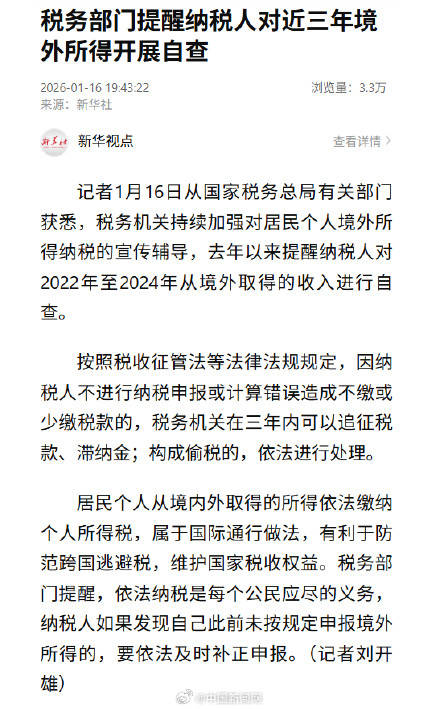
税务部门提醒纳税人对2022年至2024年从境外取得的收入进行自查
Sou Hu Cai Jing· 2026-01-16 12:22
Core Viewpoint - The tax authorities in China are enhancing their efforts to promote compliance regarding the taxation of residents' overseas income, urging taxpayers to self-check their income from abroad for the years 2022 to 2024 [1] Group 1: Tax Compliance Measures - Taxpayers are reminded that failure to declare or incorrectly calculating taxes can lead to back taxes and penalties being enforced within three years [1] - The tax authorities emphasize that residents must pay individual income tax on income obtained both domestically and internationally, which aligns with international practices to prevent cross-border tax evasion [1] Group 2: Responsibilities of Taxpayers - It is highlighted that paying taxes is a civic duty, and taxpayers who discover they have not reported overseas income as required should promptly correct their declarations [1]
税务部门提醒纳税人:对近三年境外所得开展自查
Xin Hua Wang· 2026-01-16 12:21
Core Viewpoint - The tax authorities in China are enhancing their efforts to promote compliance regarding the taxation of residents' overseas income, urging taxpayers to self-check their income from abroad for the years 2022 to 2024 [1] Group 1: Tax Compliance Measures - Taxpayers are reminded to declare their overseas income as per the tax laws, which is a common international practice aimed at preventing cross-border tax evasion and protecting national tax rights [1] - The tax authorities can recover unpaid taxes and late fees within three years if taxpayers fail to declare or miscalculate their tax obligations [1] - In cases of tax evasion, legal actions will be taken against the offenders [1] Group 2: Responsibilities of Taxpayers - It is emphasized that paying taxes is a civic duty, and taxpayers who have previously failed to report their overseas income must correct their declarations in a timely manner [1]
税务部门提醒纳税人对近三年境外所得开展自查
证券时报· 2026-01-16 12:16
Core Viewpoint - The tax authorities are enhancing publicity and guidance on the taxation of residents' overseas income, urging taxpayers to self-check their income from abroad for the years 2022 to 2024 [1] Group 1: Tax Compliance - Taxpayers are reminded that they must declare and pay personal income tax on income obtained from both domestic and foreign sources, which is a common international practice [1] - The tax authorities can recover unpaid or underpaid taxes, along with penalties, within three years if taxpayers fail to declare or miscalculate their taxes [1] - Tax evasion will be legally addressed by the tax authorities [1] Group 2: Taxpayer Responsibilities - It is emphasized that paying taxes is a civic duty, and taxpayers who discover they have not declared their overseas income as required should promptly correct their declarations [1]

税务部门提醒纳税人对近三年境外所得开展自查
21世纪经济报道· 2026-01-16 12:10
Group 1 - The tax authorities are enhancing the promotion and guidance on the taxation of residents' overseas income, reminding taxpayers to self-check their income from abroad for the years 2022 to 2024 [1] - According to tax collection laws, if taxpayers fail to declare or miscalculate their taxes, the tax authorities can recover unpaid or underpaid taxes within three years, and cases of tax evasion will be legally processed [1] - Taxpayers are obligated to pay personal income tax on income obtained from both domestic and foreign sources, which is a common international practice that helps prevent cross-border tax evasion and protects national tax rights [1]

境外所得缴税追溯期为三年:哪些境外所得应纳税?如何申报?
Xin Jing Bao· 2026-01-16 12:09
Core Viewpoint - The Chinese tax authorities are intensifying efforts to ensure that residents report and pay taxes on overseas income, with a focus on compliance from 2022 to 2024 [1] Group 1: Tax Compliance and Regulations - Taxpayers are reminded to self-check their overseas income for the years 2022 to 2024, as the tax authorities can retroactively collect unpaid taxes and penalties within three years [1] - Residents are required to pay individual income tax on income earned both domestically and internationally, which aligns with international practices to prevent tax evasion [2][5] - The tax authorities have extended the retroactive tax collection period for overseas income to as far back as 2020 or even 2017 [1] Group 2: Reporting Procedures - Individuals who have a residence in China or reside in China for 183 days or more in a tax year are classified as residents and must report overseas income [2] - The tax authorities have established a specific reporting period for overseas income, which is from March 1 to June 30 of the year following the income's acquisition [3] - The tax department has introduced online reporting features for overseas income through the electronic tax bureau and personal income tax app, facilitating easier compliance for taxpayers [3] Group 3: Enforcement and Penalties - The tax authorities employ a five-step approach to address tax issues, which includes reminders, corrective actions, and potential investigations for non-compliance [4] - Taxpayers are advised to cooperate with tax authorities and provide necessary documentation to avoid penalties and investigations [4] - Non-compliance with overseas income reporting can lead to legal consequences, including penalties and potential audits, especially as China participates in the automatic exchange of financial account information with over 100 countries [5]