壳资源炒作

Search documents
家居大佬深陷卖身潮
3 6 Ke· 2026-01-07 04:13
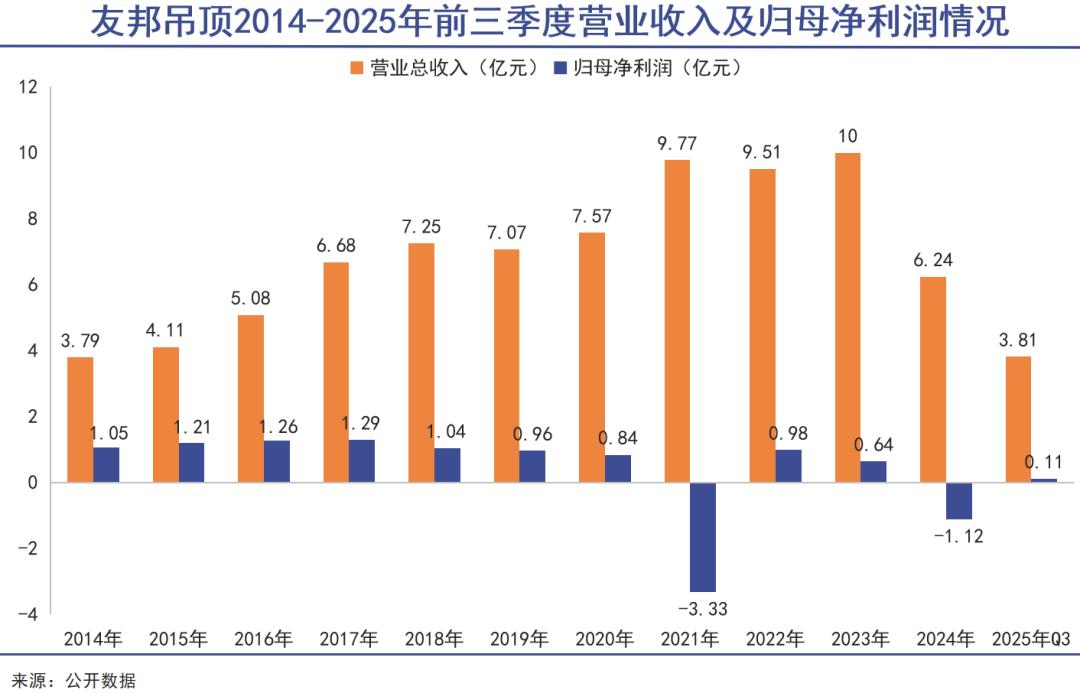
Core Viewpoint - The announcement of the transfer of control of A-share listed company Youbang Ceiling marks the end of the golden era for the home furnishing industry, reflecting a broader trend of ownership changes among home furnishing companies due to declining performance and market pressures [2][3]. Group 1: Company-Specific Developments - Youbang Ceiling, known as the pioneer of integrated ceiling products, reported a total control transfer price of 1.713 billion yuan, following a significant decline in performance and stock price [1]. - The company experienced its first annual loss of 333 million yuan in 2021, with revenue dropping to 624 million yuan in 2024, indicating a downward trend in its financial performance [3]. - Other companies like Pinao and Gujia Home have also undergone control changes, with Pinao's control transferred to Chuxin Group for approximately 839 million yuan [6][7]. Group 2: Industry Trends - In 2025, a total of 16 home furnishing companies experienced ownership changes, highlighting a significant trend of restructuring within the industry [10]. - The decline in the real estate market has been identified as a critical external factor contributing to the struggles of home furnishing companies, as demand for new home renovations has sharply decreased [11][12]. - Many companies, including Gujia Home, have faced challenges due to a lack of focus on core business strategies and over-reliance on real estate growth, leading to financial distress and ownership changes [20][22]. Group 3: Market Reactions and Opportunities - The ownership changes have led to short-term stock price surges for several companies, indicating a speculative interest in the "shell resources" of these firms rather than improvements in their core business operations [24][28]. - For instance, the stock price of Youbang Ceiling increased significantly after the announcement of its control transfer, reflecting market speculation [27]. - The trend of ownership changes presents new investment opportunities, driven by capital interest in the potential of these companies' shell resources rather than their operational performance [28].

青海华鼎频易主仍陷退市困局,控制权游戏谁是赢家?
Mei Ri Jing Ji Xin Wen· 2025-10-21 11:32
Core Viewpoint - The company *ST Haihua (formerly Qinghai Huading) is undergoing another change in actual control, with the new controllers being Zhu Jiayang, Zhang Shundi, and Zhang Dong, marking at least the fourth change in control since its listing in 2000. The company is facing significant operational challenges and is on the brink of delisting due to continuous losses and a declining market value [2][20]. Company Control Changes - The actual control of *ST Haihua has changed hands multiple times, with the latest shift occurring on October 17, 2025, when the control moved from Wang Feng to Zhu Jiayang, Zhang Shundi, and Zhang Dong [2][20]. - Since its listing, the company has transitioned from state-owned to management-led and now to private capital control, with each transition failing to deliver on promises of revitalization [9][20]. Historical Context - Established in 1998, *ST Haihua was initially a state-owned enterprise with significant government backing, holding a dominant position in the heavy machinery sector [3][9]. - The company has experienced a series of ownership changes, with the first major shift occurring in 2006 when Qinghai Tianxiang attempted to gain control through a share auction [4][5]. Financial Performance - The company has struggled financially, with revenue declining from 918 million yuan in 2017 to 535 million yuan in 2022, and a net loss of 418 million yuan in 2019 [11][13]. - Despite attempts to pivot to new business areas, such as cultural and clean energy sectors, the company has continued to report losses, with a net loss of 159 million yuan in 2023 and 89.94 million yuan in 2024 [15][16]. Market Position and Challenges - *ST Haihua, once a leader in the heavy machinery market, has seen its market value plummet to 2.3 billion yuan, teetering on the edge of delisting [2][9]. - The company has been criticized for its lack of coherent business strategy, with each new controller failing to invest in core resources and instead using the company as a financing platform [17][18]. Future Outlook - The new controllers face the challenge of reversing the company's fortunes and addressing the delisting risk, with market observers keenly watching for any new business resources or strategic shifts [20].