复合型医学人才生态建设

Search documents
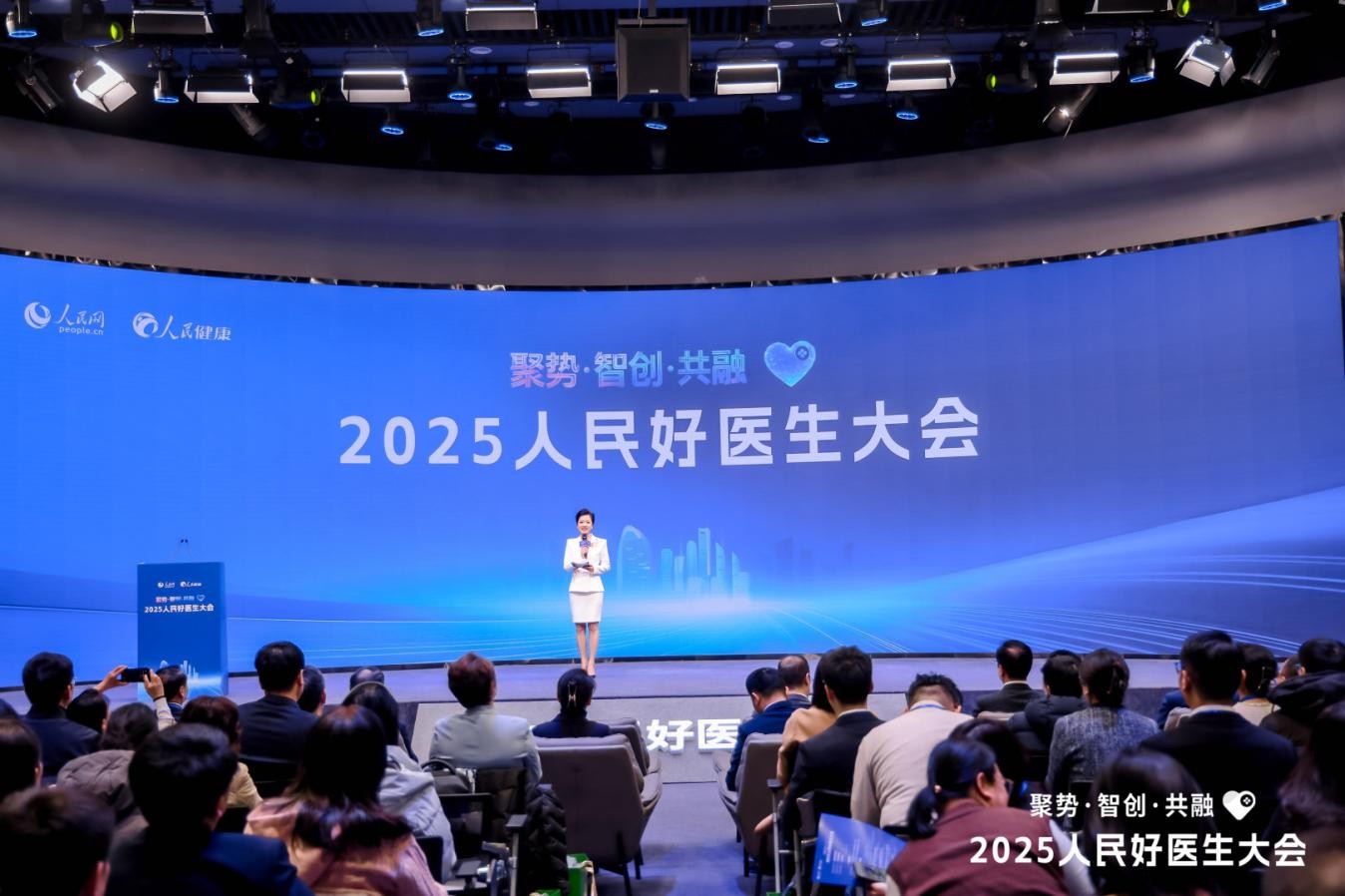
“智变”赋能医疗健康 2025人民好医生大会在京举办
Ren Min Wang· 2025-12-22 09:30
Core Insights - Artificial intelligence is becoming a key force driving transformation in the healthcare sector, focusing on precision in disease diagnosis, personalized treatment plans, efficient drug development, and intelligent health management [1][4]. Group 1: AI in Healthcare - AI is reconstructing the healthcare service paradigm by breaking down geographical barriers in medical resources, enhancing grassroots diagnosis, and ensuring precise health knowledge dissemination [4]. - Experts emphasize the importance of integrating AI in early identification and personalized intervention for neurological diseases, showcasing significant advancements in stroke prevention and treatment [4][5]. - The integration of AI with traditional Chinese medicine is highlighted as a means to innovate while preserving the essence of traditional practices [8]. Group 2: Medical Talent Development - High-quality discipline construction in public hospitals is essential for cultivating exceptional medical talent and improving healthcare service quality [6]. - A differentiated evaluation system is proposed to adapt to the "Healthy China" strategy, focusing on both innovative and clinical medical talents [7]. - Emphasis is placed on interdisciplinary collaboration and practical-oriented training to enhance the capabilities of medical professionals [7]. Group 3: Health Management Innovations - The "People's Good Doctor Family Health Care Service" project aims to create an intelligent, inclusive, and reliable health protection system for the public, utilizing AI technology [20]. - The launch of the "People's Good Doctor Corpus" aims to provide reliable information and verification services for healthcare professionals and the public [15]. - The establishment of the "People's Good Doctor·Zhong Nanshan Science Popularization Joint Laboratory" is intended to build a robust health science communication system [12]. Group 4: Future Directions - The conference highlighted the need for continuous optimization of medical talent training systems and the integration of digital technologies in healthcare [5][6]. - Discussions on the coexistence of medical humanities and AI suggest that AI can enhance the quality of medical services while promoting humanistic care [25].