
多发性骨髓瘤

Search documents
吉大一院靳凤艳团队研究入选 2025 中国十大医学研究和血液领域十大医学研究
Xin Lang Cai Jing· 2026-01-24 15:27
Core Insights - The research led by the team of Jin Fengyan from Jilin University First Hospital has been recognized as one of the "Top Ten Medical Researches in the Blood Field for 2025," highlighting a significant breakthrough in the clinical treatment of primary plasma cell leukemia (pPCL) [1][2] - This recognition is part of an annual evaluation by Mace Medical, which has been conducted for eight consecutive years, emphasizing the originality and impact of the selected research [1] Group 1 - The evaluation process involved selecting 15 studies from numerous submissions, which were then narrowed down to the top 10 through online voting, ensuring transparency and public engagement [1] - The research focuses on pPCL, the most aggressive subtype of multiple myeloma, which has the poorest prognosis, addressing the limitations of existing staging systems and the challenges of personalized treatment [1] - The team developed a novel pPCL-specific staging system (PSS) using real-world data from 26 centers, which incorporates easily obtainable clinical variables such as LDH, thrombocytopenia, and cytogenetic abnormalities [1] Group 2 - The PSS system breaks the constraints of current risk stratification models, providing a more accurate prediction of patient survival outcomes and serving as a critical tool for formulating targeted treatment strategies [1] - The research demonstrates the scientific strength of Jin Fengyan's team and signifies a major advancement in clinical research within the blood field in China, contributing to global pPCL diagnosis and treatment efforts [2]


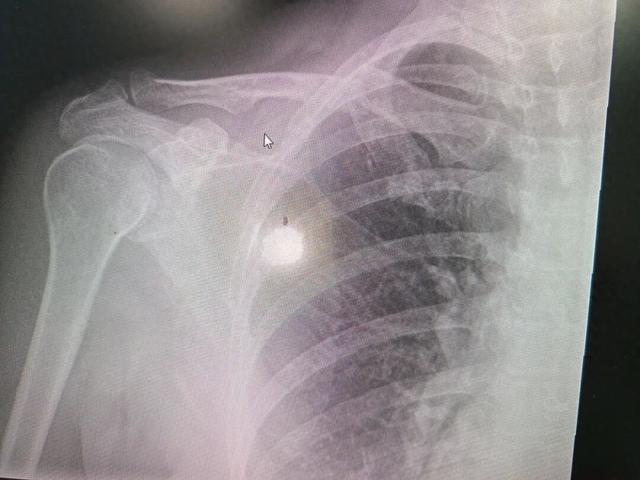
扫个灰锁骨“断”了?竟是因为肿瘤!一年前就有“警告”
Xin Lang Cai Jing· 2026-01-19 05:48
Core Viewpoint - The article highlights the case of a 62-year-old woman who experienced a pathological fracture due to underlying severe anemia, which was later diagnosed as multiple myeloma, emphasizing the importance of recognizing early symptoms of blood disorders in older adults [2][4][7]. Group 1: Patient Case Summary - The patient, referred to as Aunt Zhao, experienced a sudden shoulder injury while cleaning, which led to the discovery of a fractured collarbone and severe anemia with a hemoglobin level of 58 g/L, indicating a critical health issue [2][4]. - The diagnosis of multiple myeloma was confirmed after further tests, revealing that the anemia and fracture were manifestations of the same underlying disease [4][6]. Group 2: Medical Insights - Anemia is identified as an early warning sign, while fractures can indicate advanced disease progression, with multiple myeloma being a "blood disease that eats bones" [4][7]. - The article stresses the need for older adults, particularly those over 40, to be vigilant about persistent anemia, especially when accompanied by symptoms like bone pain or unexplained fractures [7][12]. Group 3: Diagnostic Recommendations - It is recommended that individuals with long-term anemia undergo comprehensive medical evaluations, including blood tests and assessments of kidney function, to identify potential blood disorders [13]. - The article notes that advancements in targeted therapies and immunotherapy have improved the management of multiple myeloma, allowing for better patient outcomes when diagnosed early [13].
多发性骨髓瘤容易侵袭老年人
Xin Lang Cai Jing· 2025-12-29 21:24
Core Viewpoint - The incidence of multiple myeloma in China is increasing, with approximately 35,000 to 40,000 new cases diagnosed annually, primarily affecting the elderly population. Early detection and standardized treatment can lead to "functional cure" for many patients [4][7]. Group 1: Disease Overview - Multiple myeloma is a malignant blood disorder predominantly found in older adults, with a rising incidence due to aging and increased routine health check-ups [4]. - The disease progresses through three stages: Monoclonal Gammopathy of Undetermined Significance (MGUS), Smoldering Myeloma, and Active Myeloma, with symptoms often being non-specific and leading to misdiagnosis [5][6]. Group 2: Diagnosis and Early Detection - Approximately 60% to 70% of patients in large hospitals are misdiagnosed or undiagnosed at their first visit, highlighting the importance of early and accurate diagnosis [6]. - Regular health check-ups are crucial for early detection, especially for high-risk groups such as the elderly, those with a family history, obesity, or exposure to toxic substances [6][9]. Group 3: Treatment Advances - The median survival for multiple myeloma patients has improved from 2-3 years to 8-10 years due to advancements in treatment and the introduction of new drugs [7]. - Bispecific antibodies have shown an overall efficacy rate of 60% to 70%, providing new treatment options for relapsed/refractory patients [8]. Group 4: Multidisciplinary Collaboration - The management of multiple myeloma is evolving towards a long-term chronic disease model, necessitating multidisciplinary collaboration to address the complex health needs of patients [9]. - Comprehensive treatment plans require cooperation between various specialties, such as hematology, nephrology, and orthopedics, to ensure individualized care [9].

新晋院士最新Science子刊:揭开多发性骨髓瘤起源细胞,开发CAR-T细胞疗法
生物世界· 2025-11-24 04:28
Core Viewpoint - The research identifies the origin cells of multiple myeloma (MM) and develops a CAR-T cell therapy targeting FCRL5, demonstrating good safety and efficacy in treating relapsed or refractory multiple myeloma (RRMM) patients [3][9]. Group 1: Research Findings - The study utilized single-cell sequencing and genetic tracing analysis to investigate each developmental stage from hematopoietic stem cells to lymphoid lineage, identifying abnormal differentiation stages in multiple myeloma patients [5]. - The research team discovered that the long arm amplification of chromosome 1 (1q Amp) originates from a specific B cell subset, while the short arm deletion of chromosome 17 (17p Del) occurs at the plasma cell stage [6]. - 1q Amp is present in the CD24- FCRL5+ B cell subset, enhancing B cell proliferation and promoting plasma cell differentiation, which initiates the transformation of B cells into malignant plasma cells [6]. Group 2: Implications for Treatment - The findings establish genetic events associated with the initiation and malignant transformation of multiple myeloma in the B cell lineage, laying the groundwork for potential treatment strategies targeting multiple myeloma initiating cells (MIC) and their driver oncogenes in RRMM patients [11].
