大件运输

Search documents
130吨变压器压垮百年古董大桥,印度大件运输有多奇葩?
Sou Hu Cai Jing· 2026-01-14 17:37
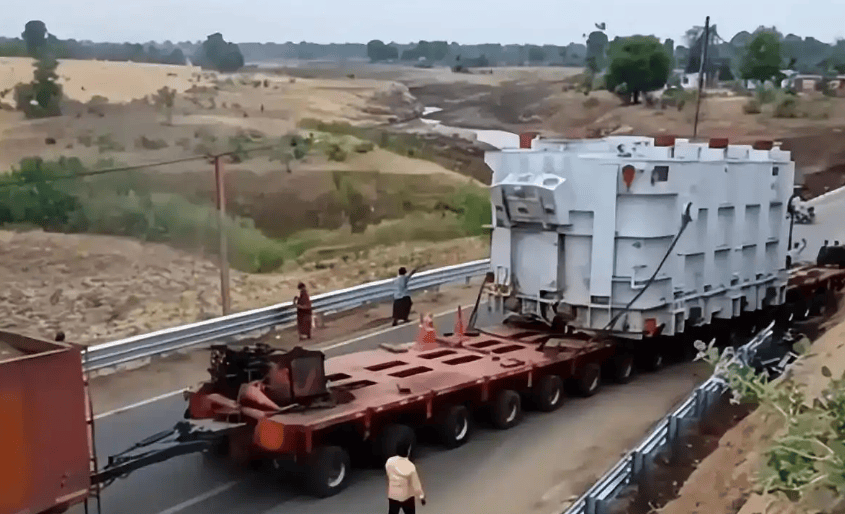
Core Viewpoint - India's large cargo transportation process is characterized by inefficiencies and irrational decision-making, leading to excessive costs and delays in transporting a transformer, ultimately reflecting a lack of professional planning in the industry [1][6][7]. Group 1: Transportation Challenges - In 2022, India decided to import a 130-ton transformer from Toshiba at three times the market price to address summer electricity shortages, showcasing a willingness to pay a premium for perceived national pride [1]. - The transportation of the transformer faced significant challenges, including the need for makeshift solutions like jacks and rollers to move it, which took 30 days to complete [3]. - The chosen transportation route deviated from Toshiba's planned path, leading to a catastrophic failure when the vehicle attempted to cross a 150-year-old bridge, resulting in the bridge collapsing and the driver being hospitalized [4]. Group 2: Financial Implications - The total cost incurred by India for the transformer amounted to ten times the original price due to the various complications and mismanagement during the transportation process [6]. - Upon arrival, it was discovered that the transformer was originally imported from China by Japan before being sold to India at a significantly marked-up price, indicating a lack of due diligence in the procurement process [6][7]. Group 3: Decision-Making and Planning - The entire transportation saga highlights irrational decision-making at multiple stages, from the initial import decision to the flawed calculations regarding the bridge's weight capacity [7]. - The series of missteps not only wasted time and resources but also resulted in a loss of face for India, as the situation reflected poorly on its logistical capabilities and planning [7].