
大模型驱动

Search documents
先生|刘韵洁:互联网“筑路人”
Yang Guang Wang· 2025-10-02 06:40
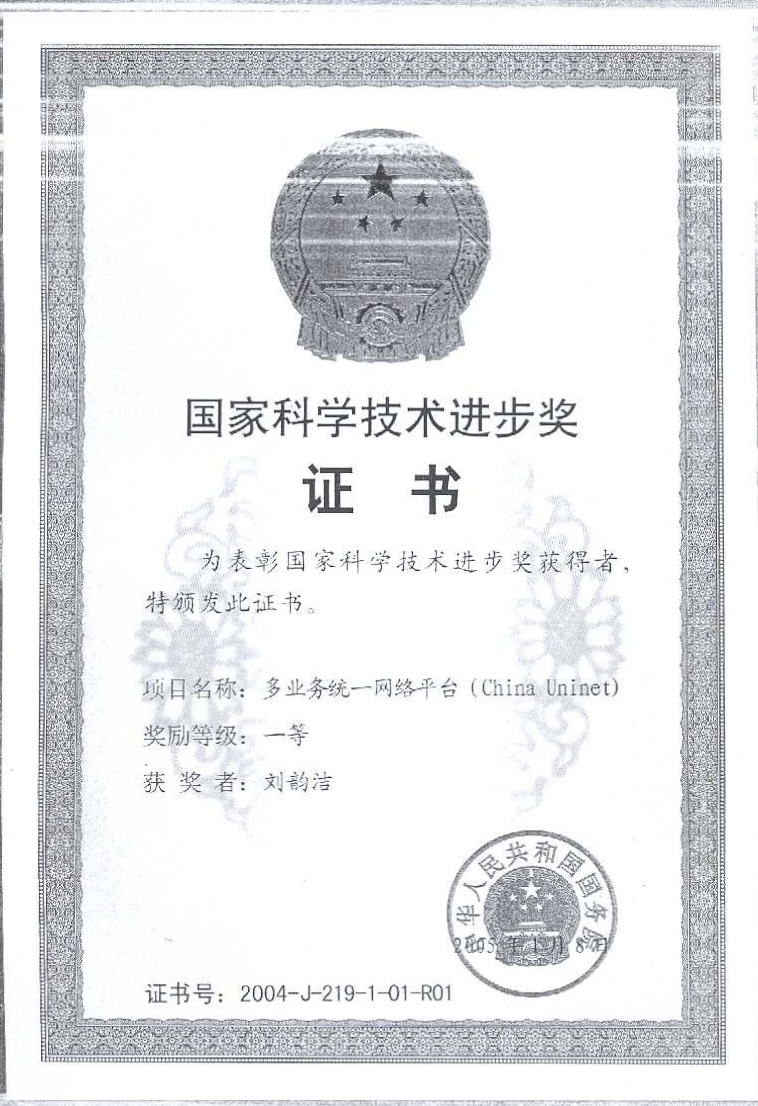
Core Viewpoint - Liu Yunjie is recognized as a pioneering figure in China's internet development, emphasizing the importance of perseverance and dedication in achieving success [2][3][18]. Group 1: Background and Achievements - Liu Yunjie, born in January 1943, is an academician of the Chinese Academy of Engineering and a key contributor to the development of China's internet infrastructure [3]. - He has received numerous national and ministerial awards for his contributions to technology and science [3]. - Liu led the development of the multi-service unified network platform (China Uninet), which won the National Science and Technology Progress Award First Class [7]. Group 2: Career Journey - Liu's career began in the semiconductor field, where he successfully developed high-power semiconductor transistors, a task deemed impossible at the time [8][9][11]. - He transitioned to the computer field in 1976, where he recognized the potential of computers to transform society, despite initially being a novice [13][14]. - Liu's foresight led him to focus on networking, addressing the challenge of connecting independent computer systems [14]. Group 3: Internet Development - In 1994, China achieved full functional connectivity with the international internet, marking a significant milestone in its digital evolution [14]. - Liu advocated for reducing internet access costs and increasing Chinese content online to encourage broader public engagement with the internet [15][16]. - By 1996, Liu's efforts culminated in the establishment of China's public computer internet backbone network, making internet access more affordable and widespread [16]. Group 4: Future Vision - Liu envisions a future where networks operate autonomously, driven by advanced models and intelligent systems, akin to self-driving cars [18]. - He believes that the next phase of internet development will focus on integrating digital technology into various sectors, enhancing productivity and connectivity [18]. - Liu is confident that with the right technological foundation, China will excel in the next stage of internet evolution, despite current disparities in high-end technology [18].

探寻青岛国际啤酒节背后的“隐形守护者”
Xin Hua Cai Jing· 2025-08-18 06:34
Core Viewpoint - The successful hosting of the 35th Qingdao International Beer Festival was significantly supported by the reliable power supply and efficient services provided by State Grid Qingdao Power Supply Company, ensuring a safe and enjoyable experience for attendees [1][2]. Group 1: Event Overview - The Qingdao International Beer Festival took place over 30 days, featuring three venues: West Coast, Laoshan, and Old Town, showcasing the unique charm of Qingdao [1]. - The opening ceremony included a stunning naked-eye 3D show, enhancing the festive atmosphere [1]. Group 2: Power Supply Enhancements - State Grid Qingdao Power Supply Company has optimized the power grid structure, with the completion of the 35 kV coastal substation project, marking the addition of the 400th public substation to the Qingdao grid [2]. - The power supply for the newly added Old Town venue, the Dabaodao Historical and Cultural District, was customized with a dual power source and dual circuit system, significantly reducing the average annual power outage time to under 7 minutes [2]. Group 3: Technological Innovations - The "Beer Exchange" at the Laoshan venue features advanced intelligent beer supply systems, with real-time monitoring and protection measures implemented by State Grid Qingdao Power Supply Company [3]. - The company has developed a device lifecycle management expert platform, utilizing a dual-model approach for equipment status assessment, enhancing fault detection and analysis capabilities [3][4]. Group 4: Operational Efficiency - During the festival, the expert platform played a crucial role in monitoring equipment, identifying potential issues such as abnormal oil temperature in transformers, and recommending timely interventions [4]. - The platform has been operational since late May, issuing 27 differentiated management strategies to improve the efficiency of power grid operations and alleviate pressure on the system [4].