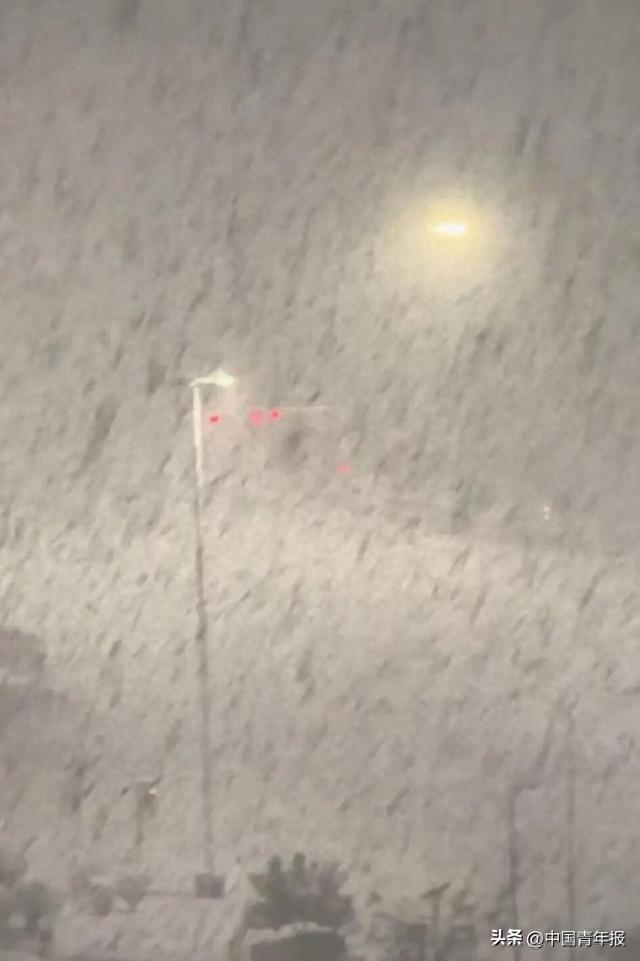
大湖效应

Search documents
既然全球变暖,北半球为何如此“大寒”
Xin Hua Wang· 2026-01-23 11:57
Group 1 - The World Meteorological Organization confirmed that 2025 is likely to be one of the hottest years on record, continuing the trend of rising global temperatures [1][3] - The northern hemisphere is experiencing extreme weather conditions, including heavy snowfall in Russia's Kamchatka Peninsula, winter storms in the northeastern United States, and cold waves in Europe and Japan [1][2] - The extreme cold and snowfall in various regions are attributed to multiple factors, including the abnormal activity of the polar vortex and the southward movement of cold air [2][3] Group 2 - In the United States, states like Pennsylvania, New York, and New Jersey are facing widespread snowfall and extreme low temperatures, leading to flight delays and traffic disruptions [2] - Japan is also preparing for significant snowfall, with warnings issued for over five days of heavy snow in the northern and western regions [2] - Experts suggest that the relationship between global warming and extreme cold weather is complex, with changes in atmospheric circulation potentially allowing cold air to extend further south [3]
威海、烟台雪下到“冒烟”,咋回事
Ren Min Ri Bao· 2026-01-13 03:13
Core Viewpoint - The recent heavy snowfall in Weihai and Yantai, known for their frequent snowfalls, is primarily attributed to a phenomenon called "cold flow snow," which accounts for over 80% of their total snowfall days [2]. Group 1: Cold Flow Snow Characteristics - Cold flow snow, also referred to as "cold flow precipitation," occurs when warm, moist air from the sea rises and cools, leading to snow formation as cold air moves southward [2]. - The geographical location of Weihai, situated at the eastern end of the Shandong Peninsula and surrounded by the sea, makes it particularly prone to cold flow snow [2]. - The snowfall in these cities is significantly higher compared to other regions in Shandong, with a notable example being the precipitation of 80.3 millimeters recorded in Yantai's Zhifu District from late 2005 to early 2006 [2]. Group 2: Factors Contributing to Cold Flow Snow - The large heat capacity of the ocean results in a more stable winter sea temperature compared to land, which enhances the conditions for air convection and cloud formation near the sea surface [2]. - The topography of the northern coastal hills and mountains also plays a role in elevating warm, moist air to condensation heights, further amplifying the occurrence of cold flow snow [2].
山东威海、烟台降下冷流雪 今天这些地方还有大到暴雪→
Xin Lang Cai Jing· 2026-01-12 04:32
Core Viewpoint - The article discusses the phenomenon of "cold flow snow" in the coastal cities of Yantai and Weihai in Shandong Province, highlighting its unique characteristics and formation process, as well as its prevalence in these areas during winter. Group 1: Cold Flow Snow Characteristics - Yantai and Weihai are referred to as "China's snow pit" due to their significantly higher snowfall compared to other regions in Shandong, with cold flow snow accounting for over 80% of total snowfall days [4][6]. - The average annual number of cold flow snow days in Yantai is approximately 39 days [4]. Group 2: Formation of Cold Flow Snow - Cold flow snow occurs when warm, moist air from the sea rises and cools, leading to snow formation as cold air moves southward [4][6]. - The geographical location of Weihai, surrounded by the Yellow Sea, contributes to the frequent occurrence of cold flow snow, with significant snowfall recorded, such as 80.3 mm in Yantai's Zhifu District from late 2005 to early 2006 [6]. Group 3: Weather Impact and Forecast - The Central Meteorological Administration forecasts that cold air will lead to temperature drops of 4°C to 6°C in northeastern regions, with significant snowfall expected in areas like Inner Mongolia and northeastern provinces [7][9]. - A blue wind warning has been issued, predicting strong winds of 5 to 7 levels in various regions, including the Shandong Peninsula [9].