
冷流雪

Search documents
山东为什么有个“雪窝子”
Jing Ji Ri Bao· 2026-01-20 10:28
Group 1 - The core viewpoint of the article highlights the phenomenon of "cold flow snow" in Shandong, particularly in coastal cities like Yantai and Weihai, which challenges common perceptions of snowfall in the region [1][2][3] - Cold flow snow is characterized by its convective and localized nature, accounting for over 80% of total snowfall days in Yantai and Weihai during winter [2] - The unique coastal snow city landscape in Yantai and Weihai is attributed to their geographical positioning, where the warm sea surface influences the local climate, leading to increased snowfall [3] Group 2 - The article emphasizes the importance of public awareness regarding weather warnings for blizzards, cold waves, and icy roads, suggesting careful planning for travel during snowy conditions [4] - Recommendations for safe travel during snow include avoiding electric bikes and bicycles, wearing non-slip shoes, and being cautious of potential hazards such as falling branches or structures under snow load [4]
威海、烟台雪下到“冒烟”,咋回事
Ren Min Ri Bao· 2026-01-13 03:13
Core Viewpoint - The recent heavy snowfall in Weihai and Yantai, known for their frequent snowfalls, is primarily attributed to a phenomenon called "cold flow snow," which accounts for over 80% of their total snowfall days [2]. Group 1: Cold Flow Snow Characteristics - Cold flow snow, also referred to as "cold flow precipitation," occurs when warm, moist air from the sea rises and cools, leading to snow formation as cold air moves southward [2]. - The geographical location of Weihai, situated at the eastern end of the Shandong Peninsula and surrounded by the sea, makes it particularly prone to cold flow snow [2]. - The snowfall in these cities is significantly higher compared to other regions in Shandong, with a notable example being the precipitation of 80.3 millimeters recorded in Yantai's Zhifu District from late 2005 to early 2006 [2]. Group 2: Factors Contributing to Cold Flow Snow - The large heat capacity of the ocean results in a more stable winter sea temperature compared to land, which enhances the conditions for air convection and cloud formation near the sea surface [2]. - The topography of the northern coastal hills and mountains also plays a role in elevating warm, moist air to condensation heights, further amplifying the occurrence of cold flow snow [2].
雪厚20厘米?!威海特大暴雪为何这么厉害
Yang Guang Wang· 2026-01-13 01:04
Core Viewpoint - The recent heavy snowfall in Weihai, Shandong, has attracted significant attention, with the phenomenon being characterized as "black snow" and leading to discussions about its unique meteorological conditions [1][3]. Group 1: Snowfall Characteristics - The snowfall depth reached over 20 centimeters, with some measurements indicating close to this figure [3]. - The snowfall is described as "cold flow snow," a rare type of snow in China, characterized by three main features: substantial snow volume, high accumulation efficiency, and excellent visual appeal [4][5]. Group 2: Formation of Cold Flow Snow - Cold flow snow forms when dry cold air flows over relatively warm sea surfaces, causing the warm moist air to condense into snowflakes [8]. - The geographical positioning of the Shandong Peninsula, surrounded by the sea, facilitates the formation of cold flow clouds, which contribute to the heavy snowfall in the region [8]. Group 3: Weather Forecast and Recommendations - The weather forecast for January 12 indicates a transition to partly cloudy conditions with temperatures ranging from 5°C to -2°C, and wind speeds of 5 to 6 levels [12]. - Residents and visitors are advised to prepare for potential snow conditions and consider visiting Weihai or nearby Yantai for winter scenery [12].


“中国雪窝”为何在胶东半岛?
Xin Lang Cai Jing· 2026-01-12 18:00
Group 1 - The core viewpoint of the articles highlights the unique snowfall characteristics of Weihai and Yantai, which are referred to as "China's snow nest" due to their significant snowfall compared to other regions in Shandong and even Northeast China [1][2]. Group 2 - From January 10 to 11, Weihai experienced heavy snowfall, with a recorded snowfall of 12 millimeters in just three hours, and a maximum snow depth of 21 centimeters at the national weather station [1]. - The geographical location of the Jiaodong Peninsula, surrounded by the sea, contributes to the high snowfall, as cold air from the north picks up moisture from the relatively warm waters of the Bohai and Yellow Seas, leading to efficient snow formation [1][2]. - Cold stream snow is predominant in Weihai and Yantai, accounting for over 80% of total snowfall days, with an average of about 39 days of cold stream snow per year at Yantai Laishan Airport [2].
威海、烟台雪下到“冒烟”,咋回事?
Xin Lang Cai Jing· 2026-01-12 04:33
Core Viewpoint - The article discusses the phenomenon of "cold flow snow" that frequently occurs in the coastal cities of Yantai and Weihai in Shandong Province, China, particularly during winter, highlighting its unique formation process and geographical significance [4][6]. Group 1: Formation of Cold Flow Snow - Cold flow snow, also known as "cold flow precipitation," forms when warm, moist air from the sea rises and cools, leading to snowflake formation as cold air moves southward [4]. - This type of snowfall is prevalent in coastal areas of the Yellow Sea and Bohai Sea, with Yantai and Weihai experiencing over 80% of their total snowfall days attributed to cold flow snow [4]. Group 2: Characteristics and Impact - Cold flow snow is characterized by its convective and localized nature, often resulting in significant snow accumulation [5]. - Yantai and Weihai are referred to as "China's snow nest" due to their unique coastal snow city landscape, with an average of approximately 39 days of cold flow snow per year [6]. Group 3: Geographical Influence - Weihai's geographical position, surrounded by the Yellow Sea on three sides, makes it particularly susceptible to cold flow snow, with notable snowfall events recorded, such as 80.3 millimeters in the Yantai Zhifu District from late 2005 to early 2006 [6]. - The large heat capacity of the ocean leads to a more stable winter sea temperature compared to land, facilitating conditions for air convection and snow formation when cold air interacts with warmer sea water [6][7].
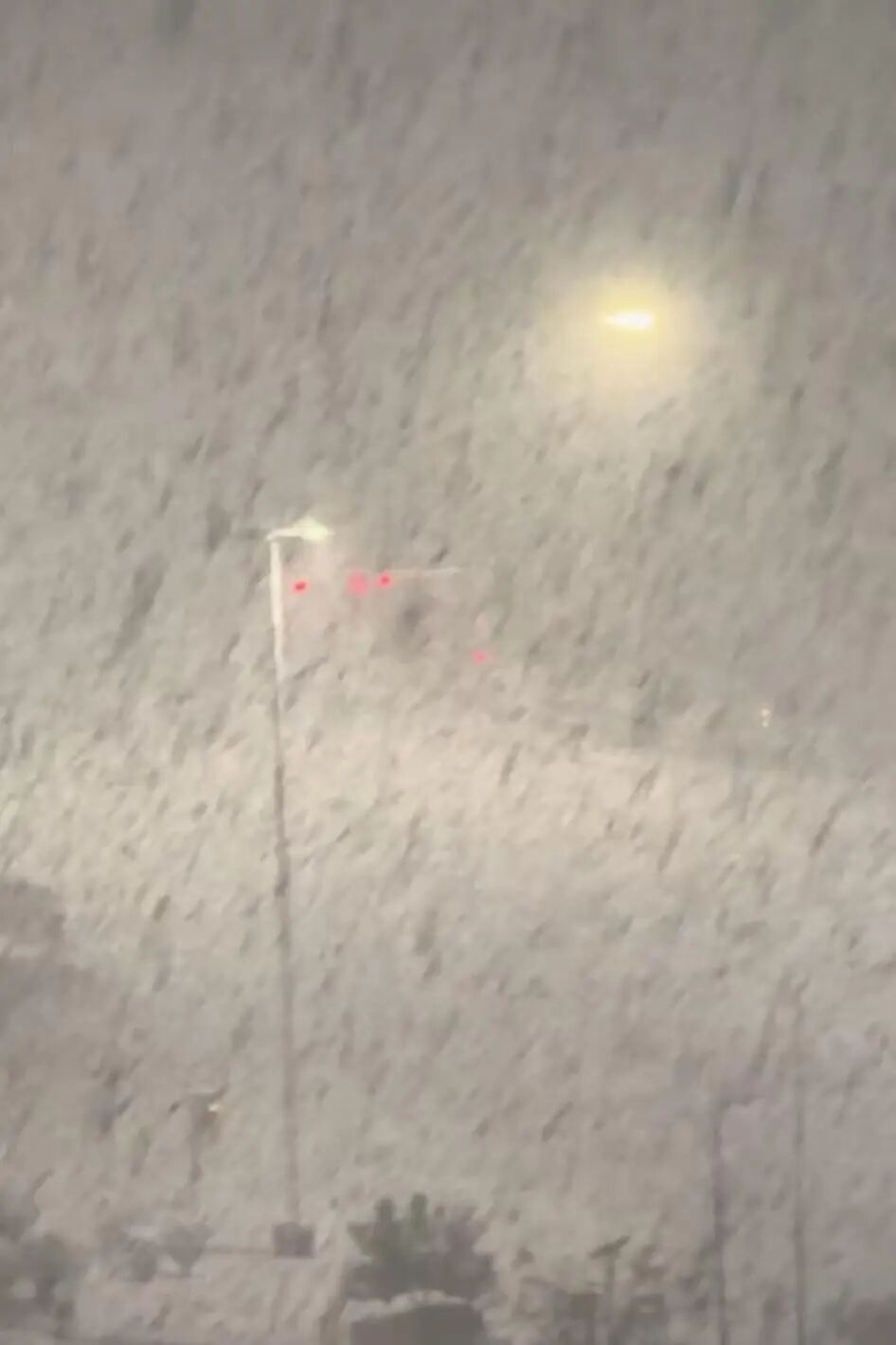
山东威海、烟台降下冷流雪 今天这些地方还有大到暴雪→
Xin Lang Cai Jing· 2026-01-12 04:32
Core Viewpoint - The article discusses the phenomenon of "cold flow snow" in the coastal cities of Yantai and Weihai in Shandong Province, highlighting its unique characteristics and formation process, as well as its prevalence in these areas during winter. Group 1: Cold Flow Snow Characteristics - Yantai and Weihai are referred to as "China's snow pit" due to their significantly higher snowfall compared to other regions in Shandong, with cold flow snow accounting for over 80% of total snowfall days [4][6]. - The average annual number of cold flow snow days in Yantai is approximately 39 days [4]. Group 2: Formation of Cold Flow Snow - Cold flow snow occurs when warm, moist air from the sea rises and cools, leading to snow formation as cold air moves southward [4][6]. - The geographical location of Weihai, surrounded by the Yellow Sea, contributes to the frequent occurrence of cold flow snow, with significant snowfall recorded, such as 80.3 mm in Yantai's Zhifu District from late 2005 to early 2006 [6]. Group 3: Weather Impact and Forecast - The Central Meteorological Administration forecasts that cold air will lead to temperature drops of 4°C to 6°C in northeastern regions, with significant snowfall expected in areas like Inner Mongolia and northeastern provinces [7][9]. - A blue wind warning has been issued, predicting strong winds of 5 to 7 levels in various regions, including the Shandong Peninsula [9].
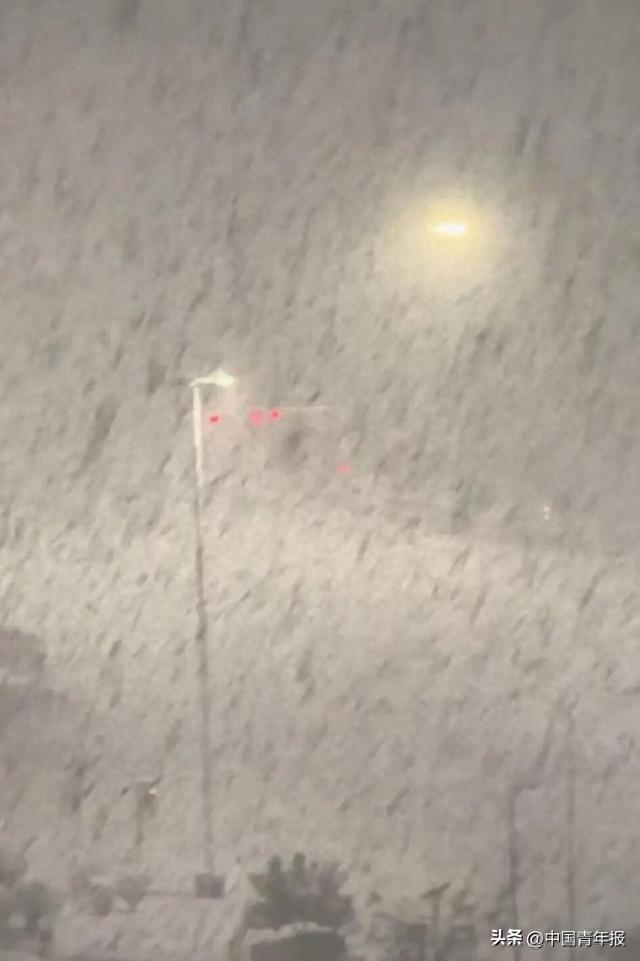
大雪!暴雪!这次的雪怎么就偏爱这一带?
Yang Shi Wang· 2026-01-09 12:51
Group 1 - The core viewpoint of the article highlights the impact of cold air leading to significant snowfall in specific regions, particularly in Inner Mongolia and Northeast China, while other areas experience minimal precipitation [1][2][4] - The Central Meteorological Administration predicts that from tonight to tomorrow, heavy snowfall will occur in parts of Inner Mongolia, Northeast China, and the Shandong Peninsula, with some areas experiencing blizzards [2][4] - The snowfall in these regions is attributed to a supply of moisture from the sea, as a low-pressure system develops and moves eastward, creating conditions for widespread snowfall [4] Group 2 - Concurrently, strong winds and dust storms are affecting areas such as Inner Mongolia, Ningxia, and Shanxi, with wind gusts reaching up to 10 levels in certain locations [6][7] - The PM10 concentration has significantly increased in regions experiencing dust storms, with ongoing strong winds expected to continue [7] - A blue warning for dust storms has been issued, predicting dust or floating dust weather in various regions, including Beijing, Tianjin, and parts of Hebei and Shandong [8]
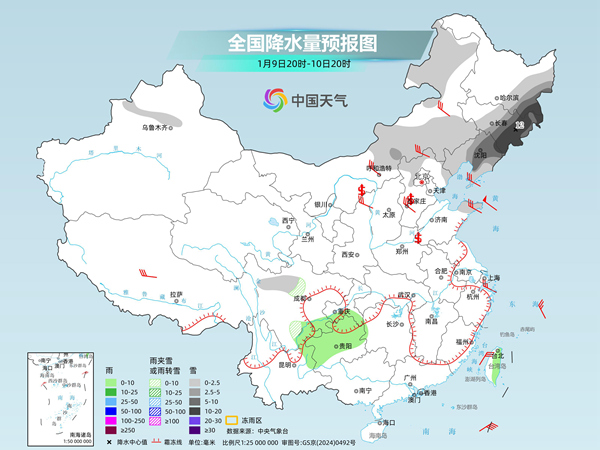
注意!冷空气携大风暴雪沙尘来袭 华北局地阵风达9级以上
Xin Lang Cai Jing· 2026-01-09 11:28
Group 1 - The core viewpoint of the articles highlights the impact of cold air leading to significant snowfall in specific regions, particularly in Inner Mongolia and Northeast China, with some areas experiencing heavy snow [2][4][5] - The Central Meteorological Administration predicts that from tonight to tomorrow, regions such as southeastern Heilongjiang, eastern Jilin, and eastern Liaoning will experience heavy snowfall [2][4] - The snowfall is attributed to a low-pressure system that is moving eastward, drawing moisture from the sea, which results in widespread precipitation in the affected areas [4][5] Group 2 - In addition to snowfall, strong winds and dust storms are affecting areas like Inner Mongolia, Ningxia, and Shanxi, with wind gusts reaching up to 10 levels in some locations [8][9] - The dust storms are expected to spread southeast, with a blue warning for dust storms issued by the Central Meteorological Administration, indicating potential dust or sand weather in various regions including Beijing and Tianjin [9][10] - The articles advise residents in affected areas to take precautions against the dust and wind, such as closing windows and reducing outdoor activities [10]
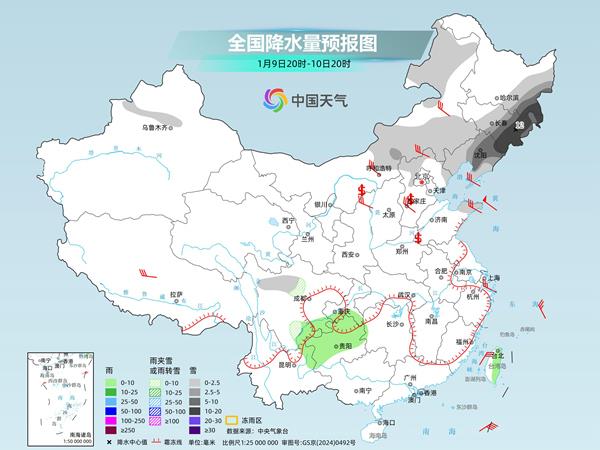
山东半岛“雪窝子”出现冷流雪 破译冷流雪:“雪窝子”背后的天气密码
Yang Shi Xin Wen· 2025-12-27 07:36
Group 1 - The article does not contain any relevant content regarding companies or industries [1][2]