大湾区文化融合

Search documents
粤语传承仍存挑战,如何构建更浓“氛围感”?
Di Yi Cai Jing· 2026-02-22 02:27
Core Viewpoint - The promotion and preservation of Cantonese language is crucial for the dissemination of Lingnan culture, including Cantonese cuisine and Cantonese opera, especially in the context of the Greater Bay Area's cultural integration and development [1][5][9]. Group 1: Cantonese Language Learning and Demand - There is a growing demand for Cantonese language learning among various groups, particularly among young people and new residents in the Greater Bay Area, driven by the need for effective communication in daily life and work [2][3][4]. - Training programs for Cantonese are increasingly popular, with a focus on practical usage rather than fluency, catering to individuals who need to communicate with local clients or integrate into the community [4][9]. - The concept of the Greater Bay Area has revitalized the perception of Cantonese, transforming it from a local dialect to a regional cultural link, thus expanding its usage scenarios and demand [9][10]. Group 2: Cultural Promotion and Integration - The Greater Bay Area is actively promoting Lingnan culture through various initiatives, including Cantonese language broadcasts in public transport and cultural events that highlight local traditions [6][7]. - Events like the early tea promotion week in Guangzhou aim to deepen the cultural understanding and consumption potential of Cantonese tea culture, integrating traditional practices with modern trends [7][8]. - The combination of official support and grassroots enthusiasm is enhancing the vitality of Cantonese language and culture, making it more relevant and accessible to younger generations [10]. Group 3: Educational Initiatives - Educational institutions in Guangzhou are incorporating Cantonese culture into their curricula, with activities designed to engage students in learning the language and its cultural significance [9][10]. - Collaborative efforts between educational and social sectors are creating a supportive environment for Cantonese language preservation, fostering a sense of cultural identity among the youth [9].
十年点亮800颗音乐火种,大湾区这个音乐周是送给青年的礼物
Xin Lang Cai Jing· 2026-02-13 14:16
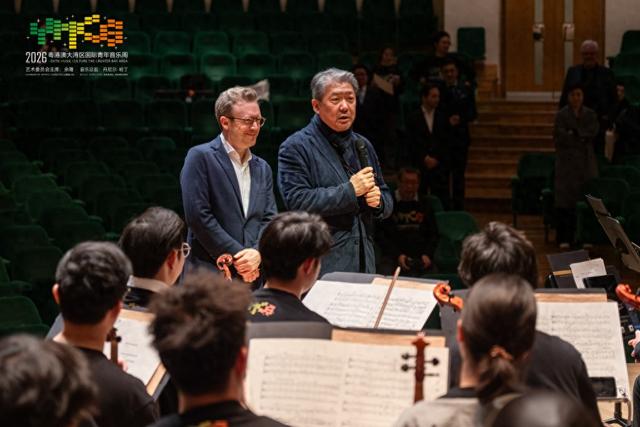
Core Insights - The YMCG (Youth Music Culture Grand) orchestra has successfully gathered 102 young musicians for its 2026 event, marking a decade of fostering musical talent across the Greater Bay Area [1][3] - The initiative aims to connect the four major cities of Guangzhou, Shenzhen, Hong Kong, and Macau through music, emphasizing the importance of youth in shaping the future of the region [1][13] Group 1: Event Overview - The YMCG has illuminated over 800 musical talents from 25 countries in its ten years of operation [3] - This year's event featured performances of Richard Strauss's "Ein Heldenleben," showcasing the orchestra's increasing difficulty level and the young musicians' capabilities [5][7] - The event included masterclasses for young conductors and singers, expanding its educational offerings beyond instrumentalists [9] Group 2: Youth Engagement - The majority of the orchestra members are newcomers, with 70% participating for the first time, highlighting the program's role in nurturing fresh talent [3][5] - The founder, Yu Long, emphasizes the need to support and empower young musicians, viewing them as invaluable assets to the Greater Bay Area [1][11] Group 3: Cultural Significance - The YMCG serves as a cultural bridge, linking the diverse cultural structures of the Greater Bay Area through music [13] - The event has expanded its reach from Guangdong to encompass the entire Greater Bay Area, marking a significant evolution in its mission [13][21] - Discussions during the event highlighted the potential for Macau to transform into a cultural hub, leveraging its entertainment reputation to foster artistic innovation [19][21] Group 4: Professional Development - The involvement of top musicians from prestigious orchestras as mentors has elevated the program's professional standards, with participants achieving near-professional performance levels [7][21] - The collaborative model of YMCG, involving multiple orchestras, is seen as a global precedent for youth arts projects, ensuring high-quality training and support for young musicians [21]

全运半程回顾丨有坚持、有热爱、还有共同的未来与期待
Xin Hua She· 2025-11-16 09:54
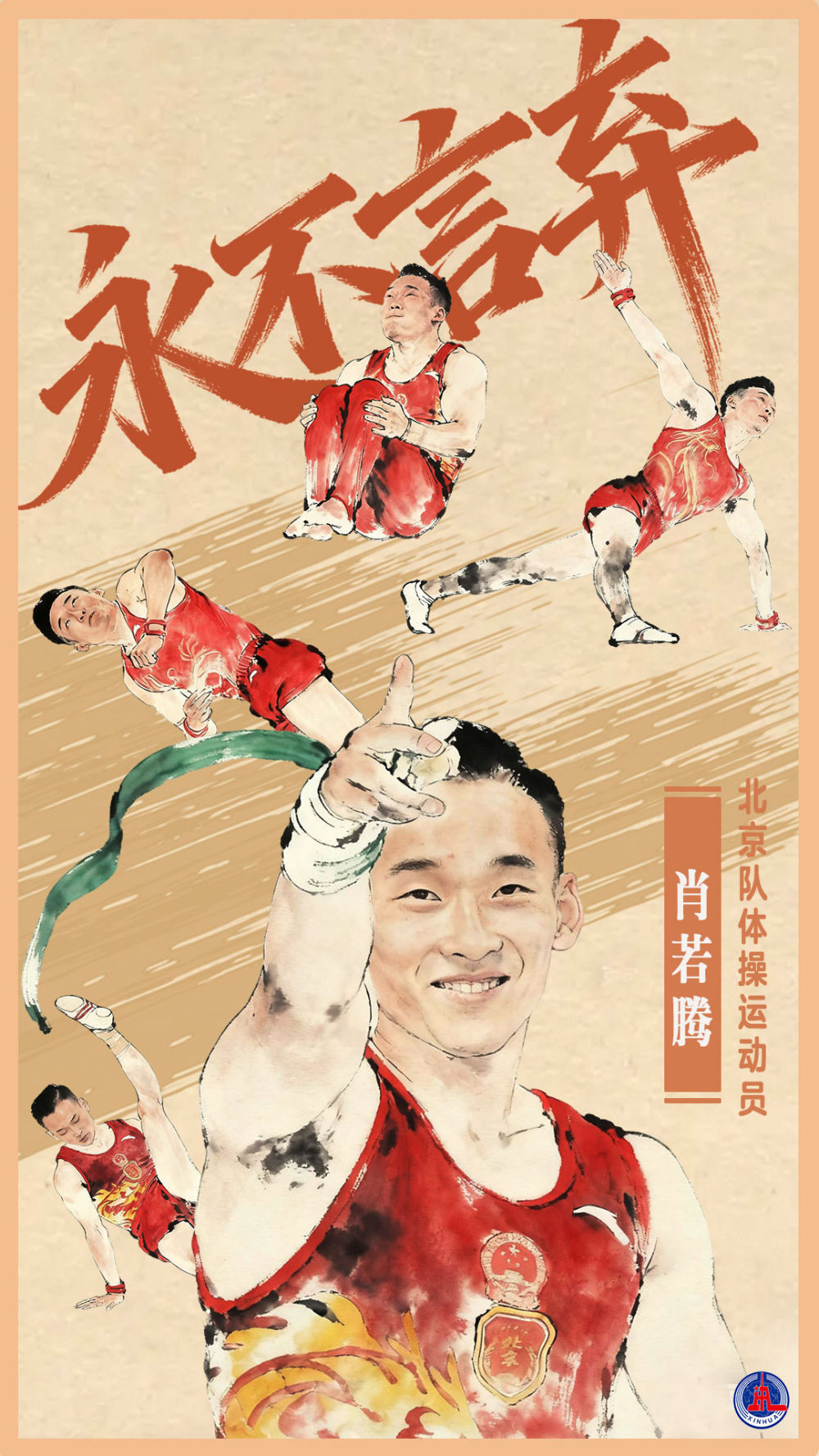
Core Points - The article highlights the achievements and resilience of Chinese gymnast Xiao Ruoteng, who successfully defended his title at the 15th National Games, showcasing his determination and inspiring future generations of athletes [21][22]. Group 1: Xiao Ruoteng's Career Highlights - Xiao Ruoteng, a 29-year-old gymnast, represented the Beijing team in the men's individual all-around final at the National Games [4]. - He joined the national team in 2012 and has since excelled in various competitions, including national championships and world championships [7]. - In 2017, he won the men's individual all-around championship at the World Gymnastics Championships, ending a 10-year gold medal drought for China in this event [10]. Group 2: Challenges Faced - Xiao's career has been marred by injuries, including a significant elbow injury that prevented him from competing in the Rio Olympics [12]. - During the Tokyo Olympics, he competed while in pain, taking painkillers before the final but narrowly missed out on a gold medal by 0.4 points [15]. - At the Paris Olympics, he again competed with injuries, contributing to the team's performance despite a last-minute error from a teammate that cost them the gold [15][17]. Group 3: Inspirational Impact - Xiao Ruoteng's perseverance and commitment to his country have made him a role model for aspiring athletes, as he emphasizes the importance of mission over personal health [19]. - His recent victory at the National Games is seen as a continuation of his legacy and a source of motivation for future generations in Chinese sports [21][22].
【相约大湾区 燃动十五运】同心共舞南狮:粤港澳 加油!
Yang Shi Wang· 2025-11-14 17:18
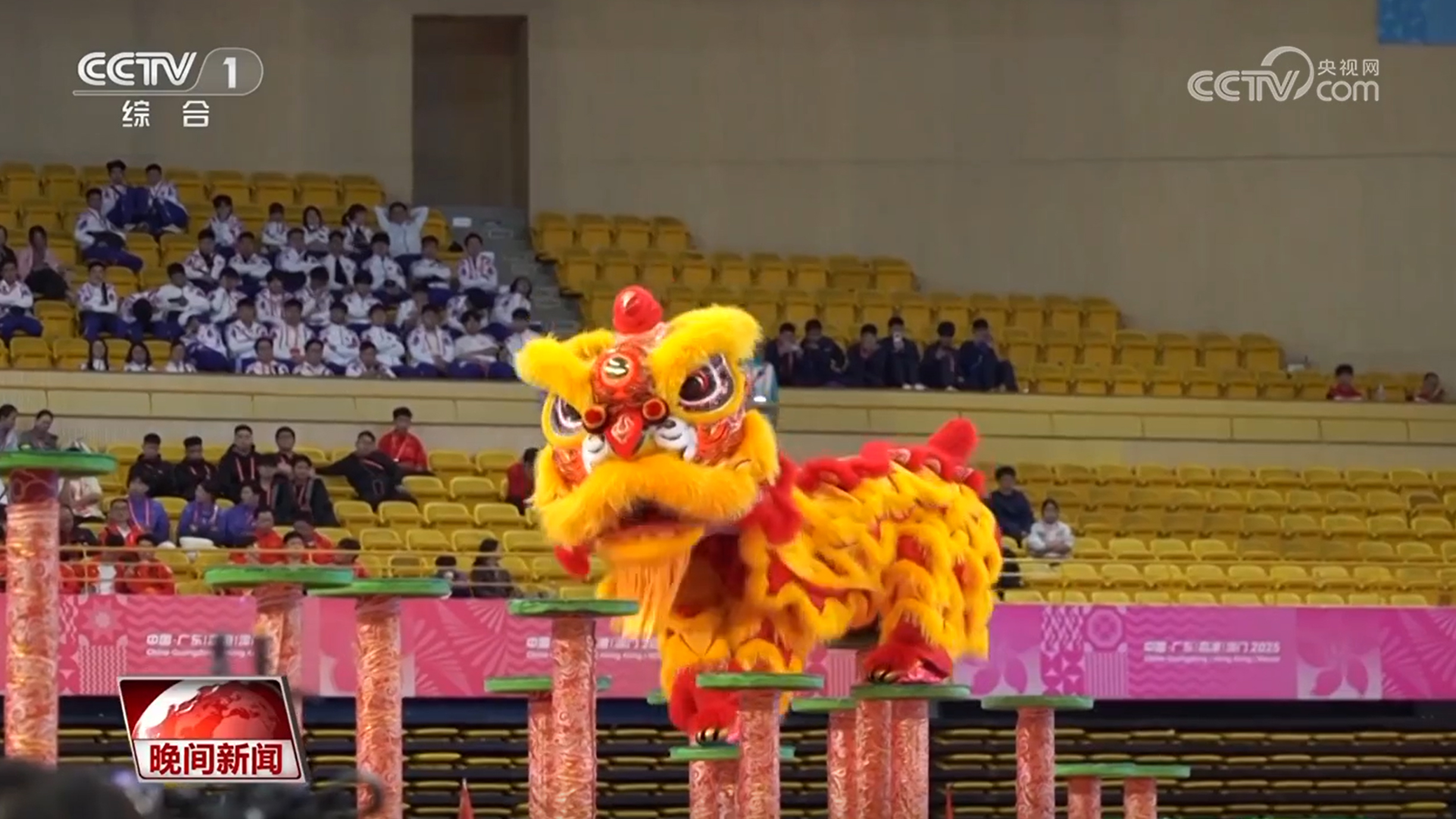
Core Viewpoint - The Guangdong-Hong Kong-Macao team made a remarkable debut at the 15th National Games, winning one gold and one silver medal in the dragon and lion dance events, showcasing their high-level performances and teamwork [1][3][6]. Group 1: Team Composition and Performance - The Guangdong-Hong Kong-Macao team, with an average age of 23, consists of 12 members from Guangdong, 2 from Hong Kong, and 2 from Macau, demonstrating impressive coordination despite being formed only in April [3][6]. - The team achieved a score of 9.19, placing second among twelve teams, and previously won the championship in the "Southern Lion Optional" event [6]. Group 2: Training and Preparation - Team members, including those from Hong Kong and Macau, typically have full-time jobs or are students, limiting their practice time to weekends, which they utilize for joint training sessions [7]. - The team emphasizes the importance of detail in their performances, with ongoing discussions between coaches and players to refine their techniques before competitions [6][9]. Group 3: Cultural Exchange and Future Aspirations - The collaboration among team members from different regions fosters cultural exchange, with aspirations to continue working together and to introduce younger participants to the lion dance [11][13]. - The coach highlighted the unique strengths of each region, aiming to integrate more lion dance athletes in the future to contribute to the cultural heritage of the Greater Bay Area [13].
(粤港澳全运会)十五运会开幕式让各界看见“最潮”粤港澳
Zhong Guo Xin Wen Wang· 2025-11-10 03:31
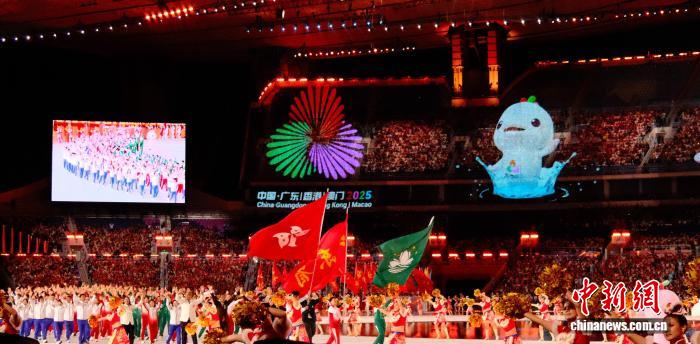
Core Viewpoint - The opening ceremony of the 15th National Games showcased a blend of traditional culture and modern technology, highlighting the deep cooperation among Guangdong, Hong Kong, and Macau, while signaling a future direction for further integration [1][3]. Group 1: Cultural Significance - The ceremony featured traditional cultural elements such as martial arts and lion dancing, combined with cutting-edge technology, reflecting the rich cultural heritage of the Lingnan region [1][3]. - The event served as a platform to demonstrate China's cultural and technological innovations, aiming to enhance global recognition of its cultural depth alongside its advancements in technology [3][4]. Group 2: Regional Cooperation - The simultaneous entry of the Guangdong, Hong Kong, and Macau delegations during the ceremony symbolized unity and collaboration among the three regions [4]. - The event is expected to further promote the development of the Greater Bay Area, transitioning from "hard connectivity" and "soft connectivity" to "heart connectivity" [4]. Group 3: International Perspective - Observers from abroad noted the impressive cultural display and expressed a desire for similar events to showcase regional cooperation on an international stage [4][7]. - The integration of traditional and modern elements in the ceremony was highlighted as a potential model for international events, particularly in how Hong Kong can serve as a cultural bridge [7].