大脑结构

Search documents
Cell:揭开大脑衰老的隐藏密码——大脑细胞衰老如何影响大脑结构?
生物世界· 2026-02-02 04:06
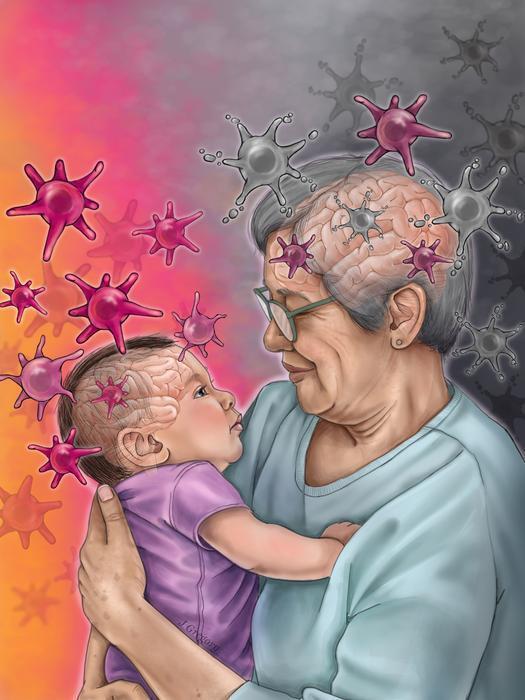
Core Insights - The article discusses the relationship between cellular senescence and brain structure, highlighting its implications for brain health and diseases such as Alzheimer's and Parkinson's [3][7][17] - It emphasizes that cellular senescence plays a dual role in development and degeneration throughout a person's life, affecting brain structure at different stages [10][12][18] Group 1: Cellular Senescence Characteristics - Cellular senescence is defined as a state where cells permanently stop dividing without dying, characterized by features such as altered morphology, mitochondrial dysfunction, and increased levels of reactive oxygen species (ROS) [2][7] - Senescent cells secrete harmful substances that can lead to inflammation and oxidative stress, linking them to neurodegenerative diseases [7][10] Group 2: Research Findings - A study published in the journal Cell reveals a profound connection between brain cellular senescence and brain structure, integrating live human brain data and neuroimaging [3][17] - The research analyzed 308 samples from the prefrontal cortex and corresponding brain scans, mapping the relationship between cellular senescence and brain structure [7][12] Group 3: Impact of Different Cell Types - The study found contrasting effects of senescence in two key brain cell types: excitatory neurons and microglia [9][12] - In microglia, senescence features correlate positively with brain volume, suggesting a beneficial role in shaping brain structure, while in excitatory neurons, senescence is negatively correlated with brain volume, indicating potential atrophy [9][12] Group 4: Lifelong Implications - The association between cellular senescence and brain structure persists throughout life, with higher senescence rates in early development, particularly before the age of five [11][12] - This suggests that cellular senescence may be a crucial regulator of brain development, supporting the hypothesis that early beneficial processes can become harmful later in life [11][12] Group 5: Genetic Regulation - The research identified key transcription factors that may regulate both cellular senescence and brain structure, such as ETV6 and CREB5 in microglia, and ZEB1 and SREBF2 in excitatory neurons [15][12] - These factors are known to play roles in aging, development, and brain function, providing potential targets for future therapies [15][18] Group 6: Future Perspectives - The findings offer new insights into how early life processes affect brain health in later years, potentially guiding prevention and treatment strategies for age-related brain diseases [17][18] - There is hope that regulating cellular senescence could delay brain atrophy, offering new therapeutic avenues for conditions like Alzheimer's and Parkinson's [18]


衰老“分子网络”与大脑结构间关联揭示
Huan Qiu Wang Zi Xun· 2026-01-29 01:35
Core Insights - The research published by the team from Mount Sinai's Icahn School of Medicine establishes a direct link between cellular aging and brain structure, providing new perspectives on brain development, aging, and neurodegenerative diseases [1][3]. Group 1: Research Findings - Understanding brain structure is a core challenge in neuroscience, with its changes throughout life closely related to aging and neurodegenerative diseases such as Parkinson's and Alzheimer's [3]. - The study combines biopsy samples from the prefrontal cortex obtained during deep brain stimulation surgery with brain imaging data, allowing for simultaneous analysis of molecular features and brain structure in the same individual [3]. - A novel method was developed to identify aging cells in live human brain tissue, exploring the relationship between aging-related gene expression and brain structure [3][4]. Group 2: Key Discoveries - One significant finding is that the impact of cellular aging on brain structure varies by cell type and life stage; genes related to the aging of microglia are associated with larger brain volume, while those related to excitatory neurons are linked to reduced brain volume during aging [4]. - Aging-related characteristics of excitatory neurons are evident early in life, indicating that the aging process begins shortly after embryonic development [4]. - The study also detected signs of aging during developmental stages, suggesting that this process may play a critical role in early brain development [4].